Comment

Day 273 - Portland, OR

Today, I find myself thinking about the pilot who appears - if investigators have it right - to have intentionally crashed a commercial airliner into the alps, killing 150 people, including himself.  There’s obviously a lot of questions to be answered here, not the least of which is “if you’re going to commit suicide, why take 149 other people with you?”.  An excellent question.  But what the whole sad incident makes me personally think about is the increasing isolation of people in our modern society.  I’ve written about this before, for example when that guy snapped and killed a bunch of people last year, leaving behind notes about how women had mistreated him.  It’s not, of course, surprising that people should get depressed.  Since the dawn of time, there’s been a dark side to humankind that gets anxious and sad and feels worthless.  And being alone and isolated are also not a completely modern phenomenon.  Odysseus was forced to travel the world alone with only his dark thoughts.  Captain Ahab traveled the seas bent on revenge.  But what is new is the depths of the Death of a Salesman problem.  Stripped of our connections to other people, it becomes so easy to get out of balance.  When I was in Early Childhood Education training, I remember one of my teachers referring to the parent of a teenager as their “external frontal lobe”.  I was struck by that thought.  As humans, we emerge from the womb less than fully formed.  Specifically, the brain is not complete (because otherwise we wouldn’t fit through the hips).  So parents are, in many ways, the external frontal lobe for their children.  But what I think is interesting about this is that I’m not sure it’s limited to children.  We, as humans, are inherently social creatures.  The people around us - our community - are, in many ways, a vital piece of our control system, of our decision making process - our “frontal lobe”.  When we don’t have that, our internal control systems have no check and balance.

One of the interesting things about the co-pilot case, to me, is that apparently nobody saw this coming.  Despite the fact that the man appeared to have had a family that cared about him (and perhaps he even lived with sometimes), a girlfriend, coworkers, etc - and despite the fact that he was apparently suffering from at least two separate ailments, one that was affecting his vision and another his mental state - nobody was able to put two and two together.  We are not talking here about some Ted Kaczynski loner off in the woods; this guy had a job, an apartment, neighbors, people who remembered him.  And yet, somehow, he apparently felt he had nobody to turn to.  I wish this was a novel phenomenon, an isolated incident, but this is something we all understand is happening to us as a species; despite all the new ways to communicate, we seem to understand less and less about the people around us with each passing day.  I have, personally, experienced what it’s like to feel incredibly down, or frustrated, and not feel like really have anyone to turn to.  I’ve been incredibly alone, even in the middle of a big city.  

This is not to suggest that I, in any way, condone flying a plane into the Alps.  There is something cowardly about suicide, but there is something truly reprehensible about taking 149 other people with you.  What I’m suggesting, though, is that unless we figure out a way to turn back towards caring more about the people around us, this may not be the last time.

Comment

Comment

Day 267 - Rogue River, OR

image.jpg

This post is ostensibly about hiking, but its really about risk.  First, I will give you the benefit of my 37 years of experience.  Which is this: Most of the time, you shouldn’t quit.  Except sometimes, when you should.  Got that?  OK, good.   If you’ve really internalized that, your prize is that you don’t have to read the rest of this post.

A little bit of background: I am not, generally, a quitter.    In fact, off the top of my head, I can really only think of two times when I’ve quit something in my entire life, and they both happened within the last year.  And one of them happened yesterday.  Now, there are certainly things that I failed to finish; my preschool teacher training, for example.  But that wasn’t really a “quitting moment”; other priorities just came along and I shifted my focus.  What I mean by quitting is that one moment in time, where you look at something, and for whatever reason - or for multiple reasons - you say “No.  No more, today at least.”    (That “today at least” part is important and I’ll talk more about that later).  The first time I quit, it was about 4 months ago, and I wrote about it here in this blog; you can go back and find it.  I had signed up for a 10 day silent meditation retreat, and after the first day, I walked away.  The second time, like I said, just happened yesterday.

I’ve been really interested lately in mountaineering, or alpinism - climbing things.  I had my own climb experience, which I also wrote about here, and I met some cool mountaineering folks, and I’m hooked.  It combines something I love - moving forward under my own power - with this really cool exploration of risk and adventure.  So I’ve been voraciously devouring every documentary and book that I can get my hands on - luckily, this being a hotbed for that sort of thing, the local library has a ton of materials.  There’s a lot of fascinating stuff in these stories.  Although on the surface it’s all about athleticism, training and equipment, when you distill it down, it really ends up being about one - or possibly two - things: risk, and self-awareness.  Having a good sense of what’s happening around you, and inside your own head, and knowing when to take that chance, and when not.  On one level, nobody would ever climb a mountain if they didn’t have a healthy ability to push through risk and fear.  On the other hand, these mountains are littered with the corpses of people who took it one step too far.  There’s a book I just started reading by Ed Viesturs, a famous Seattle mountaineer, and I’ll quote from the foreword - written by a friend of his - here:

“One of the stories that Ed told me early on was about how he turned back only 300 feet short of the summit of Everest in 1987 on his first Himalayan expedition.  He knew he could make it to the top, but he wasn’t sure he could get down alive.  That turnaround is an incredible statement…If I’d been in the same situation, I’m afraid I’d have told myself, ‘I’m this close, I’m going for it.’”

In 1996, a well-known tragedy occurred on Mount Everest.  On one single day, May 11, 1996, 8 people would die while attempting a climb of Everest.  Almost all of those died on the way back down from the top.  The story has been told and retold a dozen times, most famously in Jon Krakauer’s book Into Thin Air.  Although no tragedy like this has a single cause, the essence of the story is this: the hard part of climbing Everest - of climbing any mountain - is actually getting back down.  In the case of Everest in particular, mountaineers leave for the summit in the middle of the night, to ensure that after summiting, there is enough daylight to make the return trek.  Arriving at the summit too late increases the risk many fold, because spending a night out in the weather up at that elevation - called the “Death Zone” - is a terrible idea.  The right way to do the climb is to leave early, make good time, summit early, return safely.  Done, and done.  On May 10, some people did that, and lived.  Others did not, and died.  Now, this rule - to summit early - is not a secret.  It’s a well known fact that most mountaineers - certainly anyone anywhere near Everest on that day - would know.  Some of the climbers who died were inexperienced, but some had a great deal of experience, including previous Everest summits.  Why, then, did they go all the way to the top?

I’d read several accounts of this tragedy, but Krakauer’s book had an interesting anecdote in one of the Epilogues I hadn’t yet heard.  After the events of May 11, there were still a number of climbers and expeditions teams left on the mountain.  They had all heard an experienced the tragedy from close range, including hearing all the radio transmissions back and forth, and witnessing the rescue efforts.  Some of the climbers lost their stomach for the enterprise and left - but some pressed on, and others summited the mountain through the month of May.  One climber, in particular, Bruce Herrod, was doing a solo climb of Everest.  According to Krakauer, he was on the South Col when the tragedy happened - a few thousand feet from the summit.  He heard the whole thing.  Yet, not more than two weeks later, he attempted a climb to the summit.  He left late, he had trouble getting up to the summit, he finally made it at around 5 pm - way too late - and then died on the descent.  One particular chilling line from Krakauer recounts that Herrod had to literally step over the frozen bodies of at least 2 of the climbers, on the way up, that had died not more than 2 weeks before.  

Just to make that clear: despite literally stepping over the frozen bodies of 2 people who had just made the same exact mistake, Herrod proceeded to make that mistake and die.

Mountaineers have a name for this: “summit fever”.  The idea is that the goal gets ahold of you, grips you so strongly that you lose your ability to reason.  It doesn’t help that, at 29,000 feet, hypoxia (lack of oxygen) dulls your senses and reasoning power.  But the essence of this “disease” is simply human nature.  Climbers put an enormous amount of time and energy into getting near the summit of Everest.  A climbing permit alone costs about $10,000, but a guided trip can easily total $65k.  It takes about a month to acclimate to the peak.  Most climbers end up taking 6 weeks off from work and life.  And the weather and oxygen conditions are such that, if you do turn around, that is often your only chance.  You can’t come back the next day.  For all these reasons and more, climbers get tunnel vision.  They are 100% ego invested in the outcome: climb and win, turn around and fail.  It’s particularly insidious in this case because the summit *is* achievable.  It beckons, close.  The danger is in the descent, and it takes a dose of reason and rationality to remember that in the midst of the excitement.  The whole thing reminds me a bit of the monkey traps they used to use in India: a banana in a coconut, with a hole big enough to reach through, but not big enough to take the banana back out.  You can have the prize, but it costs you your life.  Release the banana or die.

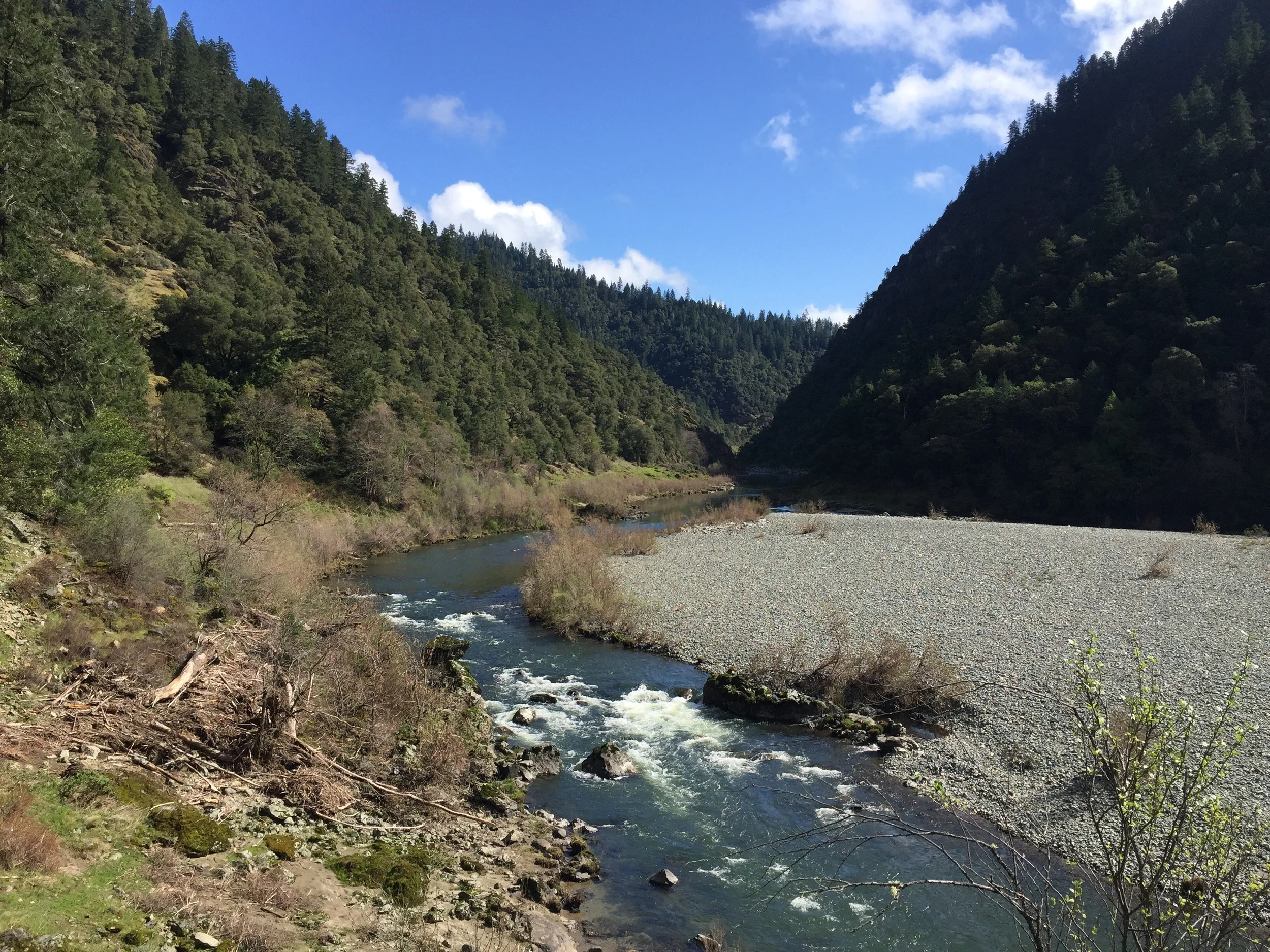
Of course, none of that has anything to do with me personally.  What does is that, facing a fairly boring spring break, I signed up for a 6 day backpacking trip that was associated with COCC, the school I’m attending.  It seemed like potentially a fun thing to do.  It was a 42-mile hike along the Rogue River in Southwest Oregon.  I’d heard it was beautiful.  The guides were students that had just graduated from OSU-Cascades (COCC’s sister school) with Bachelors degrees in leading outdoor adventures.  They were nice - very extroverted, but nice.  I felt that I was 100% prepared, athletically.  I’d hiked as much as 20+ miles in a single day, and even though I had never worn a pack quite so heavy, I thought that I could handle 6-7 miles a day.  And I could, no problem.  But I was so focused on the athletic challenge that I missed what was really at stake: the outdoorsmanship of being able to carry everything you need to survive for 6 straight nights.  My first clue that something was amiss was the night before, when I laid out everything I thought I needed to take, and realized that I had no hope of fitting it into the largest pack I owned.  I also realized that I had nowhere near enough rain gear.  I called one of the guides.  She assured me that everything would be fine.  They had packs I could borrow, she said.  They had rain gear.  I was worried about nothing.  They weren’t going to make me go, she was careful to say, but she implied that basically going was the right answer.  She talked me into it.  A little voice in the back of my head was screaming at me, but faced with a knowledgeable authority, I made my first mistake: turning responsibility for my decisions over to someone else.  It’s fine to trust an expert.  But the final arbiter of success in yourself, and the person that knows you best is you.  That person is an expert in their field, but you are an expert - the worldwide exclusive expert - in what it means to live inside your body.  This woman could not possibly have known, for example, that I have poor capillary refill, and that my extremities get very cold at low temperature.  She didn’t even ask about my sleeping bag, except just to see if I had one.

When I got to the departure point, I immediately felt ill at ease.  Everyone else who was going - 6 in total - was completely ready to go.  I had a jumble of my best effort possessions, that I tried to stuff into a huge sack as everyone else stared at me.  The woman running the event made some suggestions, and finally just started helping me pack up; she obviously wanted to get going.

The point of this story, by the way, is not that my guides did a bad job.  I don’t think they did.  I think they were helpful, kind, and concerned.  But nobody will ever be as concerned about you as yourself.  They had a lot of logistics to keep track of, and 5 other people to worry about.  At that moment, I slipped through the cracks a bit.

That night, we stayed at a campsite about 3 miles from the trailhead.  As I pitched my tent, it started to sprinkle a little bit.  The other guides put up tarps.  After a few minutes, the sun emerged and it looked like a nice day.  I was antsy and full of nervous energy so I decided to go for a jog, stripping down to just shorts and a tshirt.  Despite being cold, I knew I would warm up on the run - and I did, enough to sweat.  On the way, I stepped hard on a crag and bruised the bottom of my left foot.  Once back at camp, I put on my outer layers, but I was sweaty underneath.  Just as I thought about unpacking my pack, the rains started.  And they didn’t stop until the next morning.  I managed to stay largely dry, but I had to unpack my sleeping bag and set it up inside my tent while the rain howled outside.  All night I was freezing.  I kept waking up, tossing and turning.  My feet were so cold they hurt.  I couldn’t stop shivering.  My bag was wildly inadequate; rated to perhaps 40 degrees, the night got down into the low 20s.  I had that sudden insight, remembering an old joke of my Dad’s: “if you look around the room and can’t figure out who the sucker is - it’s you.”

Next morning, I tried to put on a brave face.  I think everyone could tell I was unhappy - I hide it poorly - but we all managed to pack up our gear and head into the van.  I spent an hour just sitting in the van, trying to warm up.  I was useless for breaking camp, but finally the others had everything together, and we started towards the trail head.  I was actually excited, because hiking is my specialty.  But as I rode in the van, I couldn’t help but think: this is going to be my next 5 nights.  I was miserable.  And I am not good at being miserable.

About halfway into the first day, I knew we were going to run across one of the other guides, who had hiked with a friend the opposite direction so that they could move the van from the start of the trail to the end.  I knew this would be my only chance to bail.  There were so many things fighting against me: the fear of failure, of course.  The social awkwardness of abandoning my group.  The added awkwardness of adding myself to the trip of the two guides hiking the other way.  I can vividly recall staring at them all assembled, my throat going dry and parched.  In that moment, I knew both the upside and the downside of social pressure.  It’s good that we’re social animals.  Sometimes, we reach inside ourselves and pull out something we didn’t know we had.  Would I have hiked on that trip and lived to tell about it?  Of course.  I wasn’t in fear of dying.  But what’s interesting to me isn’t so much the consequences, but the decision making process, which is really the same one faced by all those mountaineers.  Listening to the little voice in your head and believing in yourself enough to turn around, or letting others make decisions for you, and potentially finding something new - or something terrible.

It’s hard to regard my trip as a failure.  First of all, it doesn’t feel like one.  But more importantly, regarding it as a failure is a very dangerous thing to do.  Once you become ego-invested in the outcome of something too much, once it starts to look like success and failure and nothing in between, that’s when the decision making process starts to go awry.  Or maybe “awry” isn’t the right word, because that implies a value judgment.  What I should say is that ego-investing in the outcome may increase the chance of success, but it also drastically ratchets up the level of risk.  As long as you’re aware of that, then go for it.  But make sure you realize the mental state you’re in. 

Comment

Comment

Day 259 - Bend, OR

Today I want to talk about “third places”.  This is a concept some of you might be familiar with.  It’s got a reasonably good wikipediat article, which I’ll link here: http://en.wikipedia.org/wiki/Third_place.  That article, though, focuses pretty exclusively on the community-building aspect of these spaces, whereas I’d like to talk more about the role they play in a balanced, healthy mental state.  The words “third place” refers to the first and second places being your work and home, respectively.  The idea is that there are certain things that are hard to accomplish in your first and second places.  I encountered the concept of third place through my meditation practice.  Earlier today, I realized that - for reasons I won’t get into - I really needed to meditate.  It had been a while, and I just needed that mental space.  I found a zazen meetup here in Bend, but I realized, as I was driving to it, that what I really needed was to be alone, and to meditate alone - not with people I didn’t know.  But that was an issue.  I wasn’t going to go to work or school to meditate, obviously.  And for various reasons home just wasn’t a good spot.  I have 4 roommates, who I don’t know all that well, and who have a tendency to be loud at the most inconvenient times.  So I needed someplace to go.  Someplace quiet.

Unfortunately, for many of us, home isn’t always the most relaxing place.  We may have roommates, even as adults.  We may be in a relationship that isn’t working out - or one that is, but isn’t always calm or tranquil.  We might have kids, or pets.  Or maybe it’s just hard to really get calm surrounded by all of our stuff, and our hopes, and our dreams, and the things that remind us of our to-do list.  In the old days, that third place might possibly have been church; but I don’t believe in any organized religion, and I don’t belong to a church.  Stephen Fry has floated the idea of “atheist churches”; spaces you can go and participate in a ceremony that feels like organized religion, but isn’t.  Sometimes, though, it isn’t really community we’re looking for; it’s the ability to be alone with our thoughts.

When I was on my bike ride last summer, I found myself using McDonalds as my third place.  I didn’t intend for that to happen; it just sort of evolved.  McDonalds is actually ideal in some ways: first of all, they’re very consistent, even across the country.  Second, they’re pleasant; they often have nice booth seating, and - laugh if you want - they’ve really improved their interior design.  They have really good internet connections.  And they open early and stay open late.  But most importantly, McDonalds is completely anonymous.  It’s a blank slate, that you can pour whatever you want into.  When I wanted to sit and collect my thoughts after a day on the bike and update my blog, McDs was a great place to just let those thoughts flow, uninterrupted by anything really all that interesting.  The very thing that makes them so abhorrent to many people - their generic corporate nature - made them, in some ways, the perfect spot.

Now, I am not suggesting that McDonalds is the right answer to third places.  In fact, it’s a sign of how badly we need these places that I ended turning to a fast food chain.  For some people, coffee shops are the answer.  They do happen to provide pleasant spaces sometimes - but they can be maddeningly inconsistent, with spotty or nonexistent wifi, fluctuating noise levels, kind of random interior decor.  And I don’t actually like coffee.

I was lucky - I am taking classes at a college, and colleges have libraries, and libraries set aside places for studying.  So I went to mine, borrowed a group study room, and laid on the floor and listened to meditation tapes.  They even had a beanbag for my head.  Perfect.  (If you are going to school).

One of my old bosses had the idea - I can’t claim credit for it - for starting a series of places that you could rent, which were basically individual “meditation pods”; tiny little 1 person rooms with consistent lighting, internet access, a comfy chair, perhaps a way to play music.  They would be small, and very generic, but also very pleasant and consistent.  You would pay for access by the 15 minute time period.  Nobody would ask you to buy coffee or fast food.  For several reasons, he isn’t the right person to run that business - but somebody should.  I’d love to be able to go to a place like that, while on the road - or even in my own town - and rent a quiet space to just be contemplative.  I’d pay the cost of a cup of coffee - let’s say $4 - to rent a space like that for 15 minutes.  Would you?

Comment

Comment

Day 255 - Bend, OR

image.jpg

In vino veritas, as they say.  I’m going to blame the wine for what’s about to happen here, which is me waxing philosophical about relationships, for about the millionth time.  The good news is that it won’t be exclusively about romantic relationships, and it won’t be whiny.  

I am aware that most dialectics are false.  That is a fancy way of saying that we force ourselves into false choices: for example, being honest or lying, being in shape or not in shape, being short or tall, etc.  The truth of the human condition is that almost everything is on a continuum.  But, with that as the background, one of the main debates that’s emerged in my understanding of human relationships is this idea of the way that we communicate with people we care about it.  For lack of better terms, I’ll call these two styles the Communicator and the Lover.  What follows is absurdly oversimplified, of course, but this is just the way that I see it, or think about it at least.  For the Communicator, what’s most important is communication.  Honest and open communication.  Communication - so the Communicator would say - will solve all problems.  Light removes the darkness, etc. etc.  This sort of person is inclined to feel that intimacy comes from dropping your guard, losing all your anxieties, and baring your soul to another human being, warts and all.  To this person, the worst sin you can commit is to withhold your true self.  This is the sort of person that says on a first date that they want to know “who you really are.”

For the Lover, what’s most important is Love.  Love means many thing to many people, of course, but in this context what I mean is affection, care, and respect.  Love - so the Lover would say - will solve all problems.  Love conquers all, etc., etc.  This sort of person is inclined to feel that intimacy comes from wanting the best for another person, and wanting to be your best for another person - from caring about that person almost more than you care about yourself, being willing to do anything for their happiness, feeling connected to them by a soaring wind that lifts both of your souls.  To this person, the worst sin you can commit is to do harm to the other person, especially intentionally.  This is the sort of person that says on a first date that they want “someone they can really love”.

I am not going to argue that Love or Communication are good or bad.  First of all, I don’t believe in good and bad in human interaction, just choices.  But more than that, I think most of us would agree - certainly I feel - that both Love and Communication are super good things and important.  But the interesting thing about life is our choices, or put another way our priorities.  And it’s when Love and Communication come into conflict that the true interesting stuff emerges.  Now, some would say that Love and Communication are never in conflict.  (I find, by the way, that these people are mostly Communicators).  But that’s the easy way out.  Anyone who’s been in a real serious relationship knows that isn’t always true.  (By the way, I’m not just talking about romantic relationships here.  I also mean your relationship with your parents or kids, friends, coworkers, anyone).  Sometimes there’s just no way to simultaneously be totally and 100% open and honest and not hurt the other person - especially temporarily.

Put in this extreme way, both of these philosophies clearly have problems.  Nobody would condone being completely communicative if your most deep and honest desire is to abuse the other person.  On the other hand, this isn’t the 1950s anymore, and I think we’re all aware that our spouse/friend/parent is not a paragon of perfection meant to be idolized as the second coming.  Today’s relationships are real and messy and by and large, that’s probably a good thing.  But it’s the margins here that really resonate with me - the space in between.

Right now, for example, I am starting a type of relationship with someone that I am beginning to have a good deal of trust for.  We’ll leave it very vague right now what the nature of that relationship is, and I’ll do that on purpose, because I think these issues are universal.  I know enough about this person to tentatively feel that they are worthy of my respect and admiration and affection.  But, right now - for reasons beyond their control, to some extent - they are incredibly stressed out.  They know this, they’re aware of it, and they claim vehemently that this is not the way they usually are.  I have encountered a lot of very stressed out people in my life, and I have become allergic to their behavior patterns.  Nobody likes stressed out people - but I *really* don’t like them.  They, well, stress me out.   Part of my personal philosophy is to avoid becoming stressed out because I know how much it affects my own behavior.  Stressed people are selfish, rude, unreliable, even occasionally angry.   And this person is being all of those things, to some extent.

If I were to ask a Communicator, they would tell me that I should be open about this with the other person.  They would say something like “explain to them that, while you respect them and you know this is just a phase they’re going through, that their behavior affects you and stresses you out, and that while you support them in this transition, you just want to be honest about how it’s making you feel.”  The Lover, on the other hand, is already shaking their head, aghast.  The Lover would firmly avoid that topic.  They would show this person how much they are loved and wanted by focusing on their needs - especially at this hard time - and becoming a team member, getting that person through it by telling them how much they believe in them, that they can do it, etc.

I see the advantages to both these strategies.  Being honest avoids later resentment.  When it works, honesty builds intimacy.  However, there’s something nice about being pampered, especially when you’re stressed.  When I’m stressed, that’s the last time I need to hear that my behavior is affecting someone else because now I feel even more guilty and stressed.  Stressed people may not be able to really handle that sort of “learning moment”, especially in the moment.

A good guideline in messy situations like this is, of course, the Golden Rule: treat others the way you would want to be treated.  But what’s hard is, I’m not really stressed right now.  So it’s easy to just say “I’d want someone I care about to be honest with me.”  Because, generally, I do believe in honesty.  But: would I?  Really?  If I was really at wits’ end, do I want a friend/lover/coworker telling me that the way I’m acting is stressing them out?  Would I thank them for their honesty?  You only have to look at my past behavior to tell you the answer to that question is No.  I would not.  I would flip out and blame the messenger.  Does that make me a bad person?  A bad friend?  Yeah, kinda.  It also makes me a human being.  Nobody is so amazingly beatific that they can handle that sort of thing all the time (except maybe Fred Rogers).

So, we come back to the question: is a true friend somebody who always is on your side?  Or is a true friend somebody who tells you like it is?  Of course, most of us want both.  But when do we do one and when do we do the other?  What’s the guiding principle?  All of the simple rules and paradigms don’t seem to work.  It’s easy to say “do no harm”, but what is harm?  Is telling somebody they’re being a jerk in their long-term interests sometimes?  What about the Golden Rule?  How would we like to be treated?  If we’re stressing everybody out, do we want someone to tell us that?  What about Love?  What does it mean to Love someone?  Does it mean we want them to become their best, or does it mean we accept them exactly the way they are?  Or both?  And, if both, then what does that really mean?  

At the end of the day, I believe that the only person/people we can ever truly be 100% intimate with are those with whom we can manage to Love and Communicate at the same time, to somehow be completely ourselves but also make the other person feel like a million bucks.  But that’s rare, and even when we have that relationship with someone, we won’t have it 100% of the time.  Besides, we all have to have friends/coworkers/acquaintances, with whom our level of intimacy is not going to allow us to Love and Communicate, both, all the time.  So the strategies for the middle ground have been on my mind a lot lately.

Comment

Comment

Day 254 - La Honda, CA

This post is ostensibly about banana slugs.  But it’s really about life.

Yesterday I went hiking in the South Bay, down near La Honda.  It was a very pleasant, if uneventful hike - warm, easy, rolling hills.  Nothing particularly notable happened.  Along the way back, I was on my own, having split up from the group to get back to the city early, and I happened across a banana slug along the trail.  For some reason I stopped to watch him, as he moved over a twig.  I watched, as he slowly stuck out his feelers, and stretched his upper body out along the twig, extending up towards the sun.  It took him a full minute to completely unfurl.  I had a sudden thought that, by banana slugs, this guy (or girl) was a go-getter, an adventurer.  Here he was, braving danger, lifting his body up towards the light.  Moving, it might be said, at a breakneck pace, by banana slug standards.

I promise I’ll connect this story up to something, but switching gears for a moment, a few weeks ago, a good friend of mine had what can only be described as a near-death experience.  She fell while walking, and ended up lacerating her kidney, spending 8 days in the hospital and bleeding internally.  Friday night, I got to sit and have a few drinks with her for the first time since this happened.  It was a good conversation, and overall she seemed to be in good spirits, all things considered.  At one point, though, she turned to me, looked me right in the eyes, and said “What is the point of life?”  I paused.  My first thought was: nothing like serious health problems to really force people to get to the crux of the issue.  My second thought was that I was really glad for all the meditation and yoga training.  My third thought was an upwelling of personal pride.  I wasn’t sure where it came from at first, but then I realized: I was proud of myself for living my life the way I would advise others to live theirs.  I was walking the walk so to speak.  So I looked her right in the eyes and I said “The point of life is to be happy.”  I elaborated briefly: we all know, I said, what we really want to do; who we really are.  But so much of the time, we ignore that - for reasons which seem like good reasons at the time; money, advice from friends, society, a general feeling that what we truly enjoy is silly, or irresponsible, or selfish.  But, in the long run, I have found this: when you do what you truly, truly want to do, then you become a happy and surprisingly selfless human being; you not only are happy yourself but you want to spread that happiness to others.  Conversely, when you avoid what you truly want to become, you get tight, selfish, controlling.  Resentful.  I’ve seen it time and again.  In fact I don’t know a good counterexample off the top of my head.  I think much of the truly evil stuff in the world comes from people who don’t feel like they can express themselves and be who they really are.  I kept going: I don’t know - I said - what you ought to do, specifically.  In fact, the whole point is, nobody does, except you.  The only thing you can do is listen closely to that tiny voice on the inside.  I’ve met a lot of engineers, doctors and lawyers in my life.  And I’d say there definitely are some of them that are truly happy with what they do.  Being a lawyer *is* their innermost desire.  That happens, and I think that’s awesome.  However, for every lawyer I’ve met who truly wants to be one, I’ve met 3 more who don’t, but do it because it makes money, or they went to law school already, or they feel like they should, etc., etc.  And those are, by and large, not happy people.

I can’t tell anyone what they should do with life.  It’s hard enough to keep track of my own.  But I will say this: you’ll know it when you see it!

Comment

Comment

Day 250 - Bend, OR

image.jpg

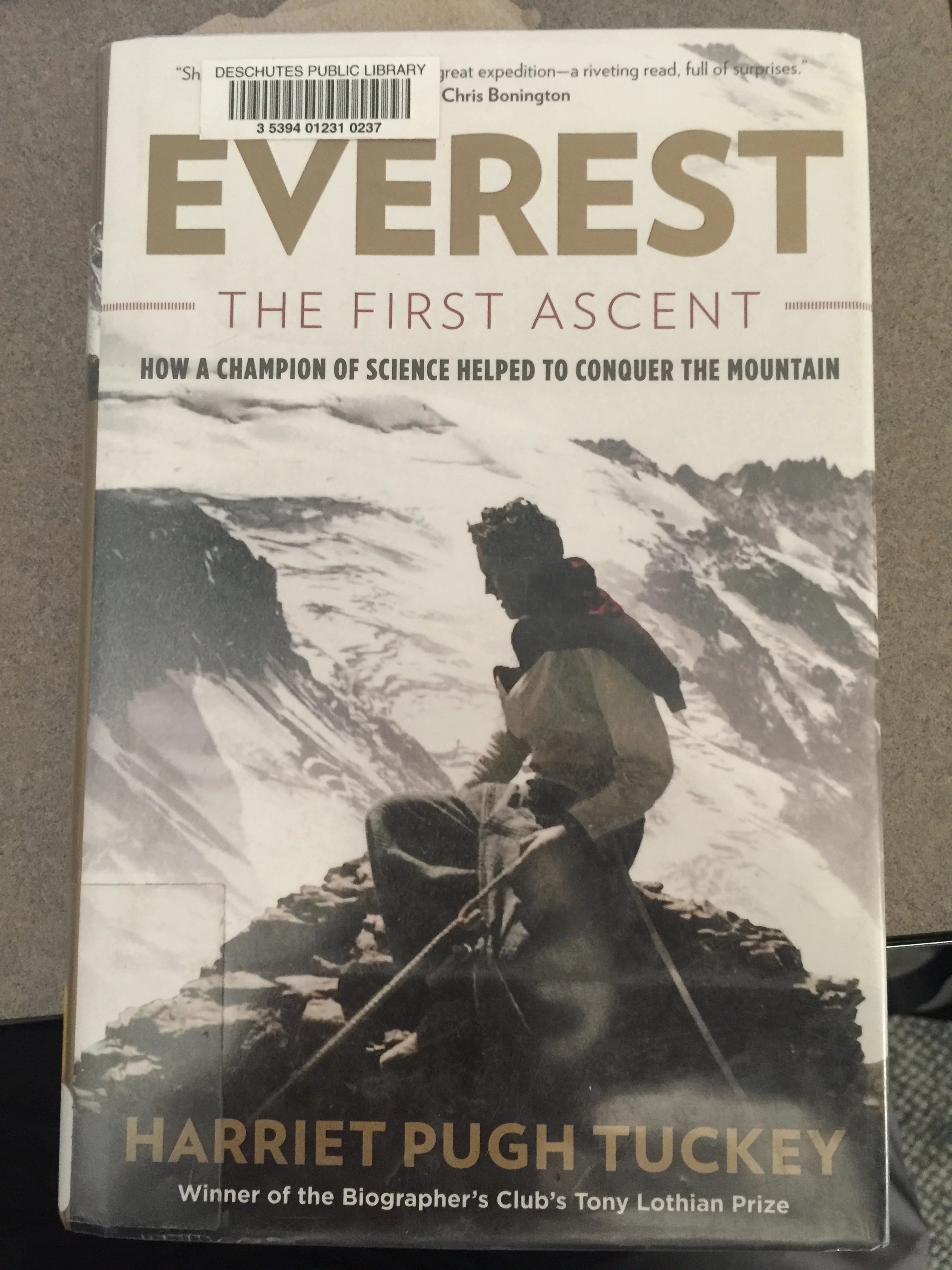
Today’s post is about risk.  I’ve been reading a really good book at about the first successful attempt at climbing Everest - “Everest: The First Ascent: How A Champion of Science Helped to Conquer the Mountain.”  There are many books about that first climb, but this one takes a different tack which I find interesting; it’s written by the daughter of the team’s chief scientist - a physiologist named Griffith Pugh.  As would befit a book from this perspective, a lot of the book covers the attitudes of the climbers towards science, and towards having a scientist with them.  Everest had been attempted many times previous to this climb, and they had all failed - of course - and failed in largely the same way; suffering from dehydration and altitude sickness, the climbers would retreat at or around 27,000 feet.  All of these climbs - the British ones at least - were arranged by the Alpine Club, which was an amateur climbing and mountaineering organization.  That group had the attitude we often find among amateurs: do your best, give it your all, and whatever happens, happens.  But for the climb in 1953, the prevailing political winds had pushed against this attitude.  It was commonly felt that the other nations, such as Italy at Switzerland, which had been getting more and more interested in the climb, would succeed in ’54 or ’55.  They had no compunctions against using modern equipment and science, and so the British were pressured into accepting things such as the use of oxygen, and special climbing tents and equipment.  And Griffith found himself right in the middle of this.  One page of the book in particular captured this situation well, and I’ll just quote it largely verbatim:


“The Alpine Club, with its amateur sporting ideals, was less well disposed toward science.  As…onetime club president Leslie Stephen told members in 1924: ‘True alpine travelers loved the mountains for their own sake and considered scientific intruders…to be a simple nuisance’.  By the 1930s an influential contingent had become convinced that the huge size and mixed objectives [mountaineering and science] of the early Everest expeditions, with all the scientists and their equipment, were largely to blame for the repeated failures…In the mid 1930s [this] Alpine Club view gained the ascendancy, fiercely advocated by iconic Everest veterans…The Royal Geographic Society’s scientific aspirations were set aside; the juggernaut missions of the past were supplanted by small, flexible expeditions far more enjoyable for the climbers and more consistent with their sporting principles.  After World War II, the ideas…that only climbers could understand the needs of other climbers, and that small casual expeditions were the only type worth going on - remained articles of faith…in perfect harmony with the public-school sporting ethos of ‘untutored brilliance’, the so-called ‘Corinthian Spirit’ by which gentlemen sportsmen achieved effortless success without really trying.  Only the mundane professional - an altogether lower order of person - would stoop to engage in elaborate preparations and heavy training, or feel the need for scientific advice.” (emphasis added)


I have always been a sportsman and a competitor, a sort of “weekend warrior”.  I enjoy competition and sports; I played a lot of sports when I was a kid, and as an adult, I’ve been a marathoner, a climber, a soccer player, and a distance cyclist.  There’s lots of reasons that I do these things, some of which have nothing to do with sports per se; the feeling of motion, being in better shape, meeting new people, visiting new places.  Putting all of those things aside for the moment, though, I find myself really interested in the competition side of it.  By which I mean not necessarily competition against others, but rather competition against oneself, or against nature.  In one of my Outdoor Leadership classes, we’ve talked about “risk equilibrium”.  This is the notion, among sports psychologists, that we as humans seek to maintain a specific level of risk.  If we encounter too much risk, we pull back.  Intriguingly, though, if we encounter too *little* risk, we search for ways to add in more.  For example, studies that attempt to isolate the effect of safety equipment often have the problem that people who wear safety gear - because they feel safe - do more dangerous things.  I find this idea of “Corinthian Spirit”, and the idea of “risk equilibrium”, very interesting in more personal life and my approach to sport.  

As with many human endeavors, sport and risk are things that happen on a continuum, and sometimes where we put ourselves on that continuum doesn’t make any sense.  For example, on the one hand, we could have people try to climb mountains with nothing but their bare feet and a few scraps of clothing.  That would be pretty ridiculous.  We could also just helicopter people up to the top and drop them off there.  Equally silly.  Somewhere in between, we accept a certain amount of equipment and help as “acceptable”.  We allow people to use canisters of oxygen, at least above a certain elevation.  We use camp stoves to heat ice and make water.  But we don’t use that same propane to power an engine to power us up to the top.  We allow poles made of carbon fiber and jackets made out of complex synthetics, but we don’t allow someone to be carried up the mountain.  I recently watched a video about a man with cerebral palsy who climbed Mt. Kilimajaro and they made a big deal out of the fact that one of his sherpas had to assist him up a couple of the more technical sections of one of the shear rock faces.  It’s not even clear - even to mountaineers themselves - what exactly the “rules” are.  It seems that it has something to do with lifting and moving yourself using only your own power - but clearly some assistive devices are allowed, such as really good shoes.  Clearly we have an advantage over climbers from the 1950s - who themselves had an advantage over climbers of the 1920s.  But, somehow, there is a human need to carefully avoid having an *unsporting* advantage.

And we still do this today - the rules about doping or drafting in cycling, for example.  The best example may be golf, which has elaborate books full of detailed rules about the specific kinds of balls and clubs that are allowed.  Golfers, for example, are not allowed to use GPS devices to tell how far they are from the pin - but they are allowed to employ caddies who walk the courses and memorize - yes, memorize - how far it is (using a GPS as their guide of course) from each major spot in every hole back to the flag.  

One of the things that always amuses me about sport is the idea of trying to explain the internal logic of these rules to an alien.  Imagine trying to explain to someone with no knowledge of human physiology or psychology why we’re allowed to ask a caddie how far it is to a pin but not a GPS.  Or why you can have someone follow you on a motorcycle and hand you water in the Tour de France but you can’t ride too close to another cyclist.

Comment

Comment

Day 249 - Bend, OR

People tell me that one of the things they like about my blog is that I am willing to be vulnerable; I don’t shy away from delicate topics.  I appreciate that, because obviously it’s hard to be open in such a public forum.  I’ve gotten some blowback in my personal life about some of the things I’ve posted, but I really try hard to “keep it real”, because otherwise what the heck is the point?

Along those lines, I want to talk about a personal issue that I have a feeling is shared by others.  I am afraid of people.  Not necessarily those I know well - although sometimes that too - and not strangers, per se, or large groups of people.  My fear is those people that I have some kind of interaction with but no basis for a trust relationship.  Service providers, coworkers sometimes, classmates, anyone I come in contact with on some sort of regular-but-not-too-regular basis.  Some would call this “social anxiety”, and I think that’s as good a word as any, although I’m not a psychiatrist so don’t hold me to it.

Some examples: about a week ago I made the decision that I would move out of my current living arrangement and head back to San Francisco.  I don’t have the best relationship with my roommates; its not a bad relationship, but it’s an awkward one.  They wanted me to be good friends with them but we’re more just housemates.  Anyway, I was really nervous about telling them I was moving out.  I have every legal, ethical and moral right to move out.  There’s really no reasonable reason for me to be actually apprehensive about telling them.  But I was.  Quite apprehensive.  It’s tempting to use a word other than “fear”, because that seems kind of dramatic - but it really is a fear response.  I can feel myself sweating just thinking about it.  And, in the end, they were minorly put out by it, a bit irritated when I did finally tell them.  But it will probably be OK, they’ll get over it.

Now, this may seem minor.  But it’s recently come to my attention just how much time and energy I waste on this issue.  Some people don’t have social anxiety.  Some, have social anxiety bad enough that they just avoid doing things.  They don’t move, they don’t change jobs, they keep life on an even keel.  Then there are people in the middle, who definitely find things like this nerve-wracking, but insist on doing them anyway.  And I am like a pathological edge case for this scenario; I crave new things, and I hardly ever let me social anxiety get in the way of my finding new things - but I have fairly bad social anxiety.  This is not a winning combination because it means that my life has the hallmarks of an extroverts’: lots of change, lots of new and sometimes amorphous relationships, plenty of acquaintances, an ever-shifting support structure.  But that doesn’t really suit my psyche.  It makes me nervous.  So, I spend a lot of time, well, nervous.  

I’m not sure what the answer to this conundrum is, if there even is one.  Obviously one answer is that I could settle down; stop moving, stop changing.  Someday, I suspect I *will* do this.  But that time has not yet come.  Another tempting platitude is to “just chill out”.  But I don’t think that works.  I can no more control my anxiety response to unusual or unfamiliar social situations than a person who has asthma can control their asphyxiation response.  Meditation and yoga and such help, which is why I do them.  But at the end of the day, I spend a lot of my time worrying about things.  One thing I can do - and do - is to increasingly try to find rhythm and routine even in non-routine circumstances.  Tiny habits that I can “take with me” and provide consistency.  Sometimes it’s as simple as keeping the same small list of possessions with me; the same phone, the same wallet and keys.  Sometimes that means eating at the same restaurants; I’ve filled out 2 different “frequent diner” cards for the same small taco stand here in Bend.  Sometimes it’s an exercise routine.

I love the new.  But, yeah, it stresses me out!

Comment

Comment

Day 246 - Bend, OR

image.jpg

I'm writing this blog post from inside the ACSM Northwest chapter annual conference.  That's the American College of Sports Medicine, for those keeping score at home.  We just heard a keynote by a famous researcher and scientist, Dr. Steven Blair google him).  The crux of his talk - and I'm drastically oversimplifying of course - was that we've spent so much time and energy on diet in this country as the way to prevent obesity, when in fact the science shows that exercise is much more effective.  Now, I can't honestly claim that I know enough to know whether what he's saying is true.  He's got a lot of science to back up his claims, that's for sure - and a sterling reputation.  All I can really add to the discussion is my own personal experience, which is this: I have, in my life, had periods where I cared very much about my nutrition.  I have denied myself food, denied myself processed foods.  I've also had times when I just let myself go. And the same is true for exercise: at times in my life, I've been an exercise fiend, and at other times, I've been a slob.  And for me, personally, the answer is startlingly clear: my body doesn't care what I eat.  It responds almost exclusively to two things: my exercise level, and my stress level.  When I am stressed and sedentary, I feel lousy.  When I work out and chill out, I get fit.  End of story.

When I focus on diet, it feels so negative.  It's all about what I can't do, and what I'm denying myself. I've tried all kinds of different diets, many of which were specifically designed to keep me from feeling like I'm denying myself anything, and none of them work.  They all feel like a prison.  Conversely, exercise makes me feel amazing - capable, full of motion and energy and possibilities.  It's all about what I can do, and what I can accomplish.  Diets stress me out.  Exercise calms me down.

And yet - as Dr. Blair showed - we spend so much more time in this country on diet than we do on exercise.  He did a simple search of fitness and obesity on the web and found about a million hits.  Diet and obesity?  70 million hits.  Similarly, he searched PubMed for scholarly articles.  Fitness and obesity was about 2500 articles, while diet and obesity was over 45,000.

The plain and simple fact is that the most healthy I have ever felt was on my bike trip last summer, when I rode my bike an average of 55-60 miles a day and regularly ate whatever the hell I felt like: McDonalds, candy bars, and yes, fruits and veggies as well.

Am I suggesting that a diet of McDs and candy is a good way to live life?  No, absolutely not.  There's a baseline of nutritional awareness that you must have.  But when it comes to feeling alive, capable and full of energy, that has so much more to do with how I choose to spend my time than what I put in my mouth.


Comment

Comment

Day 238 - Umpqua National Park, OR

image.jpg


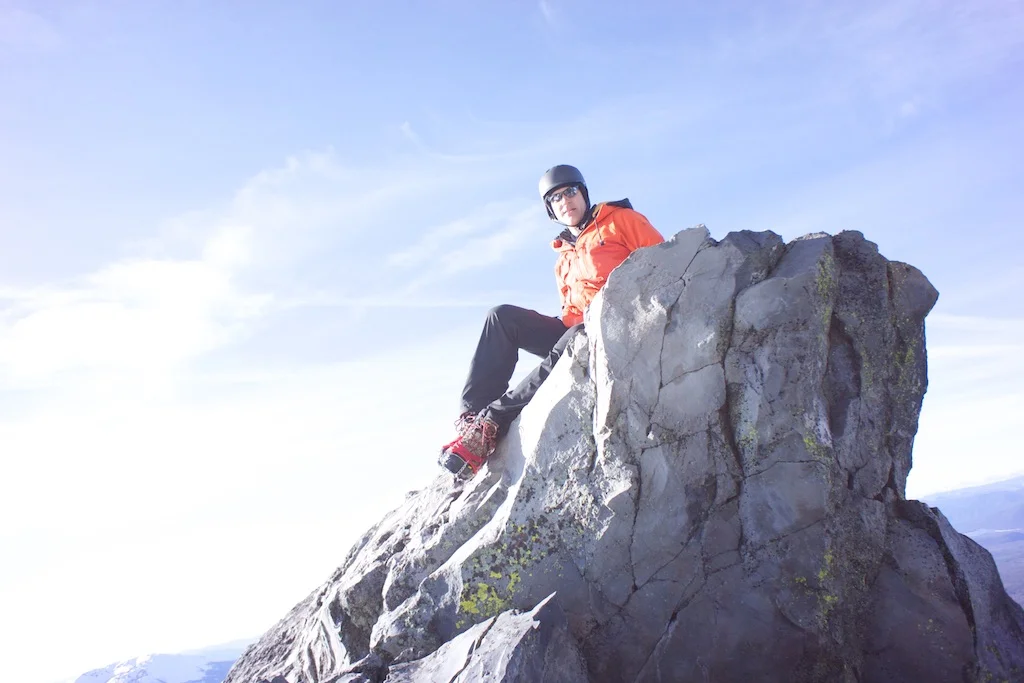
Today’s post is ostensibly about climbing a mountain.  But really, it’s about death.  And not a metaphorical mountain, but an actual mountain.  Specifically, Mt. Thielsen, about 9200’.  And not metaphorical death - the actual no-longer-alive kind.  The interesting thing about this particular mountain is that today, I climbed it.  All the way to the top.  Well, OK, not quite - I stopped about 20 feet from the top on “Chicken Ridge”, so named because you literally must value your life about as much as a chicken to try the last part without ropes and pitons, which I did not have.  Actually, scratch that: chickens are pretty smart.  They wouldn’t do it either.

I did 3 smart things climbing this mountain:

1) I let somebody (my parents) know where I was going and to get help if I didn’t call.

2) I carried several redundant GPS systems and a fully charged phone

3) I did not climb past “Chicken Ridge”.

Then, I did 3 stupid things:

1) I didn’t carry enough water.

2) I went by myself.

3) I overestimated my own abilities.

One of these 3 things almost got me killed.  Want to guess which one?  If you guessed #3 - you’re a winner!  So, it turns out that there are two important things about climbing: one, when people who know what they’re doing tell you do something, you should do it, and two, climbing up is actually way easier (on a technical level) than going back down.  So, when they said “you should carry an ice axe”, I thought to myself “it’s unseasonably warm and not that icy; surely i won’t need it to climb”.  Well, duh - you need the ice axe to *get back down*.

As I plummeted down the side of Mt. Thielsen, uncontrollably cascading towards a pile of jagged rocks, these two facts became manifestly obvious.

Fortunately, I had listened just enough to just smart enough people, and I did have a set of what are called “microspikes” on my shoes (think golf cleats, but a bit more so).  With the frantic power that only people who realize they are in grave danger possess, I dug those sons of bitches into the snowpack as hard as I could and clutched at rocks as they flew by.  And slowly, surely, I stopped.  I had slid about 100 feet.  As I lay there, panting, I realized something: this isn’t over.  This is going to happen again.  And, sure enough, it almost immediately did.  This time, I stopped it faster - maybe 30 feet down.  But I realized something: I am screwed.  I don’t know what I’m doing, and it’s about 800 or 900 feet down to the place where the snow started to level out.  The snow is at about a 50 or 55 degree angle and every time I try to stand up, I just start sliding.  So, after quickly going through all 5 stages of acceptance, I realized the obvious: I’m going to have to slide.  And I did.  And it was terrifying.  I figured out how to do a barely controlled slide for about 5 to 10 feet at a time.  I was lucky: the snow was soft, and when it started to pile up under my butt, it would stop me.  I was doubly lucky: this could have been avalanche conditions, and here I am dislodging big chunks of snow.  I could watch bits about as big as my fist cascade down the hill in front of me, all the way to the bottom.  It took me about an hour - maybe more - to get down that 800 feet.

Was I ever in danger of actually dying?  No, probably not - at least not at first.  Fortunately Mt. Thielsen doesn’t have any big cliffs to go over.  But I easily could have hit a rock and ended up with a broken leg, alone, at 8700 feet above sea level (with no water).  I had visions of myself, broken fibula or wrist, trying to use my cell to call for help (fortunately, it was charged, and actually, you get service, because it’s so clear that radio signals travel).  

So, yes - I am officially an idiot.

It’s a funny thing about life.  I value mine quite highly, and yet, to be honest, some part of me knew that what I was doing today was a bit stupid.  Mind you, I didn’t know how stupid it really was, but the point is, I *knew* it was safer to just sit on my couch and watch documentaries about people climbing mountains.  But I didn’t do that.  Why?  I believe we’re the only species that intentionally puts ourselves in harms way for anything other than food or procreation.  That’s probably not 100% true actually, but still: you don’t see bears climbing mountains just because they’re tired of, you know, eating fish and having bear sex.  I think there’s something about us, as humans, that recognizes that if you have no chance of death, then really, you don’t value life the same way.

But next time, I’m bringing an ice axe and a friend.  

image.jpg

Comment

Comment

Day 237 - Bend, OR

painting.jpg

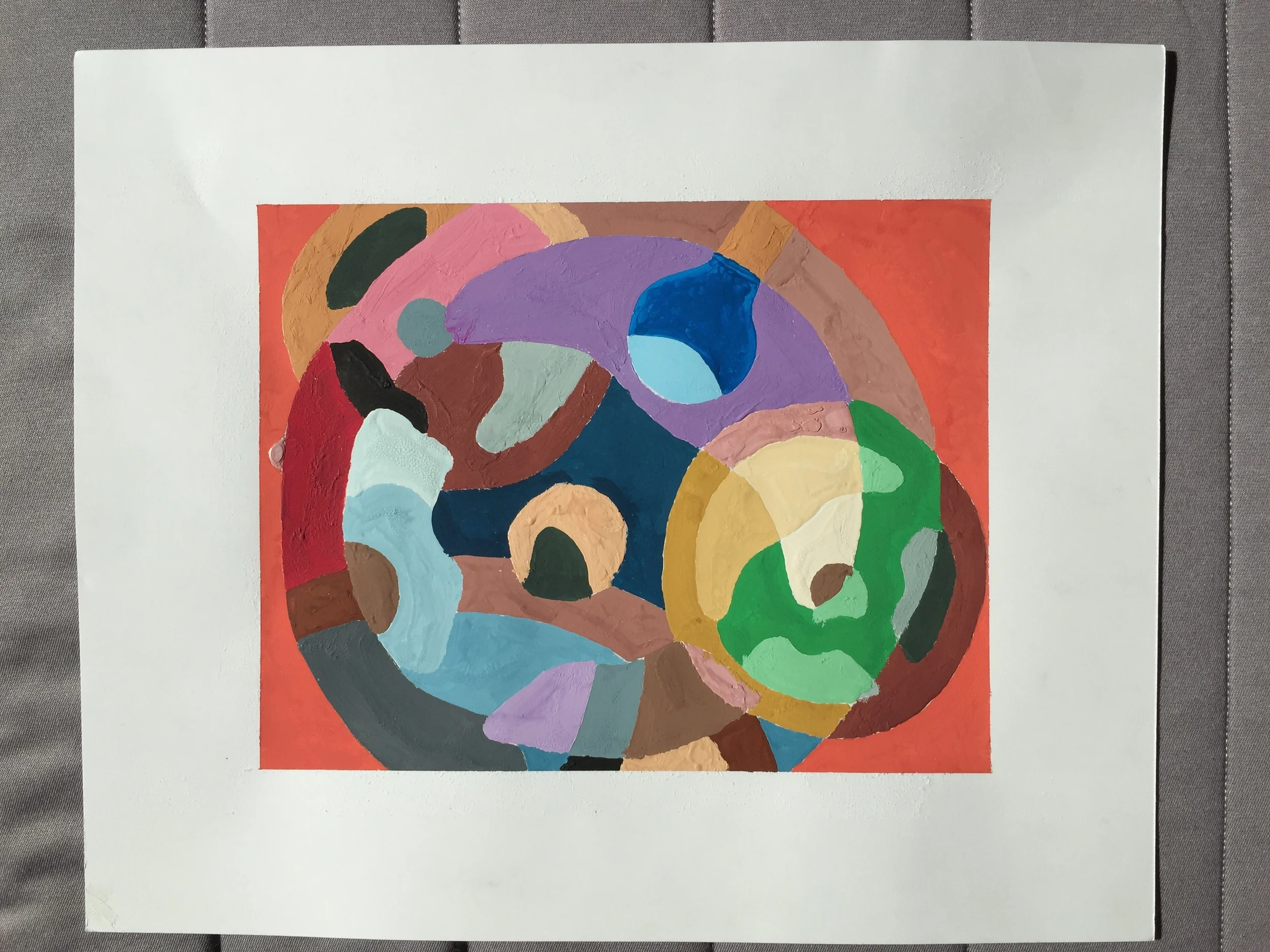
Today’s blog post is ostensibly about painting.  But really, it’s about positivity.

This semester, at COCC, I decided to take a couple of art classes.  One of those classes sounded really interesting; it was about color, and the use of color in design.  I, of course, was thinking about color theory as it applied to things like apps, games, maybe even movies - digital art.  But what the class actually turned out to be was a basic education in traditional color for painting.  So, we paint.  I’ve never painted, at least not since I was 8 years old.  So for me, it’s been about 10% color theory, and about 90% learning to paint.  And it’s a very humbling experience.  A lot of things I thought I knew cold have been really opened up to me.  For example, it’s been just a fact for most of my life that the three primary colors are Red, Green and Blue.  But not in the world of painting; it’s Red, Blue and Yellow.  And, it turns out, there are some really good reasons for this, which I won’t get into here.

Anyway, it’s been a really interesting learning experience, but also very humbling - which is where we get to the real point of the post.  Over the years, I’ve done some teaching and tutoring in math, and one of the things you hear over and over again is that people are scared of math, or feel like they can never succeed at math.  And often, what I’ve heard and read is that this can be because of negative messages from people around them.  This is something I understood, intellectually, but I never really related to on an emotional level.  Now, I do.

I am not very good at painting.  That’s OK; can’t be good at everything.  But my art instructor, Mrs. Platt, takes great pains to point this out.  Now, I don’t think she’s a bad person.  I don’t think she’s doing this on purpose.  If I did, I would have dropped the class.  I think that’s just how she relates to people.  When I bring up my work to show it to her, the first thing out of her mouth - every time - is something critical or negative.  I think she realizes this, because outside of class i’ve gotten a few emails from her that are really positive, as if she’s trying to compensate.  She even sort of half-apologized for it once during class.  She’s not negative to everybody; some of the students are quite good at painting.  But she’s very forthright and honest - and honestly, I’m not good.

And it is profoundly disheartening.

Now, I fight through it, because I’m 37 and not 17.  But replace painting with math, and replace me with one of my former tutees or students, and I can really see how having somebody just be honest - not mean, but honest - can be really demotivating.  You feel like you’ll always suck, like it’s just not worth trying.

In my life, I have not been a very positive person.  To put it lightly.  When I was younger, my attitude towards this was “suck it”.  This is who I am - I would say, or think - and if you don’t like it, tough.  Can’t take the heat, get out of the kitchen.  That sort of thing.  As I got older, I realized that approach was hurtful, but I still never really figured out how to deal with my own feelings in a way that felt genuine.  So my approach as an adult has been to hide.  In situations where I feel negative, I try to clam up, or walk away, or say something noncommittal.  And I do think this is better than just blurting out whatever’s on my mind.  But it’s only a half step.  I realize that one of the great challenges of the back half-to-two-thirds of my life is going to be finding a way to be genuinely positive about other people and their talents and abilities.  Genuinely positive.  Not fake, but really capable of seeing the potential in other people.  That’s a challenge for me; it isn’t really how I was raised or taught.  But it’s the way I want to be, because I want to encourage others.  Or at least avoid discouraging them!

Comment

Comment

Day 235 - Bend, OR

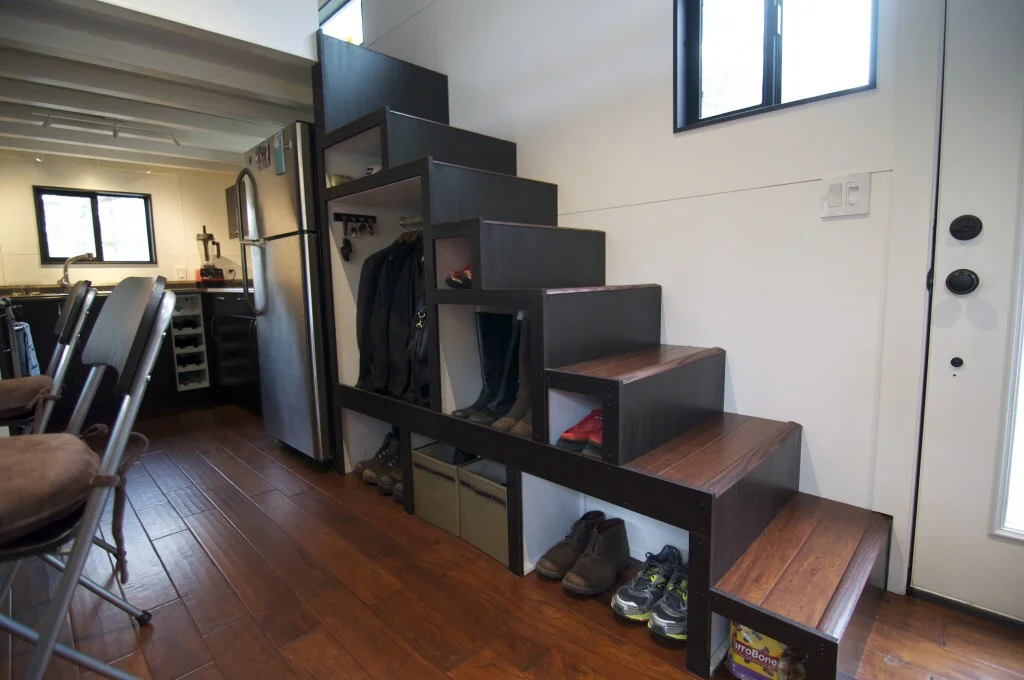
Tiny house! 

As if I needed another hobby - I'm about to pick up a big one!  In about a month, I'm off to Austin to attend a workshop by the Tumbleweed homes company on how to build your own tiny house.  

For those who don't know, the tiny house movement is a new-but-not-so-new movement that's gaining steam both in the U.S. and across the world.  Of course, people have been building small houses for a long time - mostly out of neccessity - but this is a coordinated movement of folks interested in building an industry out of the idea. 

What is a tiny house?  Well, there's no agreement about that of course, but in general, a tiny house is about 200 square feet or less.  Most of them are intended for at most 2 people, although there are people who raise families in them.  They come in one of two main types: mobile or stationary.  I'm going to build a mobile one, I think.  They cost around $30k if you build one yourself, or more if you buy it premade (and, yes, you can buy them premade).  They are variously classified as trailers or permanent homes depending on where you live.  Tumbleweed, the company, has a rustic Colorado-esque design aesthetic, but I prefer a more modern look, so I'm looking at the hOMe (yes, cheesy name) at www.tinyhousebuild.com.   

Why a tiny house?  Well, there's a few reasons: 

1) First and foremost, it's about downsizing my life.  The same way meditation and yoga have showed me how to clean out my brain, I think - as do many others - that living more simply will help me organize my life. 

2) Financial.  I've both owned and rented in my life, and they're both a pain in the butt.  Imagine owning your own home, having no debt, and paying almost no taxes. 

3) Mobility.  A movable house makes it a lot easier to, well, move. 

4) Self-determination.  Learning how to build my own house, and doing it with my own two hands, sounds like an amazing learning experience and a great confidence builder. 

I'm not on a fast timeline for this particular project; I'm thinking 4-5 years for the final product, with the actual construction taking about a year.  

image.jpg

Comment

Comment

Day 233 - Mt. Hood, OR

image.jpg


Snowboarding

For years now, I've been wanting to try out snowboarding.  I've been an avid skiier for years, and I've just never wanted to ruin a good day of skiing with learning to board.  But with the snow conditions being so miserable this season, I finally had my opportunity; I didn't feel like I was missing anything.  So, yesterday was the day!

Adam's Summary of Snowboarding For People Who Usually Ski:

Not as hard as people make it out to be: +50 points

You don't feel like as much of a dork wearing a helmet (which you probably should anyway: +20 points

You still feel like a little bit of a teenage douche, even though you're really not: -30 points

It's really easy to turn: +25 points

It's incredibly hard to stop: -100 points

You really do fall a lot: -50 points

When you fall it's pretty harmless and relatively easy to get back up: +40 points

You have to put the damn thing on every time you get off a lift: -75 points

When you get off to go get lunch, you're not wearing bizarrely shaped concrete death boots: +60 points

The board is way easier to carry, and you don't need poles: +40 points

Skiing is just totally awesome and makes you feel like some kind of invincible olympic athlete who sips cognac and reads The Times: -100 points

Final score: -120 points.

All kidding aside, I think I'm a skiier for life, but it is fun to try new things, and I'm looking forward to my second lesson.  I can see the appeal, for sure.

Comment

Comment

Day 232 - Government Camp, OR

image.jpg

Hostels.  There are many topics I was planning on writing about today, but hostels just jumped and bit my brain right on the ear.  Wait, that sentence made no sense.  Anyway.  You get the idea.


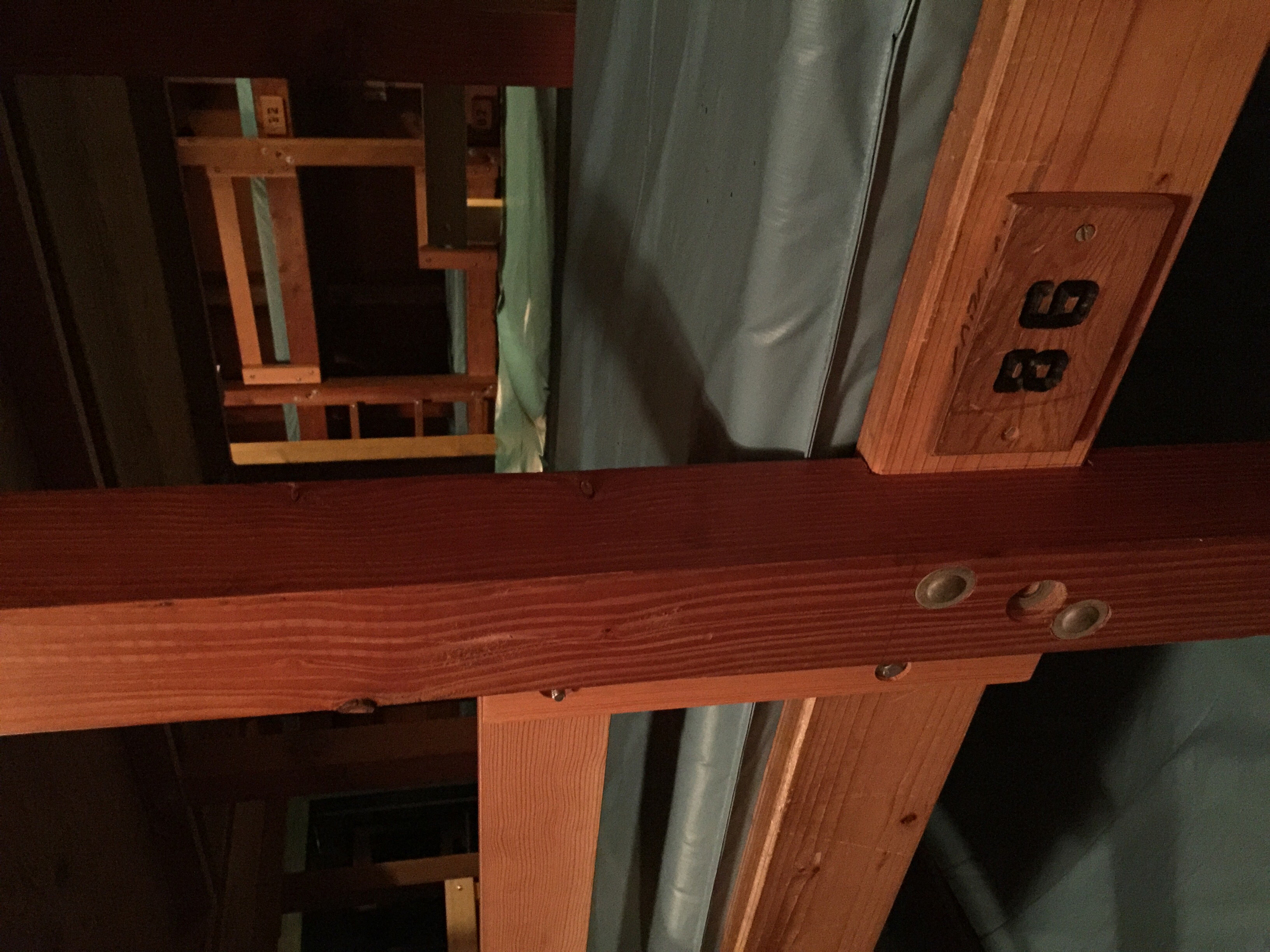
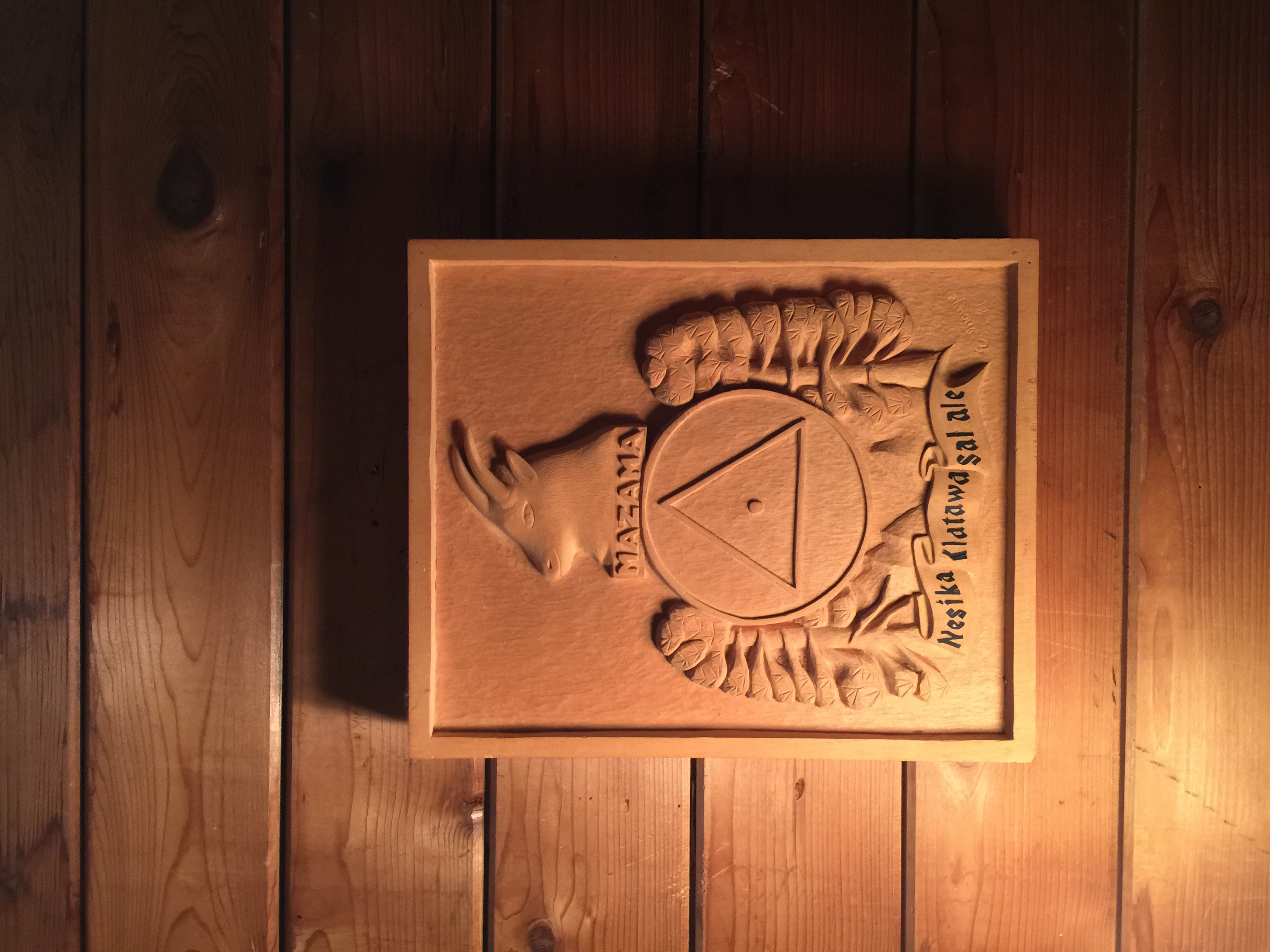
In my travels around this globe, I have stayed in quite a number of hostels.  Some were really nice, even swank.  Some were - charitably - a dump.  Each of them has been remarkably different.  All have a story.  Hostels remind me of what I like about SF - everyone you meet has something interesting to say.  There’s the cute hostel in the palm trees in Volcano, HI.  There’s the revitalized hostel in the theater district in downtown Buffalo, NY.  A St. Christopher’s Inn in London.  Or the hostel I’m in right now, the Mazama Lodge in Government Camp, OR.  Nestled up in the woods, along a dirt road that I couldn’t find in the dark, Mazama is the best of what hostels represent.  It’s not really honestly a hostel at all, more of an ex-ski lodge, turned hostel.  Fire roaring, breakfast in the morning.  I’m in the library, where there’s a book about “The Vikings of Today”, a book about Sasquatch, somebody’s old iPod, a really ancient copy of Trivial Pursuit, and for some reason a classic 1950s era stand microphone.  What I’m trying to say is, there’s a story here.  I may never know the details, but I can wrap that story around me like a warm cloak.

I always sleep well in hostels.

image.jpg

Comment

Comment

Day 230 - Bend, OR

Sleep.  Ah, delicious sleep.  Today I want to talk about the miracle drug.  There isn't a lot I can say about sleep that you probably don't already know.  It protects us from heart disease, diabetes, and even cancer.  It keeps us from overeating.  It keeps us from making dumb decisions.  It helps us drive.  It improves our mood.  It's like an aphrodisiac, anti-depressant and a career change all wrapped in one.  There's isn't much it can't do.  And yet, none of us gets enough.  When was the last time you got a solid eight hours?  And if it's been awhile, what's stopping you?  Is what you were doing really more important than getting a good night's rest?  As I get older, I find that I'm more sensitive to a lack of sleep - but I'm not sure if that's biological or rather that I'm just becoming more in tune with my body.  I can say this: the problems of being tired are bad enough, but it's really the secondary items that hurt the most, my "fatigue compensation strategies", like food, caffeine, YouTube, etc.  and it's a vicious cycle sometimes: when I don't sleep, I tend to indulge in things like late-night YouTube marathons, which makes the problem worse.  

When I studied Early Childhood Education, I learned that little kids are very bad at knowing what they need.  That is, often a toddler will tell you that they are hungry or thirsty when really they're tired, or vice versa.  And I think that even as adults, we'd like to thing we're good at that, but we're not.  I often find myself mindlessly eating when what I really need is a nap.  So, who wants to take a nap?

image.jpg

Comment

Comment

Day 228 - San Francisco, CA

image.jpg


San Francisco, let's chat.  All my San Franciscophiles out there, let's put our heads together.  Something is happening to our fair city.  It's not a surprise nor is it a new thing.  It's been happening for years.  The exact nature of it is hard to define but the broad outlines are clear: San Francisco is losing its edge.  Whether it be Borderlands closing this week, the end of the Anon Salon house, the loss of the Yoga Punx house, or maybe passing a law prohibiting certain kinds of public nudity; whatever your personal "bright line", we can all agree that something is happening.  Of course, some people think it's a good thing, and I'm not here to argue with them.  But for those of us who don't think so, the question is: what to do about it?  Can anything be done?  *Should* anything be done?  Is Borderlands an artifact of an old and outdated San Francisco, or something worth saving?

I like to tell the story about how years ago, I found myself needing to get from one party to another across town.  I wanted to walk, which was totally reasonable.  Less reasonable was that I was dressed head to toe as the Tick; a giant blue costume with antennae.  And it was decidedly not Halloween.  In other cities, that might be odd.  In SF, I never even thought about it.  Nor did anyone else; nobody commented on the six foot tall blue guy with antennae.

SF, in the old days - long before I got here - was the home of the Barbary Coast.  It was the place where the term "shanghai" was invented - the name for soldiers who were drugged in bars and hustled on to ships bound for China, where they would wake to 6 months of imprisonment.  It was, in a word, not a very nice place.  Modern SF is continuously undergoing a process of sanitization.  It's not that it's a bad place to live, per se - it's more that it's becoming just like everywhere else.

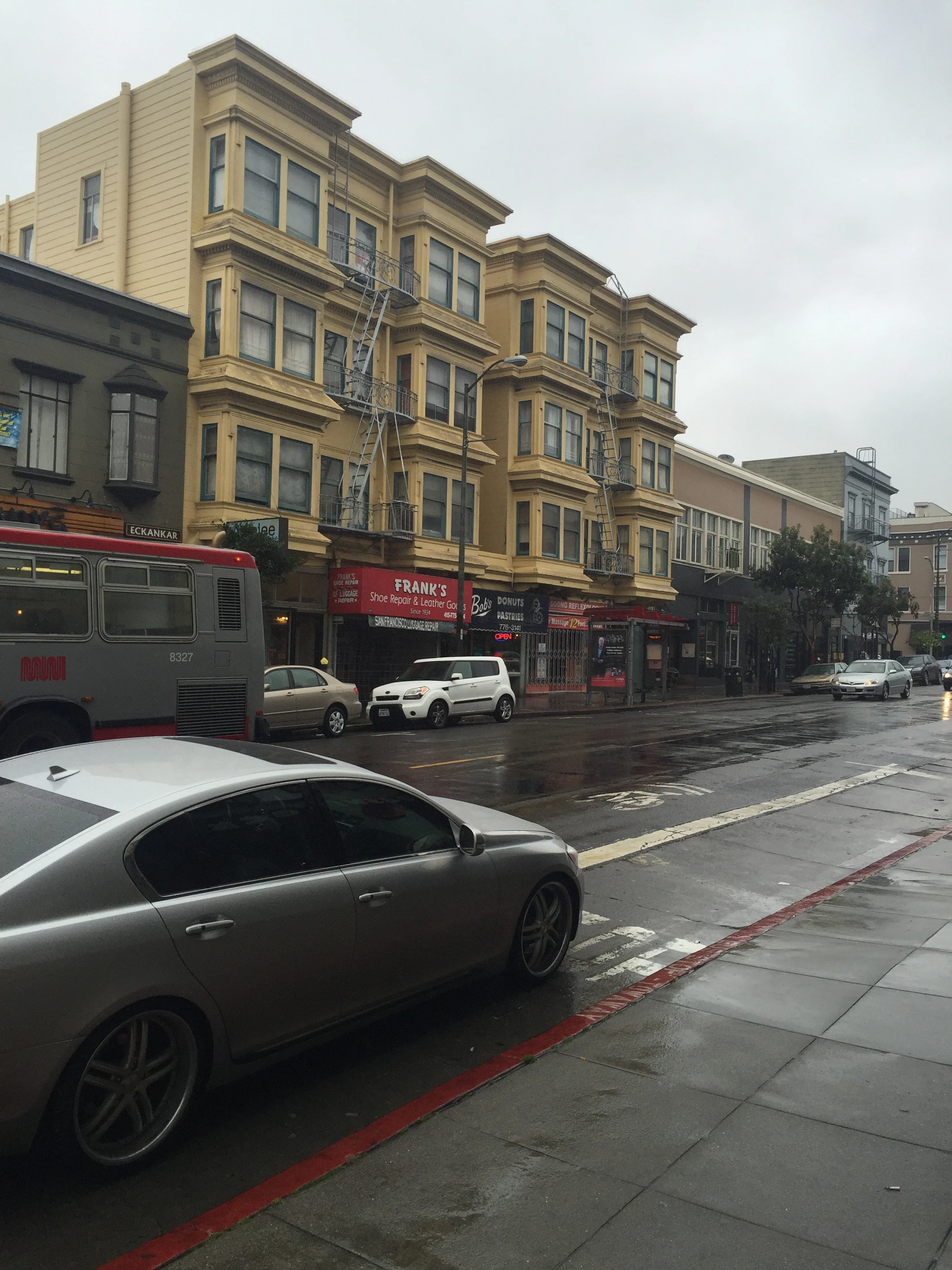
Another great example: Bob's Donuts.  Bob's is over on Polk street, and if you've never been you should go.  For one thing, they make the best donuts I've ever had, and that's reason enough.  But in addition to that, Bob's represents something: one of the last stomping grounds for the old San Francisco.  I remember going in there years ago and listenning to a conversation between a hooker and her John.  He had decided he wasn't really out for sex after all and just wanted to take her out for a donut and some coffee.  So, there they were, in Bob's.  Try that at Flour & Co.  Nothing about Bob's is pretentious.  They were, until recently, cash only.   6 or 7 chairs are lined up along a table near the front.  A sign on the wall advertises the fastest recorded times for customers to eat their head-sized donut.  Often a Chinese man is seated at the front table reading a Chinese daily newspaper.  Bob's is home-away-from-home for the sort of person San Francisco used to be about.

My point here, though, is not simply to rehash all of this.  Nor is it to be excessively negative.  There are some advantages to increased standard of living.  There is a danger in romanticizing the old days.  Nobody wants to get shanghaied.  However, the irony is that, during this process, one of the main draws to San Francisco is being destroyed by the very people it attracts.  I am often amused to watch apps, like Sosh, scrape the city for "fun things to do".  Techies - especially hip, urban, young ones - *want* to do something a little bit exciting and different.  But they've priced out the very people who make those exciting things happen; the artists, the hippies, the lunatic fringe.

We all know what's happening - the rise in cost of living, especially rent, driving out those who can afford to sit around and think about the absurdity that is life, especially modern life.  The question is: what can we do about it?  Would creating affordable housing options bring back the art?  Can technology help?  Should we all move to Oakland?  Austin?  Memphis?  Is this just a natural evolutionary process?

I don't have the answers - but I think the question is worth asking.

Comment

Comment

Day 226 - Bend, OR

image.jpg


Today, Radio Shack filed for Chapter 11 bankruptcy.  Let me explain why I care about that.

Part of it is unquestionably nostalgia.  When I was - let's see, about 16 - my mom said that I needed to start applying to scholarship programs for college.  I must have written about 100 essays on all kinds of crazy topics, like agriculture or beekeeping.  But one of the essays I was actually kind of interested in writing was about electronics.  It went to a little organization called the Tandy scholarship - and I won.  I received $1000 for college, which was awesome.  But even better - although I didn't realize it at the time - it came with a job offer: come work for Radio Shack in the summers.  As it happened, my parents also wanted me to have a summer job.  So, the summer between junior and senior years of high school, I found myself driving to a Radio Shack owned by a guy named Chuck in a strip mall in Jacksonville.

Now, Chuck was just a really stand-up guy.  He was the sort of dude that rolled his dress shirts up to the bicep.  He shot straight with everybody - customers and staff.  And he really liked me.  Maybe he liked me because I liked electronics.  Maybe it's because I was a good, quiet employee.  I did the things his other employees wouldn't do, like stock shelves.  You see, Radio Shack was mostly commission in those days (maybe it still is, I don't know).  All the other people working there just wanted to sell big screen TVs and computers.  I remember one guy I worked with, an Italian guy in probably his late 30s, who was one of the best salesmen I'd ever met.  He chain smoked, and he would stand outside on the sidewalk holding the door open, cigarette in one hand.  If anybody got near the store, he'd throw the cigarette on the ground, hold the door open for them, say "How's it going, boss?", and follow them into the store.  From that point on he would never let you go.  The guy was good.  I watched him sell refrigerators to Eskimos, if you get my drift.  And I didn't care about any of that.  I was there just to make my parents happy.  The money was a nice perk.

I learned a lot from working in that store: how to be nice to your coworkers, how to dress nice every day, the value of a dollar.  But the most important lesson I learned was this: you can build stuff, and even more importantly, you can take it apart.  I remember that, once a year during the summer, Chuck would have what he called a "tent sale".  You see, one of the great - and terrible - things about Radio Shack was that they would take anything back, anytime.  And people knew it.  We used to call it "Rental Shack".  One summer while I was there, at the beginning of the summer this construction crew came in.  They bought all kinds of stuff, including a bunch of expensive walkie talkies.  At the end of the summer, they came back in with them, all crusted with dirt, and said, with a straight face, that they didn't like them very much.  Chuck took 'em back.  Anyway, at the tent sale, we would sell all that stuff: the stuff so broken that Radio Shack headquarters didn't even want it.  Chuck's store was the district store (Chuck was the district manager in addition to the store manager), and he would collect all this stuff and put it out for pennies on the dollar.  Mostly it was there to attract people into the store.  When that sale happened, I would spend half that week's paycheck on stuff.  I remember I bought a whole stack of semi-functional electronic calculators one time.  One of them had a tiny solar panel, and I took it apart and wired up that solar panel to a meter to see how much electricity it put out (not much).  I don't know that I ever learned anything all that monumental.  All the real learning happened later, in college.  But what I learned was more important: that you could take things apart.  It was OK.

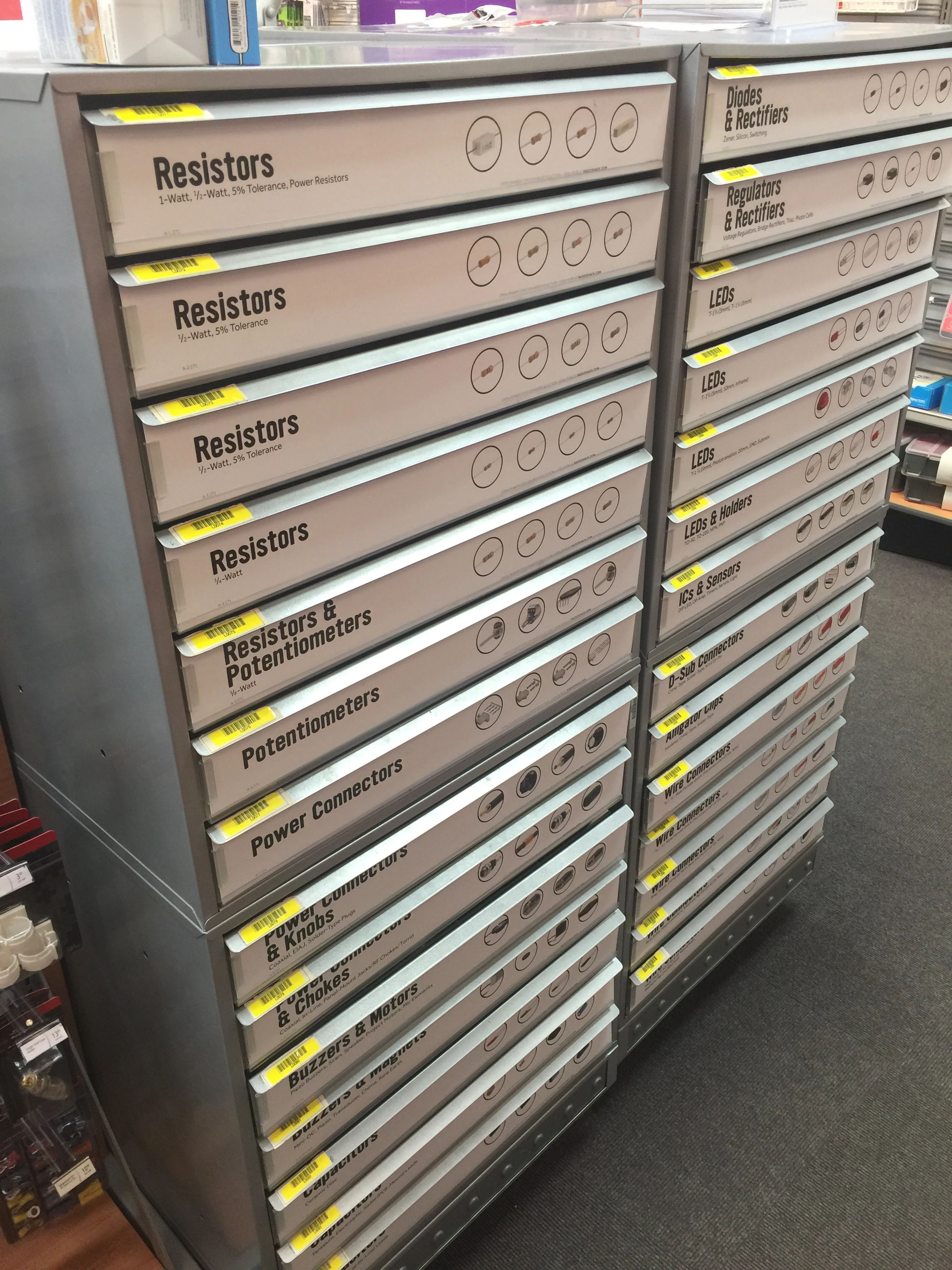
You see, that's what Radio Shack represents - or used to.  And it's still there, if you go look, behind all the cell phones and XBox controllers - the old Radio Shack.  Arduinos, weird batteries, multimeters, soldering irons - buried in the back.  Most of the time the people working there don't even know what they are.  But they are a link to something important and valuable, a time when it was explicitly American to build stuff, when knowing how to work a soldering iron was cool.  Now, I'm not saying that is gone.  Others have taken up the mantle to some extent: hacker collectives, the Maker movement.  But Radio Shack was unique: it was the only place that somebody in, say, Redmond, Oregon could go and buy a transistor, or a resistor.  And that's important.  It's all well and good to buy stuff from Amazon, that's cool.  But here's the thing: I never *explore* at Amazon.  I hardly ever go there to buy things I didn't already know I wanted or needed.  Radio Shack was, for a kid, like the public library - a place to go *learn what you didn't know you wanted to learn*.  

I'll miss Radio Shack.  And I wonder what Chuck is up to these days.

Comment

Comment

Day 225 - Bend, OR

image.jpg

The Internet.  The series of tubes.  I have a complex relationship with the Internet.  This isn't surprising; I have a complex relationship with almost everything.  (Except cheeseburgers.  Actually, scratch that; even cheeseburgers.)  A lot of people - both the technerati and your average folks - have ambivalent feelings about the Internet.  It's this amazing way to keep in touch with people, but it's also deeply distracting and can be a serious pain in the butt.  I have this really terrible cell phone service plan, a pre-paid plan from Verizon - by the way, don't ever buy the pre-paid plan from Verizon - and the data part of the plan got all screwed up a few days ago.  So I just sorta didn't fix it, just to see what would happen.  I'm on day 5 and so far the universe hasn't ended.  But it is really annoying.

A lot of things about the internet and my reaction to it confuse me, but one thing has become really really clear: crappy Internet service is deeply irritating.  I can't begin to describe how much stress I experience using a crappy internet connection.  The apartment I'm living in here in Bend, just because of the way it's physically set up and the service my roommates picked, is incredibly terrible.  It fades in and out, sometimes not working at all.  And I'm over it.  If I am going to use the Internet - I want it to be top notch.  It's like driving; I'd rather not drive at all, but if I'm going to, I do not want to wait in traffic.  I will structure my life willingly to avoid traffic if at all possible.  Add to that list lousy Internet.  I want fiber directly into my brain, or I'm just going to curl up with a DVD or a book. 

Of course it occurs to me that I used to use a 1200 baud modem to connect to BBSes.  Which is true.  But there's two things about that: one, it annoyed me even back then.  Two, I knew it was going to be slow and terrible, so I didn't use it for anything all that important.  Nobody used the internet to look up phone numbers and addresses, or how to get someplace, or apply for a job, or sign up for classes.  Now we do all those things - and, dammit, I want it to work.  Like, right now.  After all, phone books never had to load; you just opened them up and there you go.  And that kind of Internet exists; I've used a quality connection, for example at work, and I know what that feels like.  (Hint: really good).

So bring on that fiber, set up that 802.11n, let's do this thing.  Fatten up those tubes. 

Comment

Comment

Day 224 - Bend, OR

image.jpg

Introvert.  

Today I want to talk about that word.  I've been thinking a lot about introversion over the last couple months - maybe even the last few years.  I think it's an interesting concept that - like many simple concepts - has a kernel of truth to it, surrounded by some interesting half-truths and metaphors.

All my life, one of the interesting things - challenges, maybe - about my life is that I seem to float between worlds.  And that's no less true when it comes to the introverted/extroverted continuum.  The first time I took the Myers-Briggs test as an adult, the woman who administered it half-jokingly accused me of cheating.  I had come down right on the 50% line between introvert and extrovert - a result which, she said, was "highly unusual".  Certainly we see it that way in popular culture.  People are one or the other - introverts who bury their heads in the sand, or extroverts who can't seem to ever be quiet.  But my reality has always felt a lot more malleable than that.  Sometimes, I'm the life of the party, and other times, I just want everyone to go away.  It isn't quite the same as whether I like people or not, either; I usually do like them, but even when I like them, sometimes I find them exhausting.  This is true not just on a day-to-day or hour-to-hour level, but in my life overall as well.  When I was a little kid, I distinctly recall being very extroverted - the leader of my little local pack of kids, a popular student, a football player.  As an adult, I feel I'm at the apex of my introverted phase.  Especially moving to Bend, I feel very much like retreating, like being alone.  So how to jibe this sense of introverted-ness being a fluid, changeable thing, with the typical perception of it as an absolute description?

I don't have the answers to this, but I will say this: in my life, my level of introversion feels much more like nurture than nature.  Do I think there are biochemical aspects of my brain and metabolism that make being social harder sometimes and easier others?  Yes, I think that's probably true.  But a lot of what makes me want to - or not want to - be around others is simply my recent experience with how people have been treating me.  This seems obvious, on one level.  When we have a bad experience - say, crashing while skiing - then we may be a little shy of skiing for a while.

What I find particularly interesting about this is the potential for positive or negative cycles to occur.  When people are rude, or just difficult to understand, it causes stress.  A side note about that: obviously negative interactions can be stressful.  People yelling or being rude or nasty or bullying is stressful.  But stress can also come just from interactions that are awkward or hard to understand.  Even well-intentioned interactions can make someone feel misunderstood or confused, and that's stressful. That stress has an immediate negative effect, but it also tends to create an expectation that future interactions will cause more stress.  After a while, like an abuse victim, you approach each interaction guardedly, wondering if perhaps that interaction will go poorly.  And if this is true for me, I suspect it's true for many people.  There's a similar phenomenon in exercise; when you work out, you burn calories, it's true - but even more critically, you create excess muscle mass, which increases your resting metabolism, creating a virtuous secondary cycle.  So, do people avoid interacting with someone because they are shy, or are they shy because people avoid interacting with them?  Perhaps both.

My point - in as much as I have one - is that introvert/extrovert is not a label, it's more of a state of mind.  We create shy people and introverts by the way that we interact with others - at least part of the time.  That's an opinion of course, based on my own life and my observations.  But, if true, it's a pretty inspiring message - it means that we can change our attitude - but we need help.  Just like obesity, or alcoholism, what we once thought was entirely choice, then later entirely genetics, we now understand to be a complex issue combining willpower, genetics, and the support of others.

Comment

Comment

Day 223 - Redmond, OR

Caving! 


image.jpg

Today's adventure du jour was caving!  I went with a Meetup to the Redmond Caves, about 20 miles from my apartment in Bend and right across the street from the Redmond airport.  I've been in caves before, of course, but this was the first time that I was actually crawling around in one on my own, belly to the floor.  It was definitely fun and something I'd like to do again.  At one point we turned off all our lights and it was pitch black - and quiet.  It's interesting what sensory deprivation will do to a social group.  The conversation turned to online  dating, and for the first time I had nothing to do with it.  :)  I stayed quiet while I listened, and I learned a lot more than I would have flapping my gums.  So a lesson learned.  There were about 5 seperate caves, although we couldn't figure out how to get into one.  So we'll say 4.

What struck me was the juxtaposition with a friend who came through Bend who is doing a Masters in trans-cultural studies, and specifically studying how different cultures deal with coming of age and how being outside relates to that.  What is interesting about the caves is that - probably because there aren't that many of them and they aren't that big - there was just enough "officialness" to have some signs up and protection, but there was nobody on duty or anything like that.  We were totally free to just wander around.  If we got stuck and starved to death - well, it's your funeral, as they say.  I feel like we don't get enough of those kind of opportunities in modern life.  You're never going to learn what a cave is like by downloading an app, or even - no matter how well-intentioned - going to a museum or on a guided hike.  There's just no substitute for growing up the hard way.  Does everybody need to go climb around in a cave to grow up?  No, of course not.  But real experiences - the kind without visible safety nets - are a big part of our learning process.  Do I mean that people should do truly dangerous things?  Well, it depends - if you want to, sure.  I don't think it's neccessary, though, no.  But these caves - while perfectly safe, really - had at least the illusion of some genuine danger, some actual real-ness.  And boy was it fun! 


image.jpg

Comment