Comment

Day 370 - San Francisco, CA

June 23, 2014

June 23, 2014

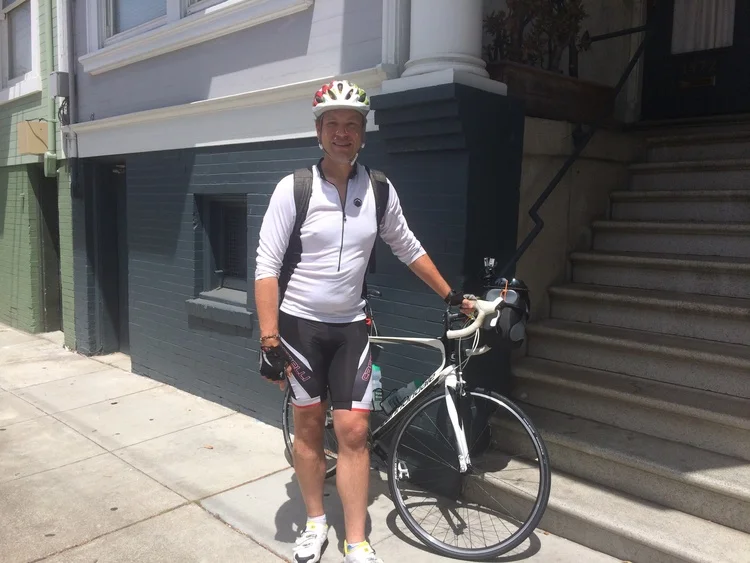
A few days ago, a momentous occasion passed.  Because I’ve been so incredibly sick, I managed to barely notice.  I was vaguely aware of it, though, so when I finally felt well enough today, I checked the calendar.  Sure enough: on June 23, 2014, one year and five days ago, I made the choice to get on my bike and start a solo ride across the country.  I will never forget standing there, with my backpack on, hopeful but incredibly apprehensive.  I remember asking a confused older Asian woman to take my picture.  I remember going back up into my apartment at least 3 times for things I thought I’d forgotten.  I remember that first 5 miles riding through Golden Gate park, and then over the bridge into the Great Beyond.  I never quite made it all the way, in the literal sense, but in another real sense, it was possibly the biggest success of my life, and still the thing I am most proud of to this day.  It’s hard, being here, back in San Francisco, to have the right perspective on all this.  It doesn’t help that I still feel so physically lousy.  I’m sitting in one of my favorite diners, right near my house.  My throat hurts, my head is pounding, my back hurts from coughing.  My mood is not positive.  When I left on the ride, I had no idea what would happen, but I hoped that it would transform my life.  Sitting here, back in San Francisco, back at the beginning, working for a tech company, it’s easy to feel like nothing has changed, like the trip didn’t “work”, like I’m stuck forever.  But that would be so very wrong.  Everything has changed for me.  I see now that the bike trip didn’t change things, rather it was an expression of that change.  It was the beginning of the middle of the end of the story.

There are moments I will never forget, from that trip.  I still get flashes of moments, when I’m falling asleep.  The man in a bar in California who was there drinking with his mom, and offered me a room in his house for the night, complete with Golden Retriever, and made me breakfast.  Riding up a mountain pass in Central Oregon, out of water, being chased by a bee, and the tourist who gave me a bottle of water at the top.  Sitting in a river, bare feet in the water, bicycle propped against a portable bathroom, and then staying in a church’s basement that night.  Laying on a bench in a coffee shop somewhere on the coast, staring at stumps of trees, and calling my parents to tell them how I was doing.  Names of people and places have started to fade, which is why I’m so glad that I kept a blog.  I will forever treasure that blog.  I may even read it to my kids, someday, if I have any.

When I returned from the trip, I was confused.  What should I do next?  What will happen to me now?  I remember getting back to SF, riding back from the airport, and being suddenly lost.  What am I doing here?  What happens now?  Well, what has the last year brought?  I spent a few months trying to piece together contracting gigs.  I signed up for another charity ride, raised a bit of money, then quit.  My younger brother moved out, and we fell out of touch (I miss him).  I taught some yoga.  Searching for what to do next, I remembered riding through Bend, and how much I’d liked it there.  Poking around on the internet late one night, I came across a program in “Outdoor Leadership”.  Sooner that I could imagine, I was in my tiny red car, headed for Bend, enrolled in 14 credits of community college classes.  I spent 3 months living in Bend.  Halfway through I met a woman, who is still in my life.  I had my first kiss in a long time that felt like it meant something.  I moved back to San Francisco.  Then I moved to Portland.  Then I moved back.  I climbed Mt. Thielsen and almost died.  I climbed Mt. St. Helens.  I climbed South Sister and made myself sick.  Along the way, I realized I owed the IRS about $20,000.  I spent an awesome Christmas with my parents.  I drove my scooter halfway to Portland, got stuck in a storm, had a wild adventure, rented a pickup at the smallest airport you’ll ever see, threw it in the back with the help of some strangers, and drove it to Portland, where it now sits at the airport.  I sold my TV.  Someone stole my laptop.  I tried to give my yellow bike away, twice.

In short, things have not turned out according to plan; and yet, they have turned out exactly according to plan.  One of the profound realizations I had during my trip was the sudden clicking of everything into a coherent narrative.  It may just be human nature to see patterns in randomness, but suddenly the story of my life - at least the last couple of years - made perfect sense.  The order of things, the movement of relationships and jobs and places, suddenly it seemed like everything had to happen just the way it did; even some of the crappy bits.  I had to hit new dating lows in SF to realize just what was important to me about relationships.  I had to ruin my body running marathons to discover yoga.  I had to be in a relationship with a nutcase to find meditation.  And I still feel like I’m on that track.  I don’t believe in organized religion, but I understand now the idea of feeling like someone else is calling the shots, and right now that person feels like a benevolent despot; perhaps like I’m the main character in a novel, but that novel comes from the Young Adult section, not Horror.  I will admit to feeling a bit down in the moment, today, but when I take a step back, it really feels like everything in a broader sense is on this grand sweep towards something great.


Comment

Comment

Day 349 - San Francisco, CA

So, this week I've been sick.  Very sick, all week.  I finally feel today like I'm feeling better.  You would think that this would suck, and it has, definitely.  Scratchy, painful throat, fatigue, achiness.  But, in all of it, there has been a silver lining: being sick has forced me to slow down.  I just haven't physically been able to do that much this week.  And that might be a good thing.  I think maybe I've been pushing too hard the last few months.  So I'm trying to look on the bright side; I got plenty of rest for a change!

Comment

Comment

Day 348 - San Francisco, CA

The day before yesterday, I attended a talk at WWDC, which is Apple's yearly developer conference.  It was a technical talk about a moderately obscure new feature whereby developers will be able to package up assets that are targeted to only particular families of devices (don't worry if that made no sense).  As I sat there, I suddenly realized: this task, this new capabilitiy, requires a professional.   And then, suddenly, I had a moment of clarity: the day of the garage mobile developer is coming to an end.

I just started a job at a large mobile developer, Pocket Gems.  We're working on something new, as well as a game that's already released (War Dragons; check it out).  I'm not allowed to tell you how many people work on my team, but rest assured, it's more than a few.  And all of those people are professionals, making professional salaries.  There are artists, designers, programmers, marketing folks, office admins, middle management, etc., etc.  We have a small army of Mac Books and standing desks and a full service kitchen.  This is not an inexpensive operation.   When I squint, it reminds me of the days I used to work on console games.

Make no mistake; it will always be easier to develop for mobile than it was for consoles.  Back in the console days, we had to spend tens of thousands on custom development kits that were only provided if we passed diligence checks.  We had to submit against a huge binder full of checks and cross-checks.  It cost multiple tens of thousands just to ask nicely if we could publish on a platform.  The promise of mobile still is an open ecosystem (especially on Android; problem is, nobody makes money on Android).  But this idea that a dude in his garage can make an app is disappearing.  It's just too hard.  Modern gamers have increased their demands.  They want professional art, 3D effects, smooth performance, interoperation between a variety of platforms, etc., etc.  That stuff isn't cheap or easy.  Competition is fierce.  Yes, there's still a lot of money, but there's also a lot more people fighting for that money.  In the old days, there were simply fewer people trying.  This is all good.  I'm not complaining.  We're clearly moving forward, overall.  One or two dedicated people still can make a game - but the key word is "dedicated".  I'd expect to spend at least a few man years on anything that is going to be really quality and competitive.

Comment

Comment

Day 345 - San Francisco, CA

I really did not want to write today about this topic.  I had several other things on my mind that might make good blog posts.  But it keeps shoving itself in my face, so here we go.  Today's post is a little story.  Not a happy story, maybe not a sad story, just a story, of how people can sometimes get stressed, and maybe about the perils of living in a large urban environment.

Tonight, I was at the gym, working on the stationary bike, when I realized that I really needed to relax.  Maybe, I thought, I should do some yoga.  One of my favorite yoga studios was holding a Yin class, and that seemed perfect.  So I pulled out my Amex, and charged $17.  I googled it and saw that if I got off the bike, I had time to pick up some Subway and still get there on time.

The Subway part of the adventure went fine.  ( I don't recommend the guacamole, though).  After Subway, I went back to my office to pick up my bike.  It's a new job, and I'm still getting used to the bike room thing; it's in the basement and you have to take a special elevator, and I got a bit lost in the maze of the garage.  Then, on the way down to Valencia, I was riding in the bike lane and a woman was riding very slowly all the way on the left, next to the cars.  I tried to pass her, and she started yelling at me about how I was passing people wrong.  This was not a crazy person; this was a hipster.  And apparently I was riding my bike wrong, and, you know, needed to be told that in public.  Loudly.  (She was incorrect, by the way).  A bit rattled, I rode on, and showed up to class, but at this point I was 5 minutes late.  At this point, I realized I had left my yoga mat at home.  They had rental mats, but they cost $1, and I didn't have any cash.  The lady gave me a look, but let me take the mat (thanks, lady).  I gingerly stepped into the room and immediately was told (nicely) to put my mat down.  I did.  Then I was told I put my mat down wrong.  So we lifted it up and turned it around.  I immediately laid down, closed my eyes, and tried very hard to relax.

And failed, utterly.  I lay there, thinking about the bike room, the lady who yelled at me on the street, about being late, the fact that I put my mat down wrong, the $1 I owed but couldn't pay, basically everything except relaxing.  After laying there for a bit, we transitioned to a different relaxation pose.  I closed my eyes and settled in and started to feel peaceful.  Suddenly, there was a voice whispering right next to my ear.  It was the teacher.  Apparently, I was relaxing incorrectly.  I politely asked if I could just close my eyes and just keep being, you know, quietly wrong.  She visibly huffed and moved on.  I closed my eyes again.  

And failed, utterly.  Now I was thinking about the teacher, and the fact that the room was really damn warm (apparently, she didn't know how to run the system and the room was about 15 degrees warmer than it was supposed to be).  And how this class cost $17.  After another 10 minutes of this, I finally, blissfully, felt myself calm down.  I lay there for about 15 awesome minutes, floating.  Finally, class was over.  I started putting my props away.  When I came back for another load, the teacher was standing on my mat.  She kept talking to someone.  I had to politely wait for her to move.  Then I picked up my final blanket to put it away - and a splinter from the hardwood floor jammed itself under my fingernail.  It hurt.  Kind of a lot.  I grimaced, finished putting my stuff away, put my shoes on my feet, waited my turn at the water dispenser, found some good light, got the splinter out, went outside, unlocked my bike, and rode home (fairly uneventfully).  When I got home, I thought to check on my car, which I rent to other people.  Turns out the last person had parked it with straight wheels on a hill and received a ticket, which I now have to pay, and hope that I get reimbursed for (which I'm supposed to, and the people from Getaround were very nice).

Not everyone I interacted with tonight was unpleasant and judgmental, and not everything that happened went badly.  There were definitely moments of bliss and happiness in the midst of everything.  It's hard, thought, not to shake the feeling that I probably would have been better off if I had gotten off that bike, rode home, pulled the covers over my head, and just read a book!

Comment

Comment

Day 344 - San Francisco, CA

I don't think Mad Max: Fury Road is a very good movie.  But this post isn't really about Mad Max.  It's more about movies in general.  I will readily admit that I'm picky about movies; I probably dislike more than I like of the ones I see, and I'm extremely picky about which ones I even bother to see.  To me, one of the main things a movie has to do is build interesting characters.  To me, interesting means one of two things: 1) Believable characters in unbelievable/interesting/incredible situations, or 2) Interesting/bizarre/incredible but believable characters in fairly normal situations.  What doesn't work for me is unbelievable characters, by which I mostly mean inconsistent characters.  Let me explain: I like watching people with "normal" personalities respond to really weird settings.  Case in point: The Princess Bride.  Wesley is a fairly straighforward character who becomes a Dread Pirate because, well, he kind of has to or die.  I also like watching strange people try to do normal things.  Case in point: UHF, where Weird Al tries to run a TV station.  What is always true, though, is I have to be able to put myself inside the character(s).  I have to be able to say one of two things: I recognize/know a guy like that guy, and yeah, that's what he would do, or If I was like that person, then yeah, that's probably what I would do.  Mad Max sets up some incredibly weird (but fairly consistent) settings, and then introduces some characters with certain personalities.  But then those characters go on to do things that - in my opinion - don't "ring true".  That is, there's a difference between people with crazy personalities, and people without a personality, that is, people who don't seem to act by any set of internal rules or guidelines or framework.  It's perfectly natural for Hannibal Lecter to kill and eat people.  What would be out of character for him is to suddenly decide to become CEO of his brother's luggage company.  That's something perfectly normal, but not for Lecter.  If that were going to happen in a movie, it would either require a ton of very crafty storytelling, or be a joke. 

Again, just an opinion.  But that's why I didn't like Mad Max. 

Comment

1 Comment

Day 342 - Portland, OR

I'd really like to get back in the habit of updating the blog every day, even if what I write is small, or not terribly groundbreaking.  So today, I'm going to talk about my new Apple Watch.  I don't really have anything to say that others haven't already, but having had some realistic time to spend with it, I have a few conclusions:

1) I really like being able to respond to basic text messages and phone calls from the watch.  This is the one killer app so far, for me.  Being able to see messages, write a quick response (usually using voice), and even answer phone calls is a godsend, especially when I'm driving my car, or riding my bike (or even on the elliptical machine).  This is well implemented, and worth using.

2) Apps suck.  Basically they all stink.  I blame Apple; if one app stinks, that's the fault of the app dev.  If they all stink, Apple did a bad job.  And they did; the WatchKit is trash.  Rumor has it it's going to get a lot better soon, though.

3) Notifications are often a waste of time.  Nobody seems to have gotten this quite right yet.  My solitaire app, for example, tells me once a day that a new daily game is ready.  I don't care.  Meanwhile, Facebook Messenger doesn't seem to notify the watch, which is the one thing I would like.

4) I really want Google Maps.  If I want turn-by-turn directions to show up on the watch, I have to use Apple Maps.  Well, I don't like Apple Maps.  I like Google.  I want Google Maps on my Apple Watch.  And I'm the consumer, so give me what I want. :)

5) The battery life is actually pretty darn good.  This is the one thing Apple did right, and I suspect it underlies a lot of their other choices, including things that they did "wrong".  For example, I know the main reason apps stink right now is that Apple is being super careful not to let you drain your battery playing Tetris.  Which is the right call.  Now it's time to carefully find the balance.

6) There's so much wasted potential.  This thing is gold.  The hardware design is fantastic; spot on.  It's the software that has to get better; way better.

1 Comment

Comment

Day 341 - Portland, OR

I talk about some pretty intense things here on the blog, but today I want to talk about a lighter topic: IKEA furniture.  IKEA furniture is a thread throughout my entire life.  As I sat this morning, putting together a Breim wardrobe with a pink screwdriver,  I waxed nostalgic about all the other wardrobes, cubbyholes, dressers, and chairs I've put together over the years.  I must have assembled almost 100 pieces of IKEA furniture in my life.  As someone whose life has taken him all around the country, I have often found myself in a new place, with a need for the basics, like a place to sit down.  And because I'm a cheapskate, and I like modern design, I find myself wandering the endless labyrinth of IKEA one more time.  From a consumer standpoint, I understand what makes IKEA so compelling: the price point, the design sensibility.  But what, if anything, does IKEA mean for our immortal soul?  What does it say about our culture?

As a man, what I find particularly interesting is the process of putting IKEA furniture together.  I was just listening to a sports talk radio show the other day where the host was asked by his sidekick what he can do around the house.  After saying that he was good at cleaning and gardening, he said that he could "never get the hang of that IKEA stuff".  Building things just wasn't his strong suit, he said.  As I screwed slot A into tab B this morning, I mused about the fact that putting together IKEA furniture from a box has become our closest metaphor for actually building things.  For many of us, it's the closest we'll ever come to making anything with our bare hands.  Sort of like buying a microwave burrito is the modern substitute for cooking.  I'm not saying this is neccessarily a bad thing.  But it's interesting to me.  I feel sometimes like my cat, who used to take his food out of the bowl and bat it around before he ate it.  You know, just to keep things interesting. 

IKEA is also a cultural and conceptual background to my life.  The transience of things, the ephemeral nature of my places.  A while back, in what feels like another life, I sat in one place for an extended period of time.  But now I move around, and my IKEA furniture is always there.  No matter where I am, I can sit in one of those Poang chairs that rocks back and forth.  But it isn't the same chair, of course; why bother moving IKEA stuff when you can re-purchase and re-assemble it for less than it would cost to move? 

I like IKEA.  But someday I will move out of the IKEA phase of my life.  And when I do, I think IKEA will be the metaphor I choose to describe this period of my life. 

Comment

Comment

Day 340 - Portland, OR

As most of you know by now, I don't shy away from delicate topics here in this space.  That's a conscious choice.  Today's topic isn't the most delicate I'll ever address, but it is about a sensitive topic: sex.  As some of you who know me personally know, I was raised Roman Catholic.  I haven't been Catholic for a long time now, but the practices and ethics of that religion - as practiced in the Northeastern US, anyway - still linger in my mind.  One thing, in particular, was hammered into my head from an early age; not just in Sunday school, but by my public school, my relatives, even messages from society as large.  That thing is this: women don't like sex.  Corollary: the ones that do are weird.  Corollary to the corollary: if a woman seems to want to have sex, she probably is just saying that to make you feel better.  Third corollary: nice guys don't really push the sex thing too hard (because women don't want it and that would be bad).

The story goes a bit like this: men are, essentially, horndogs.  The job of a man is to constantly clamp down on his sex drive because - left unchecked - it would corrupt his soul.  Women, on the other hand - chaste creatures that they are by nature - must never inadvertently tempt the man. 

This is not some sort of postironic commentary.  As an 8-14 year old, I truly, truly believed this.  Even into my late teens and early twenties, I assumed that my sex drive was completely unwelcome in the "fairer sex" and that, generally speaking, my job was to pretend to not want to have sex, in order to make sure women felt comfortable around me.  My ex-wife, who I met when I was about 23 - and is, by the way, an awesome and amazing person - was a virgin, as was I, when we got married.  Neither of us had any clue what we were doing.  Looking back, it's clear that my ex was - through no fault of her own - just not a person with a high sex drive, at least not as high as me (at the time).  And, of course, this just reinforced what we had both been taught; that men desire sex, and women merely receive it. 

Imagine, for a moment - if you were not unfortunate enough to receive this piece of homespun wisdom - what entering into a sexual relationship would be like, given this as your paradigm.  Not good, I assure you. 

After my divorce, and into my thirties, I had enough sexual experiences to allow at least the scientific side of my mind to put this myth to rest.  It took a while, and some patient partners, but I no longer believed intellectually that women had any less of a sex drive than men.  Of course, there are women who don't really like sex - as are there men.  I'm no longer convinced that there's any difference at all, when averaged out among the whole gender.  I have recently been lucky enough to start a normal, healthy sexual relationship, and it's amazing what can happen when two people approach each other's needs without that kind of baggage.  I'm still dealing with the emotional fallout of my upbringing.  It takes time for the scientific mind to convince the 8 year old who sat through Sunday school.  But I know this for sure: if I have a child be it son or daughter, I'm not perpetuating that bit of nonsense. 

Comment

Comment

Day 336 - South Sister, OR

A couple of days ago, I climbed South Sister, a mountain in the Cascades, about 30 miles from Bend.  At about 10,300', it's considered one of the easier of the glaciated peaks; that is, peaks which never melt all year round.  This is my third glaciated peak, and this time I don't have any grand philosophical revelations to share with you, rather, some very prosaic practical thoughts and recommendations: 

1). I seem to have some kind of macho problem with wearing sunscreen that I desperately need to get over.  I endangered my whole climb by getting so much heat stroke on my arms, neck and face that I got dizzy. 

2). I have to carry at least twice as much water as I think I should. 

3). Micro spikes are amazing, but crampons are way better. 

4). GPS is nice, but it helps to have a real paper map.  In the snow, the concept of a "trail" gets really lost. 

5). False peaks can join bike thieves in hell. 

6). Climbing is still awesome. 


Here's to 4 days of raccoon face!! 

image.jpg
image.jpg
image.jpg

Comment

Comment

Day 332 - San Francisco, CA

This week, Ireland voted - in a landslide - to allow gay marriage.  The vote was notable for the margin of victory, which was about 62%.  There is no question that this vote is a Good Thing - for Ireland, for the world.  An interesting tidbit about the vote got short airplay, though.  The country of Ireland is known for being overwhelmingly Catholic.  As a nation, they only legalized *divorce* in 1995.  Yahoo news says “Saturday's emerging landslide marked a stunning generational shift from the 1980s, when voters still firmly backed Catholic Church teachings and overwhelmingly voted against abortion and divorce”.  Until very recently, homosexuality of any kind was against the law in Ireland.  People went to prison for it.

Now, this is all a good thing, I hear you saying.  And yes, of course - I completely agree.  But it’s also interesting.  Because what’s happened here, without us really noticing, is the fluidity of morality.  We’ve long understood that our modern life is just faster paced and more fluid than it ever used to be.  Writing a novel has turned into tweeting.  The average attention span is down to about 8 seconds, I hear.  But most of us had assumed that certain issues - the bedrock of our conscience - were still pretty rock solid.  And among those was morality, philosophy and religion.  But that appears to me to be less and less the case.  And there are really no societal conversations happening about this trend.

In an article I read recently on CNN, they were talking about what Obama might do before he leaves office with all the people - I hear it’s measured in tens of thousands - who are serving long sentences for possession of marijuana.  Which, until recently, was a very serious federal offense (I guess it still technically is).

I am totally in favor of the legalization of marijuana and gay marriage.  I think it’s awesome.  And, of course, I’m excited that we got there relatively quickly.  It’s the right answer, so why not do it sooner rather than later?  But I’m also a bit dubious.  You see, once things move fast, they tend to keep moving fast.  And not always in the direction you want them to move.  It would be terribly naive to think that all the societal movements that are going to sweep the world over the next 10, 25 or 50 years are going to be pleasant and benign.  I hope they are!  But hope is not a strategy.  

Let’s conduct a thought experiment.  What do you think we do - regularly, as a society - that our grandkids will think is incredibly weird, or disgusting, or perhaps even immoral?  Perhaps one day you’ll tell your grandkids that some people used to roll plants up in a tube and light them on fire and then inhale the smoke into their lungs and they will shudder in disgust.  Maybe you’ll tell them that we used to get our meat by slaughtering animals instead of growing it in a tube and they’ll gasp in horror.

Maybe you’ll tell them we used to regularly wear clothes and they’ll just snicker.  Or, alternatively, maybe you’ll tell them that people used to go out in the street without covering their face and they’ll be mortified.  

I think it’s terrible that people used to keep slaves.  But I also recall that some of our great founding fathers, such as Thomas Jefferson, kept slaves.  Does that make him morally bankrupt?  Tough, right?  On the one hand, we tend to regard morality as an absolute.  If it’s bad to have slaves, then it was bad to have slaves back then, and people “should have known better”.  But what will the future look back at us for and wag their fingers?  I feel a bit queasy at the thought that perhaps something I’m doing today will be written down and judged by people a hundred years from now - or maybe, given the pace of change, even 10 or 20.

I’m certainly not suggesting that we should intentionally withhold marriage equality, or the freedom to smoke pot, just to make a point.  I suppose what I’m saying is two things: one, that it’s ok to move slowly sometimes when it comes to important societal change, and more importantly, that when we do change, it’s not (always) fair to judge those of us that came before us.  I still, personally, believe that there are some moral absolutes: murder, rape, theft.  And I value our free thinking society.  I just hope we keep it pointed in the right direction.

Comment

Comment

Day 328 - Portland, OR

On this, the eve of my most recent job search, I am reminded of some of the greatest miconceptions about the job search process.  Allow me to dispense the wisdom of all my searching.  No need to thank me.  : )  In honor of Dave Letterman, I present to you: the Top Ten Myths about Engineering Jobs: 

10.)  Companies know how to hire people, so all you have to do is do a great job of being an interviewee.  Yeah, not so much.  It makes sense if you think about it: the skill set required to be a great interviewer is not the same skill set required to be a great engineer, or maybe even a great engineering manager.  And most engineers are just not very good at interviewing.  Which means you have to take charge, and make sure they're getting what you want them to get out of the process. 

9.)  Engineering is mostly about writing great code.  No, no, no.  Engineering - like every other human endeavour I can think of with rare exceptions - is about people.  If you write great code and nobody likes you, you won't get anywhere.  If everyone likes you, your code can be passable at best and you'll still be welcome in many workplaces.  I've seen very few startups fail because their code wasn't very good; I've seen many fail because the people who worked there didn't get along. 

8.)  Looking for an engineering job is a numbers game.  Yeah, no.  Have you ever seen someone frantically look for their car keys when they're late?  They tear the place apart looking everywhere, spending a ton of energy.  Then, once they're exhausted, they sit down and think for a second.  Then they walk right to where they left them.  It's the same way with relationships, roommates, and jobs: when you apply for the right job, you only need one.  I'm not saying there aren't times when sending out a lot of resumes can be helpful.  But speaking as someone who went on 400 online dates, I can tell you that when the needle isn't in that haystack, it doesn't matter how hard you look. 

7.)  Being in demand means you don't have to work to find a job.  Sure, sometimes a job will come to you.  And the more your skills are kept up to date, the better off you'll be.  In some sense, a job interview is the last step in a long process that starts with having a great skillset.  That said, great jobs don't fall out of the sky.  You have to be ready, you have to work hard, and you can never take a good job for granted. 

6.)  Coding is geographically fungible; that is, it doesn't matter if I live in Boston or Baltimore; if I'm good, the job will come to me.  At one time, there was a dream: that the wonder of the internet, and video conferencing, etc., would make telepresence omnipresent, and the worker of the future could be anywhere they wanted.  Sometimes, remote jobs work out.  But if anything, I've noticed that jobs are clustering even more; SF is known for Mobile front ends, Portland for back end web software, New York City for marketing, etc., etc.  If you want a great job, you still may have to move. 

5.)  The best engineer for my job is one that's already familiar with the technologies I use.  No, no, a thousand times no.  The best engineer for your job is the one with the passion, problem solving skills, and communication skills to get the job done.  Of course, it does depend on the job and the situation.  If I need code written in the next week, then maybe I can't wait for someone to ramp up.  But, honestly, if I need code in the next week, I've done something terribly wrong, and I'm much better off re-evaluating what I'm doing.  Over time - I'd estimate a month - a talented programmer will outperform someone with a narrow dedicated technology skill set everytime.   

4.)  If I have a good job, I don't need to care about any of this stuff.  Well, good luck with that.  You better be pretty sure about that job; and in this climate, I don't think that's a good bet.  The moment you lose a job is not the best moment to start thinking about how to find a new one.  Building a diversified skill set may mean doing work on the side to keep your skills fresh, or acting as an advocate for yourself to keep learning on the job.  And staying in touch and networking always help.

3.)  The best place to find a job is online.  Hey, online is great.  LinkedIn is awesome.  But statistics show that most people still get a job from a friend of a friend, or through a contact.  I personally like Meetup, because I think it's a good hybrid; a way to meet people online that you then interact with in person.  Relying entirely on online outlets because you don't have time or energy (or are feeling too introverted) to meet people in person is not a winning strategy. 

2.)  The hardest job to get is the first one; after that it just gets easier and easier.  Personally, my first job was by far the easiest; being fresh out of college is an easy and well-worn recruiting pipeline at many large companies.  My most difficult job was about job #3; when I started to get paid a bit more and specialized, doors started to close because I was "overqualified".  The real point may be: at any given time, any job search could be easy, or hard; you never know.

And, myth #1: 

1.)  The best engineers naturally rise to the top.  Of course, at the end of the day, being great at what you do is the best way to get and keep a good job.  But just like the best athletes don't always win, and the best guy doesn't always finish first, the best engineer doesn't always get the job.  Sometimes, as my Dad says, it's better to be lucky than good.  But, of course, smart people make their own luck! 

Comment

Comment

Day 322 - Portland, OR

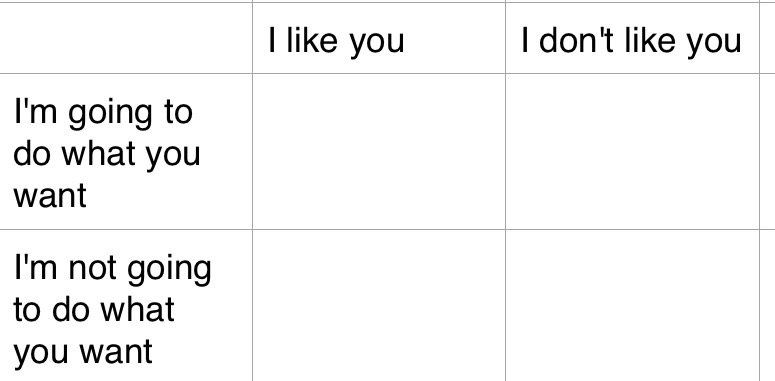
It took me a long time in life - 30 years or so, to be exact - to realize that I was a people pleaser.  Now, many people who know me might be surprised by that designation.  I rarely actually please people, so if I'm a people pleaser, I guess I'm not a very good one.  But that isn't exactly what the phrase means, I discovered - at least not to me.  Take a look at the graph below - this is what I feel like most people are thinking: 


image.jpg

There's a universe of possibility here to move around in.  Now here's what mine looks like: 


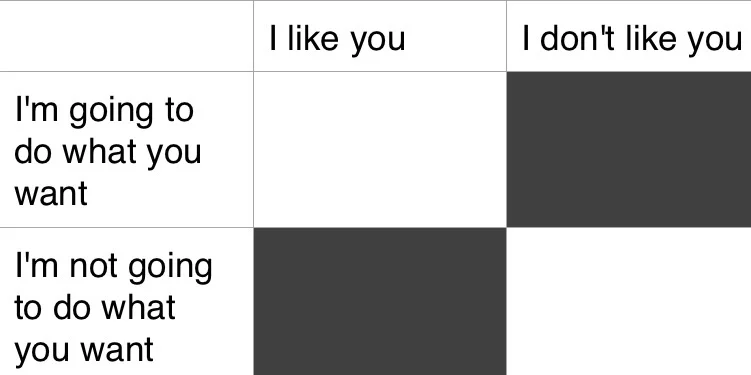
image.jpg

See the difference?  It's not that I have a problem doing something other than what someone wants me to do.  It's that I tie that together with it being an aggressive act; a sign that I don't like, or am unhappy with, that person.  Which of course isn't true.  And it means I have trouble in certain situations.  Like when dealing with people - say, in the service industry - that I disagree with.  It's hard to stay positive, and stay friendly.  Fundamentally, the logic goes, since I'm not doing what you want, I must not like you. 

More importantly, I find it really hard to relate to someone I care about while still not doing what they want me to do.  Standing up for myself makes me feel disconnected from them.  Which is the opposite of how it should be; being able to be yourself and trust the other peron is a moment of intimacy, not estrangement.  But because of my screwed-up graph, I find it hard to see that.  Because I'm not doing what you want - the logic goes - I must not like you or be compatible with you.  Which, of course, is nonsense.  Nobody agrees with another person about everything, and if they did that would be creepy.

Theres a third problem here, too, a bit more subtle.   Notice the center of that graph. There's sort of a "pinch point" right in the middle.  Instead of freely moving around, the center is kind of stuck.  Which means that, when I'm in the middle - meaning I don't have a strong preference - I get confused.  I feel like I have to resolve things to one corner or the other.  Seemingly minor and unimportant things become an internal referendum on whether I like a person.  That false need for clarity ruins the freedom of play that can make a relationship so rich.

Of course, the goal is to not be like this anymore.  I've made progress, but there's more work to do.  I'm explaining this here to remind myself to keep working - and also in case it resonates with any of you out there! 

Comment

Comment

Day 321 - Portland, OR

image.jpg

In my time on this Earth, I have been to three of what are considered the greatest urban parks in America.  And all three - while great - are very different from each other and reflect, in my opinion, the differences in the cities they represent.  Without anthropomorphizing too much (I believe Freud said “sometimes a park is just a park”), here we go:  first, Central Park in New York City.  Now, admittedly it’s been about 8 years or so, but from what I recall, Central Park was magnificent - but kind of not exactly much of a park.  Meaning, it had a pretty heavy hand of man.  I remember amusements such as a carousel, vendors selling things, somebody renting horses, and big open expanses for people to run on.  It was heavily “improved”, in the sense that people had made it suitable for people-type activities.  

Next, we have Golden Gate Park in San Francisco.  GGP is kind of in-between.  The part near the east end is improved, definitely, with two museums, a carousel, and a few roads where people stroll and bike.  It even allows cars in parts of the park.  However, as you head west, it gets fairly wild and open, and there’s a lot of trails and not much in the way of signs of man.  And even the parts that are built up are fairly sedate and still covered in vegetation.

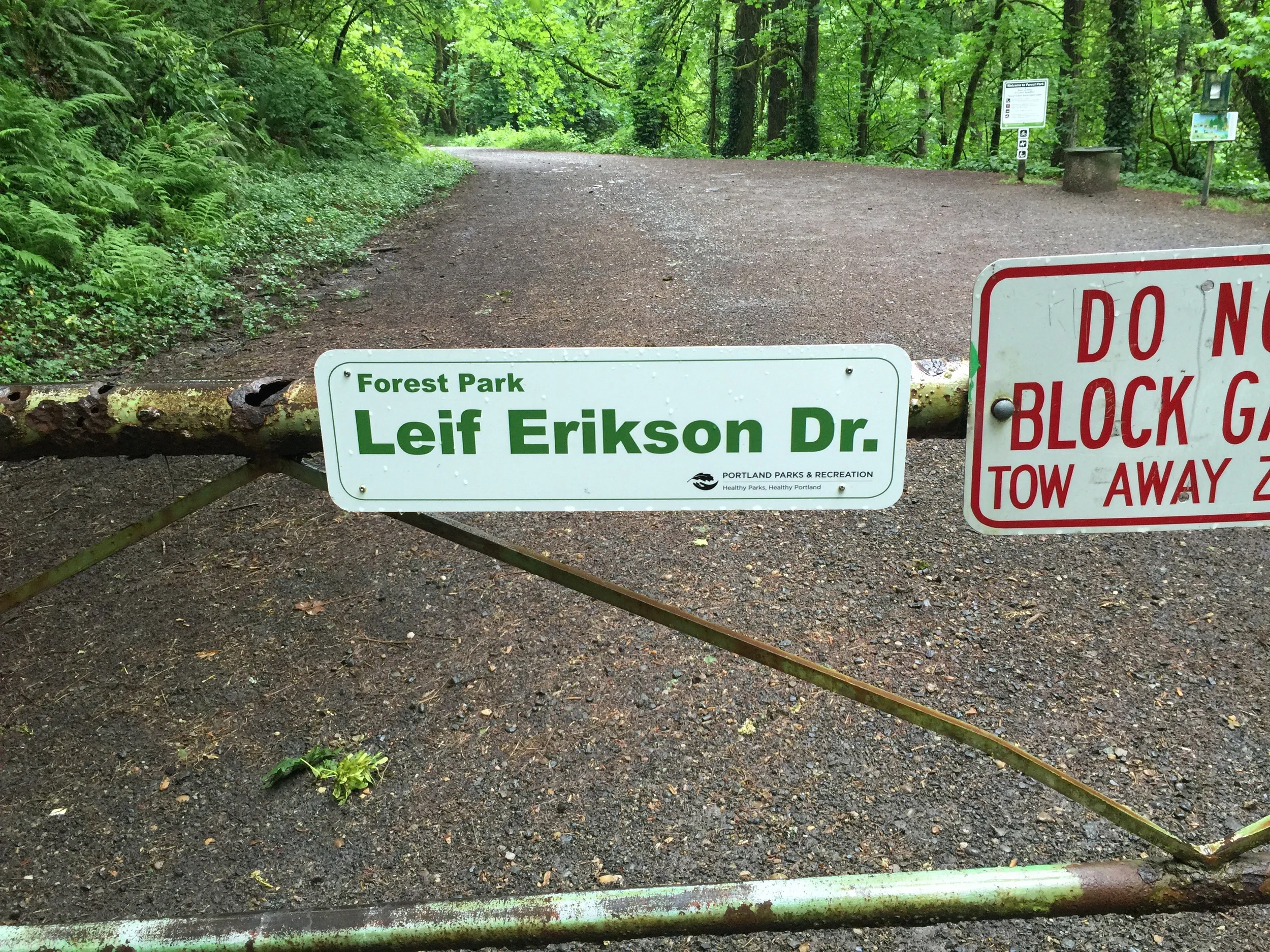
Then, you have Forest Park in Portland, where I hiked about 12 miles today.  Forest Park is a good name for it because it’s basically just a forest that happens to be called a park.  It seems as though a few folks just built a dirt road or two through a big stretch of Oregon forest and said “hey you crazy kids, go for it.”  It’s exceptionally natural and has been treated with a very light touch.  There are no attractions, or museums, or people selling things.  It’s just a park.  Apparently, it was supposed to originally be a housing development, but the road got washed out and they just made it a park, thus creating the famous Portland saying “if at first you don’t succeed, just turn it into a park”.

So, yes: New York is the home of man, San Francisco is the home of an uneasy truce, and Portland is the home of the forest.  Broadly speaking.

Comment

1 Comment

Day 318 - Mt. St. Helens, WA

image.jpg

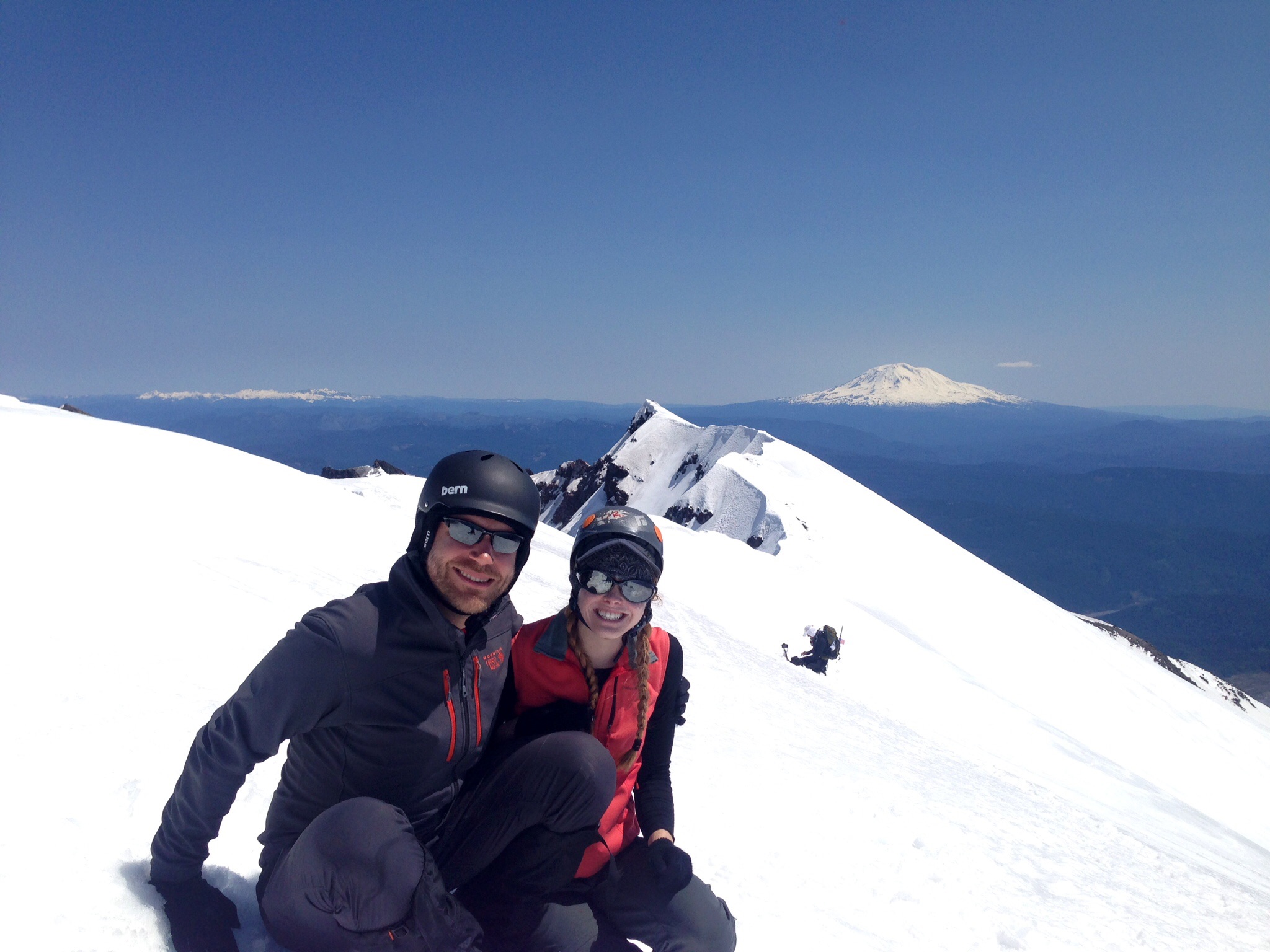
Yesterday I climbed Mt. St. Helens.  It was my first climb with the Mazamas Mountaineering group.  For those of you who read about my last glaciated peak summit of Mt. Thielsen, this couldn't have been a more different experience.  It was pleasant, one might even dare to say "easy".  Except, of course, mountains always exact their revenge: I ended up rolling my right ankle pretty good.  But it won't keep me down long.  On the plus side, I ended up learning my new favorite word: glissade, v.: to have the most fun ever in the history of ever.  Glissade is a mountaineering word for something every 5-year-old knows: if you put plastic on your butt and sit on a snow hill, you will slide down it.  And it will be fun.  Our mountaineering guide, Greg, showed us how to glissade about half of the 4500 vertical feet we climbed up safely.  It unlocked my inner child and was basically the best time I ever had.  Sliding down a clean fresh snowbank at 8300 feet is...well, amazing!  I can't wait to do it again.

image.jpg
image.jpg

1 Comment

Comment

Day 316 - Portland, OR

One of the things I really love about sports is that it’s true human theater.  At its best, it exposes our humanity, our strange psychology.  It’s like a play, except that nobody - not even the participants - knows the ending.

A few things happened in sports over the last few weeks that i find interesting from a psychology perspective.  The first is the issue of the Patriots and Deflategate.  I realize that many of you find sports terribly dull, but bear with me here: the game of football, like many modern games, has a lot of rules about equipment.  One of those rules is that the balls themselves have to be inflated to a specific pressure.  There are various sports-y reasons for this, but suffice it to say that an under-inflated ball can have certain advantages.  Somewhat bizarrely, the NFL allows the teams to supply their own balls, although they are checked by the officials.  Well, it appears that, during the run-up to last year’s Super Bowl, the winning Patriots most likely systematically under-inflated their footballs, and that their star quarterback most likely knew it was happening.  Now, it is clear that this is not the reason they won the game; the Super Bowl was a blowout, and the Patriots certainly would’ve won anyway.  But - in sports - as in life - that isn’t the point, is it?  A tweet from another player on another team sums it up:

“1. I'm not surprised 2. They still won and a deflated football doesn't help that much 3. It's all about integrity”

Integrity…an interesting concept.  Nobody thinks that what the Patriots did is necessarily the cause of their victory.  And it’s not clear that anyone is seriously suggesting that they should return the trophy.  But what is clear is this: people don’t like the Patriots.  There is an almost universal sense that most people wish they hadn’t won.  Yes, they are winners, but really, they are still losers.

One more example from a different sport drives this point home.  Last week was the “fight of the century” in boxing.  Mayweather vs. Pacquaio.  It was incredibly hyped and both fighters made over $100 million.  From a sports standpoint, it was a boring fight, both in practice and in theory.  The better fighter - Mayweather - won handily, using a very effective strategy.  He boxed well and won.  Nothing to see here.  But what interests me is this: everybody hates the guy.  One commentator said he “lacked likability”.  Of course, there’s the fact that he’s a confirmed wife beater and a jerk.  But that isn’t all of it: he also just *isn’t very good at being entertaining*.  People don’t like watching him box.  His style is boring and defensive.  It’s effective, but it isn’t fun.  And people very much want him to lose.  Conversely, Pacquaio - who is apparently also a little loose with the women and possibly a bit of a jerk - is a national hero and loved by millions.  Why?  Well, perhaps it’s at least partly because he obviously wants to entertain us.  He cares that we’re enjoying watching him box.

What is the overall lesson here?  I’m not sure, but I think it’s something like this: “winning”, in life, is at best a secondary goal.  It’s an objective to aim for, but it’s really about the journey, not the destination.  Bagging that dream job, or dream girl, or dream apartment, isn’t as important as how you conduct yourself on the way there, and what you do with it when you arrive.  This week another thing happened: Stephen Colbert donated $800k to the teachers of South Carolina, in dramatic fashion: he approved ever single grant request from them to a specific Kickstarter-esque website for teachers.  Everyone loves the guy (including me), and with good reason.

Comment

Comment

Day 308 - San Francisco, CA

I always wondered what it would feel like to leave San Francisco.  I’ve thought about it many times over the years.  I almost did it, a few times.  I had endless conversations with my parents, walking up and down Haight St, screaming into the phone about how unhappy I was.  Stumbling around 7th and Harrison, after I left my keys at a speed dating event and they were gone when I went back.  I pictured slinking back to Austin as a failure, tail between my legs.  On good days I imagined finding the woman of my dreams, moving in together, then eventually - when we decided to have a family - heading to someplace like Austin, or Oakland, or Madison, WI.  One time I almost took a job in Iceland, just because the women seemed hot and interesting and I was antsy.  In the end, though, what happened was none of those things.  After way too many years of living various unhappy lies, I finally moved out of San Francisco about a year and a half ago.  Oh, not physically - I still lived here, at 1970 Hayes.  But mentally I left.  After the ashes of Kimberly leaving me died down, I went on yet another dating spree.  I considered moving into a swanky $5000 apartment downtown.  I bought nice clothes from Express, and Jack’s, and Lululemon.  I tried to focus on work.  I dated a fashion model, two redheads, and a woman who made me enter and leave her apartment through the window so her roommates didn’t know I existed.  And one day, I had enough.  I can’t tell you what exact day it was, but it must have been about Christmas, of 2013.  That year I drove from SF to Austin for the holidays.  I don’t even remember why.  But I remember I was in the car alone on Christmas Day, somewhere in the middle of nowhere.  I stopped at the Grand Canyon, and I only stayed about an hour or two because it was -2 degrees and I was in short sleeves.  I don’t honestly even remember much of what I did on New Year’s Day.  I imagine I did something.  Maybe I hung out with Mark?  Can’t recall.  Somewhere in there, though, I made a fateful decision - to take a month long yoga retreat.  I had been doing some yoga for a while; a holdover of Kimberly’s time with me, when I discovered meditation but realized it was too slow and I needed some action.  I was a babe in the woods, although I didn’t know it at the time.  It honestly seems like only yesterday, but the calendar tells me it was February of last year, almost a year and a half ago.  I met 30 amazing people.  I’d love to say it was an instant transformation, but of course it wasn’t.  I stumbled through it.  I ended up dating someone from the retreat, who was easily as messed up as I was.  I told her that she was a threat to my happiness.  Then she drove me to Tahoe and left me there and told me to take the train back.  Nobody I knew was stable, least of all me.

But something changed during that yoga retreat.  Or, maybe it had started changing before that, and this was the first bubble that crested the surface.  I sat, while the amazing Darren Main led us in Pranyama, and cried like a baby.  I lifted up into full wheel.  I joined a men’s yoga club.  I ate vegetarian food.  Mostly, though, I stopped thinking about computers as much.  In the following year, I did some contracting here and there, but mostly, I learned about myself.  I got trained as a personal trainer.  I played Hearthstone.  I went to my buddy’s farm and moved marijuana plants (they’re surprisingly big).  I stopped dating, then I started again, then I stopped.  Finally, I had enough.  I made plans to leave; to ride my bike in the summer,.  So I did; 2600 miles.  If the yoga retreat was the beginning of the end, the bike ride was the middle.  I learned a ton about myself, documented elsewhere here in this blog.  I rode through tiny Bend, Oregon, and I liked it a lot.  I met an amazing woman and we joined hands for the Oregon Country Fair.  She showed me the door back to a happy place (thanks, Emili with an “i”) and then had the good sense to get married (and not to me!).  I had the time of my life, quite probably - at least up until now.  I hardly touched a computer, except to update my blog.  A few months after I got back, I knew I needed to leave, and Bend came to the top of the list.  I looked for an excuse to leave, and found one at the Outdoor Leadership program at Central Oregon Community College.  So, not knowing a soul in Bend, I packed up my car, rented my room to a stranger, and left.  At the time, I knew it was temporary.  Although I had imagined leaving San Francisco as a singular moment, in truth it’s been a journey.  And even though I’m leaving again this weekend, this time for Portland, I have no way of knowing if this is the last time I’ll sleep in this town.  In fact, it’s quite likely that it’s not.  But one way or another, the “San Francisco” phase of my life is over.  It started to end about a year and a half ago, and it comes ever closer to ending this weekend.

There are so many great people here.  There are also very many toxic people here, especially if you let them get under your skin.  But I’ll choose to remember the good ones; Leah Bradley, Micah Potts, my brother Jason, Abby Sanford, Katie, Silke, David (both of them).  All of them will be part of my life going forward; and not just spiritually; I’’ll be back to visit, and you should all come to visit me.

Eating dinner with a friend of mine who lived in Portland for 6 years, he described it - affectionately - as a place where ambitions go to die.  And it’s true.  The very thing I complained about in San Francisco is one of the things I needed the most; the challenge.  It is so hard here that it hones you; it breaks you down until you really decide what it is you want in life.  It’s a deceptively hard place, where people have trouble getting close, and the stress is palpable, hanging in the air like the fog.  For all that, though, it is a place of many good memories nestled in among the truly crappy ones.  I know I’ll be back.  But it will be different this time.


Comment

Comment

Day 303 - San Francisco, CA

Recently, a company I used to work for laid off some folks and appears to be in some difficulty.  At least that’s what I hear; the exact terms are secret, and I don’t work there anymore, so I’m not privy to all the details.  There’s a lot I could say about this happening; that place represents a big part of my life and I’m sad to see it go.  And, overall, That company and the two guys that founded it were extremely good to me, so I don’t want you to interpret any of what I’m about to say as disparaging them in any way.  They were, and are, awesome.

But one (relatively minor) aspect of this interests me.  If they go under, my 6,000 or so shares of their stock became worth essentially nothing.  This represents approximately the seventh or eighth time in my career that a company has given me stock in themselves as part of their compensation package.  Only once, of those seven or eight times, has that resulted in any money for me.  That one time was Google,  and the shares I got there turned into about $25,000 after a year and a half of work - a very nice windfall, but not exactly a game changer.  The other six or seven times they were worth nothing.

Offering shares as part of a compensation package is a standard Silicon Valley modus operandi.  It’s become so well known it’s almost a societal trope; the underpaid wunderkind who works his tail off for Twitter before anyone even knows what a Tweet is, and comes away a millionaire.  

But the truth is that, much like any form of gambling, most people lose.  And make no mistake about it; accepting stock as part of a compensation package is gambling.  Consider, for a moment, video poker.  Clearly there is an element of skill (the “poker” part).  If you play exceptionally poorly, you are sure to lose your money.  But even if you play optimally, you will still eventually lose.  The fact that some skill is involved does not transform it into a game of skill.  Similarly, when you accept stock in a company you work for, the insinuation is that, because you are a part of that company, you can affect whether your stock is worth anything or not.  This is - within a measurement error - simply not the case, as anyone who has been through the process can attest.  Only perhaps the first couple of founders can have any significant affect on the eventual fate of a company, and even then they are often quickly swamped by the impact of investors.  I was employee number 7 at this company, and got there well before they grew; even still, it would be pure hubris on my part to claim that I had any real role in its success or failure.  The fact is that you have way more control over a hand of video poker than you do over your stock.

In addition, the deck is stacked against you.  Accepting compensation in the form of stock is like making an extremely risky investment about which you know little.  You are underinformed, over-leveraged, and essentially in over your head from day 1.  

I have no problem with the idea of companies offering stock to new employees, per se.  Just like I don’t have any problem with them offering free lunch or yoga classes.  But the truth is this: the free lunch and the yoga class is almost certainly worth more than that stock, and it is disingenuous in the extreme - to the point of flat out untruth - to try to claim otherwise.  Advertising stock as a significant part of a compensation package is akin to telling a lottery player that they are sure to win.  It is morally and ethically bankrupt.  Even a successful company - like this one was - is very likely to eventually either go out of business or achieve a steady state, and in either case your stock is essentially worth zero.  And of course most startups simply quickly fail.  The odds of a successful conversion event that awards you significant monetary value are so incredibly poor as to be not worth mentioning.  More importantly, your role in that success is a rounding error at best.

To be sure, there is a growing awareness of this.  In my early dotcom days, I worked for a company which had the guts to offer a stock purchase plan to its employees wherein they could trade their salary - up to 100% of it - for stock.  I knew a guy who wrote a check to the company every month, to pay his salary taxes, and took 100% of his compensation in stock which - you guess it - ended up worth precisely zero.  And that was considered a successful company, which is still in business, but simply never went public.

I firmly believe there will be a legislative backlash against these tactics in the future.  Until that happens, though, if you know any young engineers, suggest that they politely ask for cash.  If they want to gamble, they’ll get better odds in Vegas.

Comment

Comment

Day 295 - Austin, TX

image.jpg

I love Austin.  It’s hot - in all the ways.  The 8 or 9 years I lived here were some of the best years of my life.  So please, Austinities, rest assured that I think it’s an awesome town.  Which is all the more reason for a little “tough love”.  Over the years, especially since I left this place, I’ve developed quite an affection for walking, cycling, even scooting - alternate modes of transportation.  And since I’ve been visiting my friend Mark without a car, he’s been kind enough to let me borrow his bicycle, which I had to walk down to the local bike shop to get fixed.  The point is, I’ve been doing more walking and cycling than I used to do when I lived here.  And I can honestly say that Austin is one of the worst cities I’ve been in for being a pedestrian.  Another thing that’s happened in the years since I left is that I’ve been in some great walking cities - San Francisco, of course, but also Bend and Portland and Paris and even London.  Now, some would say that the problem with Austin is just that it’s a southern city, and large, without a tradition of walking and cycling.  And there’s some truth to that.  But the thing is that Jacksonville - *Jacksonville*, of all places - has done a much, much better job in the last 5-10 years of putting in sidewalks and bike lanes.  I would actually say that biking around Jacksonville is pretty pleasant.  So really there’s no excuse.  I was in the Bicycle Sport Shop here in town and mentioned something to the woman there about what a hard time I was having walking around town.  And she didn’t even try to defend it.  She said something about 2 ton pickups with drivers that have something to prove.  There are parts of Lamar street that are just plain dangerous - with no sidewalks, either.  Even in the parts that have “bike lanes”, they are way too narrow, and the drivers just show no respect at all.  One guy came within a foot of my ear.  They just don’t care.  There’s one part on Braker where someone has gone in and installed “Bike Route 10” signs; but it’s a joke.  There’s no bike route.  There’s nowhere to bike except right in the middle of the lane, and good luck with that, as F250s breathe down your neck.

It’s a shame, really.  There’s definitely a running and cycling subculture in Austin.  And with the state of things in this country; obesity, diabetes, etc., it just seems like encouraging walking and cycling would be a great thing to do.  And if Jacksonville can do it, you can do it.  So - do it!

Comment

Comment

Day 294 - Austin, TX

Today, a new trailer for Star Wars: Episode VII: The Force Awakens was released.  It’s difficult for me to write about what Star Wars means to me.  In some ways, I’m not your “typical Star Wars fan”.  For one thing, I’m too young, I guess.  I was born the year Star Wars came out.  I remember vaguely my family telling me that they took me to Episode VI when it came out, but I would have been 6 years old, and honestly I don’t remember it at all.  My first explicit memory of Star Wars was when I was a junior in high school and I went to a summer camp at Florida State, and one evening the counselors at the dorm arranged for a marathon viewing of all 3 episodes back to back.  I remember that I was already a fan of the movies at the time, so I must have seen them somewhere, but I honestly don’t remember where.  And, while I was a fan, I wasn’t a Fan, you know what I mean?  I just thought they were cool, like very red-blooded kid of that age.  Darth Vader was cool.  Light sabers were cool.  The Force was cool.  Girls didn’t like it much, but that was OK; girls didn’t like anything cool.

So, in many ways, my first real “Star Wars fan moment” had to wait until the prequel trilogy came out; Episodes I, II and III, that is.  By that time, I was an adult, and I could participate along with everyone else.  We saw the trailers, debated the minutiae of them frame-by-frame, bought the early release Burger King cups, then stood in line to watch the actual movie, waiting several hours.  It felt like the whole world shut down that day.  Watching the first movie, I remember actual really enjoying myself.  Jar Jar was super annoying, yes, but other than that, it seemed like fun.  It was actually a bit surprising to me when everyone hated it so much.  I can recall arguing with my friends a bit; because I thought it was “only mediocre”, I found myself having to defend it against my angry friends.  In those days, the internet was absolutely a thing, but it didn’t yet quite have the style-defining importance that it would come to have later.  I remember Ain’t It Cool News was really upset at the movie.  Talking with my friend Mark today, I realized that one reason that perhaps I didn’t think the prequels were all that bad was because I didn’t have that intimate relationship with the first three that some people had.  The low lows required higher highs, so to speak.

Now, I’m further along in life, getting closer to what some might call middle age.  And here we are with the third go-around.  But there’s a few changes this time.  First of all, I now have something to be nostalgic about: namely, the prequels.  They happened so long ago now that they define a time in my life.  It so happens that, by coincidence, I’m in Austin this week, so it’s doubly poignant in a way.  As some of you know, right around the time of the prequels - a bit after them, if I remember right - I spent 3 years working on a Star Wars video game.  So to me, Star Wars, and the prequels, are all tied up with that time in my life - a time when I was married, when I had a solid group of acquaintances.  When I had people to shoot the shit with - and Episodes I-II-III were very popular shit to shoot, to coin a phrase.  It was a simpler time, both for society in general, and for me in particular.  And I *am* nostalgic for it; maybe not for the movies, per se, but what they represented for me.  The Star Wars movies feel like signposts in my life - the first one came out the year I was born, and the second set came out in a very defining phase of my life.  There’s another change this time, too: this time around, our most recent experience is that Star Wars sucked.  So there’s a dialectic to confront.  I feel strongly that part of the reason people disliked Episode I so much was because they liked Episode IV so much.  So it stands to reason that part of the reason people will like Episode VII so much is because they disliked Episode III.  And lo and behold, that seems to be happening.  The three series of movies form their own arc of three acts - the first good, the second bad, the third a redemption.  And this time, I get to participate as an adult.  In some ways, these sets of movies represent my life; a great childhood, a rocky transition, and now a bit of a redemption as an adult; a rebirth, if you will.

So, yes - the trailer is good.  And I’m looking forward to setting up all six movies on iTunes; even if I have to watch them by myself.  And I can’t wait for the new - new - Star Wars.

Comment

2 Comments

Day 277 - Bend, OR

image.jpg

Today’s post is about email, but really it’s about persistence.  A week and a half ago, I had 221,000 unread emails.  Yes, that’s right - 221,000.  I’m not adding an extra zero.  Fifteen or so years ago, back before Yahoo was even a glimmer in any founder’s eye, I created an “e-mail” address on the “World Wide Web”.  I chose a service almost completely at random because I liked the name, Rocket Mail.  At the time, I was fascinated by the Princess Bride, and specifically the character of Fezzik  (who am I kidding - I still am).  Et voila, fezzik@rocketmail.com was born.  I didn’t consider it terribly important.  I highly doubted I would use it for anything important.  Ever since then, I’ve thrown it around willy-nilly.  I never hesitated to give it to anyone.  It was the village bicycle - everyone had a ride.  But it also became an incredibly important gateway to friends and even family.  Some are amazed that I could have accumulated 221k unread emails.  I’m honestly surprised it isn’t higher.  

A few times over the last few years, I sat down to try and clean it out.  It had gotten so hard to find things, and so unwieldily, that Yahoo’s servers (Yahoo bought Rocket Mail about a year after they started) choked on it.  I’m probably one of the only people in the world that pays Yahoo actually hard cash to have a Yahoo email address, because the free email simply couldn’t handle it.  The first few times I sat down to fix this problem, I tried to find a technological solution.  I looked at different 3rd party tools, from scrapers to POP3 clients.  I came delicately close to inadvertently deleting the whole account one time.  Nothing I found could do the job.  Every time I went to fix it, something more important came up.

There’s an interesting life lesson in here somewhere, and that’s one of the reasons I chose to write about this.  It is not the most critical thing in my life that this email address work well and get cleaned up.  And, at any given time, there is zero chance that it ever will be the most important thing in my life.  But it is the kind of task that can only be handled if it is treated as if it was the most important thing in one’s life - with concerted effort and an intense focus.  That means that, unless I ever chose to intentionally sit down and address it - despite it not being the most important thing at that moment - it would never get done.  It wasn’t going to get better on its own.  And a future where I had, quite literally, a million unread emails was both entirely possible to contemplate and also kind of creepy.  There is a fundamental difference in life between tasks which are important and those that are urgent.  It’s not easy to balance the two.

Today, I have approximately 28,000 unread emails.  That’s still a lot, and I will be continuing to put energy behind addressing it.  But it’s only about 10-15% of the problem, and I can now see the light at the end of the tunnel.  My dream is to get back to the mythical zero inbox.  I may not quite get there, and that’s OK, but if I can get under 1,000 I think I’ll declare a success.  (It’s mostly about being able to find old things, and at that size, I can manually search if I need to).

What’s important in your life that isn’t urgent and likely never will be?  Do you want to take care of it?  If not, be gracious in defeat and move on.  If you do, though, then when?  As they say, no time like the present!

2 Comments