Today, I disappointed a friend. Actually, I suppose it would be more accurate to say that I disappointed him a while back, and today was the reckoning.
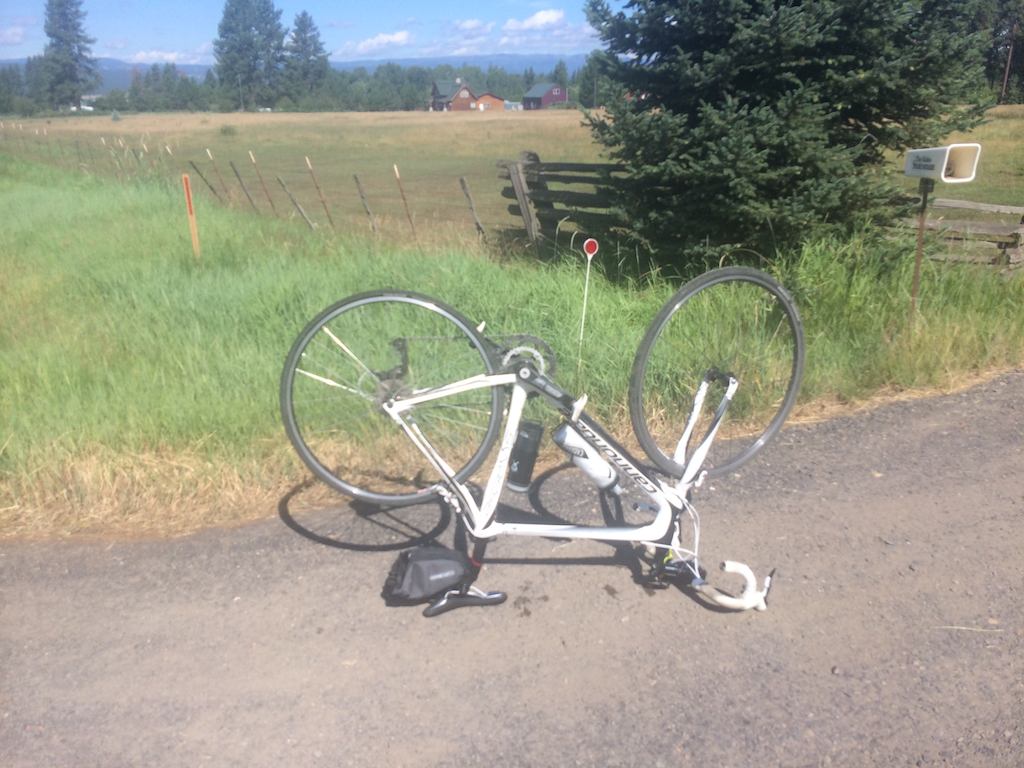
But a pause, first, to get the actual bike trip stuff out of the way. Long story short, I woke up in Idaho, biked a bunch, then fell asleep in Idaho. In between, I hung out with Stu, biked 12 miles up 1500 feet to get my rear tire changed, rode through the sun, had a flat on my rear tire again, freaked out a little about heading into the wilderness without a working rear tire, ended up in White Bird, ID, met a couple from Michigan, shared two pitchers of beer and 3 bags of chips and a smoked egg for dinner (being a vegetarian in a small town is tough) for a grand total of $16, and now I’m typing this sitting in a motel owned by a very large woman with a very small dog. Good? Good.
So, back to disappointing my friend. Good news is, this is just a professional disappointment, not like some kind of personal attack. Bad news is, it’s one of my best friends. Anyway, I really hate when this happens, and although this may be a bad thing to admit publicly, when it comes to my professional life, it happens more often than I would care to admit. It sucks when I disappoint someone. It’s this terrible feeling, deep in the pit of my stomach, that stays with me for a long time. I rode all day with it just rumbling around in my stomach, and I just really hated it. I felt so bad. But, like all bad things, it’s an opportunity, a learning opportunity. One of the worst things about most of the times that I disappoint people - and that’s certainly true this time - is that I can identify a specific moment when I had a chance to do the right thing and I didn’t do it. In this case, he had given me a job opportunity working for a company that did things that were honestly outside my professional goals and competencies. The first couple of assignments I received were in line with what I enjoy and am good at, and that went reasonably well. But then came something that they needed me to do which was more in line with their normal work, but that I knew was not a good fit for myself. The right thing to do at that point would have been to be open about the fact that it wasn’t a good fit. But I wanted to be a team player. I was afraid of letting him down, afraid that maybe they would be mad at me and not pay me for the work I already did - basically I was just a coward, and I told him, and their company, what they wanted to hear. And, of course, the irony is that in the end, I let them down way more, because I acted like I was going to get it done, and then I just didn’t.
When I think about incidents like this, it occurs to me that, as much as I don’t like to admit it, I basically have People Pleaser syndrome. This is a known psychological condition, where people want so bad for other people to like or approve of them that they lie, or overextend themselves, to try to make that happen. The bald truth is that I definitely feel that I’m not all that well-liked. I feel lonely a lot, to be honest, and I don’t have as many friends as I would prefer, and most of the friends I do have are not as close as I would like. My family - sorry, guys - has never quite given me the sort of intense and obvious love that I would have preferred, and I think sometimes I wind up being needy in my other personal relationships as a result. Whatever the reason, I’m afraid of people, afraid of telling them the truth.
Or, at least, I used to be. But I’m not going to do that anymore. At 37 years of age, I’ve seen what lies down that path. Much like an athlete who goes into a sports game trying not to get injured and actually increases their odds of injuring themselves, the tentativeness that comes from being afraid of being myself and telling others my truth - even though it’s ostensibly in the service of trying to avoid them pain - makes me more likely to cause others pain. I’ve seen it professionally, and in my personal and family life. If I had gone to my friend weeks ago and said “hey, this project is just not a good fit for me, plus I’m on this big trip and I’m probably not going to get a lot of work done”, he would have been sad for a minute, and I would have let him down in a minor way, but we would have gotten over it; now it’s a big deal, and a big letdown, that hopefully won’t - but could - affect our friendship. He was counting on me, and I blew it.
So, anyway, I have a new set of rules for myself:
1) The Only Person I Have To Worry About Letting Down Is Myself - In this case, the person I’m letting down is a good friend, so it’s natural to assume that I would be more upset as a result. But, really, the person that I’m most upset at disappointing is myself. What makes me sad about my friend’s disappointment of me is that I genuinely feel that he has a very valid right to be disappointed. And this is important; people will often be disappointed in me, for their own personal reasons. No matter how good (or casual) of a friend or contact they are, the first and most important thing is to check in with myself to see if *I* feel that they have a valid reason to be disappointed. If I don’t think they do, that’s not cause for openly denigrating their feelings or denying them - they have a right to feel that way - but it doesn’t mean that I have to necessarily agree. I think this is really important, because internalizing someone else’s disappointment, when you don’t really feel it, is a recipe for eventually resenting that person.
2) Be My Own Best Friend - basically, act in a way that won’t cause me to be disappointed in myself, always. Every Single Time. It’s not too much to ask to always act in a way that won’t cause my future self to be disappointed in myself. And that’s what I intend to do.
3) Underpromise and Overdeliver - especially professionally.
4) Embrace Fear - those moments when you feel afraid talking to someone else - those are the times to shine.
3) Chill The Fuck Out - we talked about this one already, but basically, when in doubt, don’t get all disappointed. Just smile and roll with it.
4) Don’t Be Disappointed In Others - Having someone feel disappointed in you is the worst feeling. I think the reason it feels so bad is because it’s kind of a negation of who you are as a person. It’s almost always a statement about the past, which is something you can’t change. And generally speaking, it doesn’t have any positive outcome or results. It just makes for a lot of bad feeling. It’s a natural human response, of course, and I’m not saying it’s always a bad thing - but when in doubt, I’m going to remember what it feels like when someone is disappointed in me, and try not to make other people feel that way if I can help it. If I can truly accept them for who they are and for what they do, I think I’ll make more friends, and feel better about myself in the end.
I’ll be honest - I’m over Idaho. :) I’m looking forward to Montana!