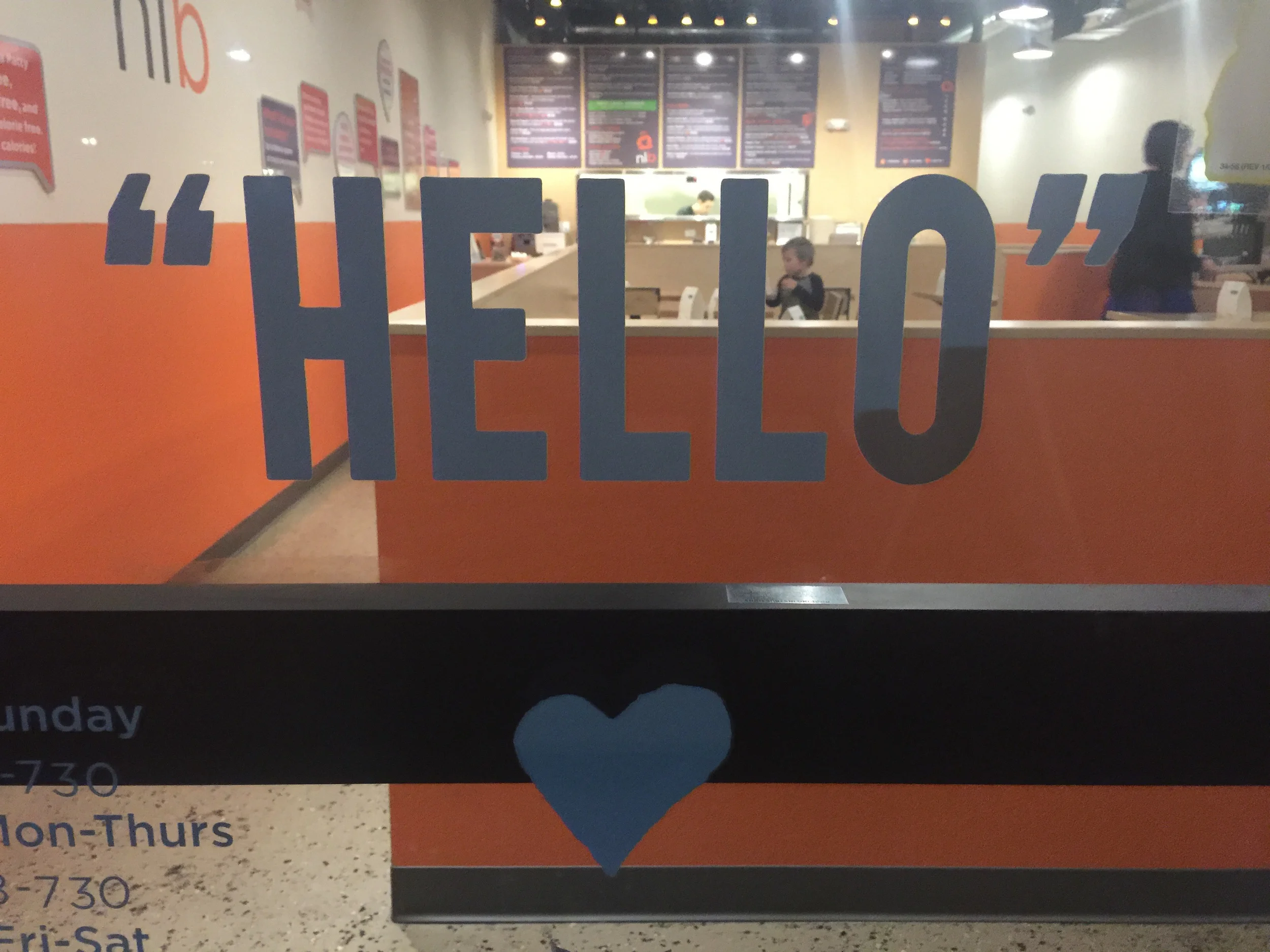
Introvert.
Today I want to talk about that word. I've been thinking a lot about introversion over the last couple months - maybe even the last few years. I think it's an interesting concept that - like many simple concepts - has a kernel of truth to it, surrounded by some interesting half-truths and metaphors.
All my life, one of the interesting things - challenges, maybe - about my life is that I seem to float between worlds. And that's no less true when it comes to the introverted/extroverted continuum. The first time I took the Myers-Briggs test as an adult, the woman who administered it half-jokingly accused me of cheating. I had come down right on the 50% line between introvert and extrovert - a result which, she said, was "highly unusual". Certainly we see it that way in popular culture. People are one or the other - introverts who bury their heads in the sand, or extroverts who can't seem to ever be quiet. But my reality has always felt a lot more malleable than that. Sometimes, I'm the life of the party, and other times, I just want everyone to go away. It isn't quite the same as whether I like people or not, either; I usually do like them, but even when I like them, sometimes I find them exhausting. This is true not just on a day-to-day or hour-to-hour level, but in my life overall as well. When I was a little kid, I distinctly recall being very extroverted - the leader of my little local pack of kids, a popular student, a football player. As an adult, I feel I'm at the apex of my introverted phase. Especially moving to Bend, I feel very much like retreating, like being alone. So how to jibe this sense of introverted-ness being a fluid, changeable thing, with the typical perception of it as an absolute description?
I don't have the answers to this, but I will say this: in my life, my level of introversion feels much more like nurture than nature. Do I think there are biochemical aspects of my brain and metabolism that make being social harder sometimes and easier others? Yes, I think that's probably true. But a lot of what makes me want to - or not want to - be around others is simply my recent experience with how people have been treating me. This seems obvious, on one level. When we have a bad experience - say, crashing while skiing - then we may be a little shy of skiing for a while.
What I find particularly interesting about this is the potential for positive or negative cycles to occur. When people are rude, or just difficult to understand, it causes stress. A side note about that: obviously negative interactions can be stressful. People yelling or being rude or nasty or bullying is stressful. But stress can also come just from interactions that are awkward or hard to understand. Even well-intentioned interactions can make someone feel misunderstood or confused, and that's stressful. That stress has an immediate negative effect, but it also tends to create an expectation that future interactions will cause more stress. After a while, like an abuse victim, you approach each interaction guardedly, wondering if perhaps that interaction will go poorly. And if this is true for me, I suspect it's true for many people. There's a similar phenomenon in exercise; when you work out, you burn calories, it's true - but even more critically, you create excess muscle mass, which increases your resting metabolism, creating a virtuous secondary cycle. So, do people avoid interacting with someone because they are shy, or are they shy because people avoid interacting with them? Perhaps both.
My point - in as much as I have one - is that introvert/extrovert is not a label, it's more of a state of mind. We create shy people and introverts by the way that we interact with others - at least part of the time. That's an opinion of course, based on my own life and my observations. But, if true, it's a pretty inspiring message - it means that we can change our attitude - but we need help. Just like obesity, or alcoholism, what we once thought was entirely choice, then later entirely genetics, we now understand to be a complex issue combining willpower, genetics, and the support of others.