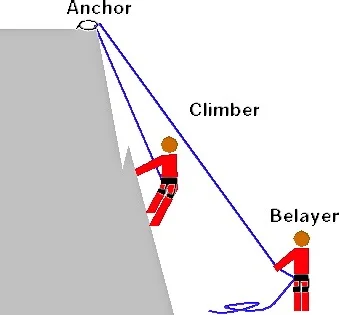
On Tuesday, I went to my first class to learn how to lead climb. As some of you know, I've gotten pretty into indoor rock climbing lately. I happened to have moved next to one of the best rock gyms in the entire country, so I'm taking advantage of it, and climbing as often as I can (and I'm always up for new climbing partners, by the way!) . Most of what I've been doing so far is called "top roping". This is what you do when you're new to a rock gym. It's a ton of fun and probably the safest and easiest option, next to bouldering maybe. In top roping, the rope is permanently attached to the wall and you just help your partner get up and doing by managing the rope (which is called "belaying"). You can learn how to do it in an hour or so tops and be proficient at the basics in just a couple of days.
Lead climbing is kind of the "next step up". It's a bit more realistic interpretation of what it would be like to actually climb outside. The biggest difference is that, when you get to the wall, there is no rope. All that is on the wall are the holds (of course) and these drilled-in carabiners called "quick draws" that can hold a rope. As you climb the wall, you bring a rope with you and clip that rope in to each of these draws until you get to the top, where you climb into a final set of 2 draws that form an anchor. Then the partner, or belayer, lowers you down using your own rope. In an outdoor setting, this is called "lead climbing" because the idea is that this first person - the lead climber - is the one that gets the rope on to the wall, and everyone else behind them can do the relatively simpler climb of top roping. In the gym, you typically just take the rope down after putting it up; it's just a fun exercise and challenge.
Lead climbing is harder for a few reasons; first, there's more to keep track of; more equipment and rules. Second, it's physically more challenging because you have to be able to clip in, which means that at certain points during your climb you must be able to pause and detach one arm from the wall and hold a stance long enough to manipulate the rope into the draw. Third, if you do fall, you have potentially further to go. In top roping, you are always being held fairly tightly, and falls rarely exceed a couple of feet unless someone isn't doing their job. But in lead climbing, there is no way to completely prevent falls from going 8-10 feet or so. This has to do with the fact that, until you get to a quick draw, you're exposed the distance back down to the next draw times two, plus a bit extra for rope stretch. So it's a bit scarier. It would be very hard to actually die while lead climbing, but it really wouldn't be hard at all to take a nasty knock on a knee or elbow or get a bad cut. And falls from as much as 8-10 feet to the ground (or "deck") are not unheard of.
For all that, though, to me it's a manageable increase in risk; just enough to keep things interesting, fresh and fun without making me genuinely worried. I climb a lot at the gym and watch people lead climb and it doesn't honestly seem that bad. And of course the easy way to avoid injury is just don't fall!