This post is ostensibly about hiking, but its really about risk. First, I will give you the benefit of my 37 years of experience. Which is this: Most of the time, you shouldn’t quit. Except sometimes, when you should. Got that? OK, good. If you’ve really internalized that, your prize is that you don’t have to read the rest of this post.
A little bit of background: I am not, generally, a quitter. In fact, off the top of my head, I can really only think of two times when I’ve quit something in my entire life, and they both happened within the last year. And one of them happened yesterday. Now, there are certainly things that I failed to finish; my preschool teacher training, for example. But that wasn’t really a “quitting moment”; other priorities just came along and I shifted my focus. What I mean by quitting is that one moment in time, where you look at something, and for whatever reason - or for multiple reasons - you say “No. No more, today at least.” (That “today at least” part is important and I’ll talk more about that later). The first time I quit, it was about 4 months ago, and I wrote about it here in this blog; you can go back and find it. I had signed up for a 10 day silent meditation retreat, and after the first day, I walked away. The second time, like I said, just happened yesterday.
I’ve been really interested lately in mountaineering, or alpinism - climbing things. I had my own climb experience, which I also wrote about here, and I met some cool mountaineering folks, and I’m hooked. It combines something I love - moving forward under my own power - with this really cool exploration of risk and adventure. So I’ve been voraciously devouring every documentary and book that I can get my hands on - luckily, this being a hotbed for that sort of thing, the local library has a ton of materials. There’s a lot of fascinating stuff in these stories. Although on the surface it’s all about athleticism, training and equipment, when you distill it down, it really ends up being about one - or possibly two - things: risk, and self-awareness. Having a good sense of what’s happening around you, and inside your own head, and knowing when to take that chance, and when not. On one level, nobody would ever climb a mountain if they didn’t have a healthy ability to push through risk and fear. On the other hand, these mountains are littered with the corpses of people who took it one step too far. There’s a book I just started reading by Ed Viesturs, a famous Seattle mountaineer, and I’ll quote from the foreword - written by a friend of his - here:
“One of the stories that Ed told me early on was about how he turned back only 300 feet short of the summit of Everest in 1987 on his first Himalayan expedition. He knew he could make it to the top, but he wasn’t sure he could get down alive. That turnaround is an incredible statement…If I’d been in the same situation, I’m afraid I’d have told myself, ‘I’m this close, I’m going for it.’”
In 1996, a well-known tragedy occurred on Mount Everest. On one single day, May 11, 1996, 8 people would die while attempting a climb of Everest. Almost all of those died on the way back down from the top. The story has been told and retold a dozen times, most famously in Jon Krakauer’s book Into Thin Air. Although no tragedy like this has a single cause, the essence of the story is this: the hard part of climbing Everest - of climbing any mountain - is actually getting back down. In the case of Everest in particular, mountaineers leave for the summit in the middle of the night, to ensure that after summiting, there is enough daylight to make the return trek. Arriving at the summit too late increases the risk many fold, because spending a night out in the weather up at that elevation - called the “Death Zone” - is a terrible idea. The right way to do the climb is to leave early, make good time, summit early, return safely. Done, and done. On May 10, some people did that, and lived. Others did not, and died. Now, this rule - to summit early - is not a secret. It’s a well known fact that most mountaineers - certainly anyone anywhere near Everest on that day - would know. Some of the climbers who died were inexperienced, but some had a great deal of experience, including previous Everest summits. Why, then, did they go all the way to the top?
I’d read several accounts of this tragedy, but Krakauer’s book had an interesting anecdote in one of the Epilogues I hadn’t yet heard. After the events of May 11, there were still a number of climbers and expeditions teams left on the mountain. They had all heard an experienced the tragedy from close range, including hearing all the radio transmissions back and forth, and witnessing the rescue efforts. Some of the climbers lost their stomach for the enterprise and left - but some pressed on, and others summited the mountain through the month of May. One climber, in particular, Bruce Herrod, was doing a solo climb of Everest. According to Krakauer, he was on the South Col when the tragedy happened - a few thousand feet from the summit. He heard the whole thing. Yet, not more than two weeks later, he attempted a climb to the summit. He left late, he had trouble getting up to the summit, he finally made it at around 5 pm - way too late - and then died on the descent. One particular chilling line from Krakauer recounts that Herrod had to literally step over the frozen bodies of at least 2 of the climbers, on the way up, that had died not more than 2 weeks before.
Just to make that clear: despite literally stepping over the frozen bodies of 2 people who had just made the same exact mistake, Herrod proceeded to make that mistake and die.
Mountaineers have a name for this: “summit fever”. The idea is that the goal gets ahold of you, grips you so strongly that you lose your ability to reason. It doesn’t help that, at 29,000 feet, hypoxia (lack of oxygen) dulls your senses and reasoning power. But the essence of this “disease” is simply human nature. Climbers put an enormous amount of time and energy into getting near the summit of Everest. A climbing permit alone costs about $10,000, but a guided trip can easily total $65k. It takes about a month to acclimate to the peak. Most climbers end up taking 6 weeks off from work and life. And the weather and oxygen conditions are such that, if you do turn around, that is often your only chance. You can’t come back the next day. For all these reasons and more, climbers get tunnel vision. They are 100% ego invested in the outcome: climb and win, turn around and fail. It’s particularly insidious in this case because the summit *is* achievable. It beckons, close. The danger is in the descent, and it takes a dose of reason and rationality to remember that in the midst of the excitement. The whole thing reminds me a bit of the monkey traps they used to use in India: a banana in a coconut, with a hole big enough to reach through, but not big enough to take the banana back out. You can have the prize, but it costs you your life. Release the banana or die.
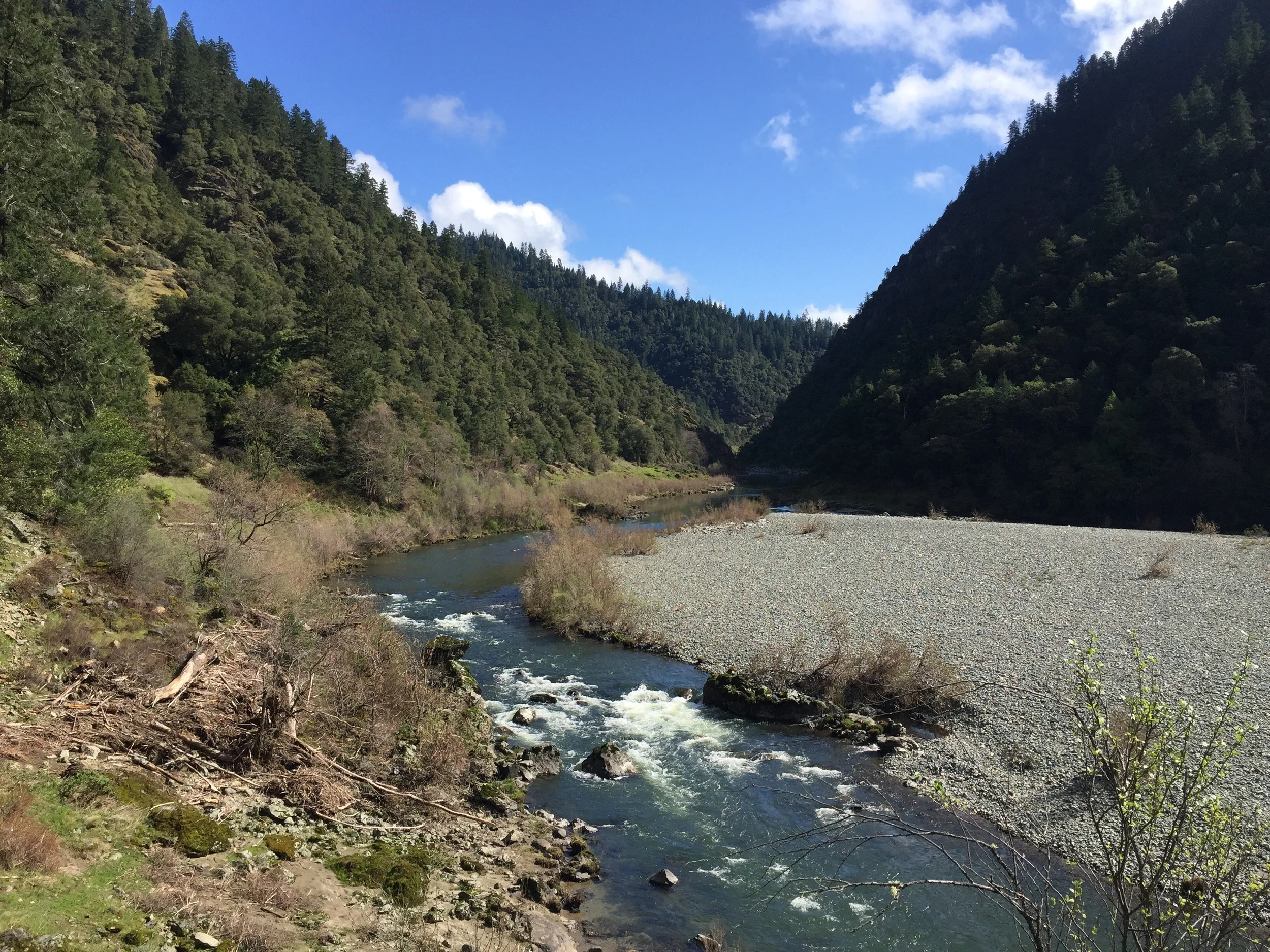
Of course, none of that has anything to do with me personally. What does is that, facing a fairly boring spring break, I signed up for a 6 day backpacking trip that was associated with COCC, the school I’m attending. It seemed like potentially a fun thing to do. It was a 42-mile hike along the Rogue River in Southwest Oregon. I’d heard it was beautiful. The guides were students that had just graduated from OSU-Cascades (COCC’s sister school) with Bachelors degrees in leading outdoor adventures. They were nice - very extroverted, but nice. I felt that I was 100% prepared, athletically. I’d hiked as much as 20+ miles in a single day, and even though I had never worn a pack quite so heavy, I thought that I could handle 6-7 miles a day. And I could, no problem. But I was so focused on the athletic challenge that I missed what was really at stake: the outdoorsmanship of being able to carry everything you need to survive for 6 straight nights. My first clue that something was amiss was the night before, when I laid out everything I thought I needed to take, and realized that I had no hope of fitting it into the largest pack I owned. I also realized that I had nowhere near enough rain gear. I called one of the guides. She assured me that everything would be fine. They had packs I could borrow, she said. They had rain gear. I was worried about nothing. They weren’t going to make me go, she was careful to say, but she implied that basically going was the right answer. She talked me into it. A little voice in the back of my head was screaming at me, but faced with a knowledgeable authority, I made my first mistake: turning responsibility for my decisions over to someone else. It’s fine to trust an expert. But the final arbiter of success in yourself, and the person that knows you best is you. That person is an expert in their field, but you are an expert - the worldwide exclusive expert - in what it means to live inside your body. This woman could not possibly have known, for example, that I have poor capillary refill, and that my extremities get very cold at low temperature. She didn’t even ask about my sleeping bag, except just to see if I had one.
When I got to the departure point, I immediately felt ill at ease. Everyone else who was going - 6 in total - was completely ready to go. I had a jumble of my best effort possessions, that I tried to stuff into a huge sack as everyone else stared at me. The woman running the event made some suggestions, and finally just started helping me pack up; she obviously wanted to get going.
The point of this story, by the way, is not that my guides did a bad job. I don’t think they did. I think they were helpful, kind, and concerned. But nobody will ever be as concerned about you as yourself. They had a lot of logistics to keep track of, and 5 other people to worry about. At that moment, I slipped through the cracks a bit.
That night, we stayed at a campsite about 3 miles from the trailhead. As I pitched my tent, it started to sprinkle a little bit. The other guides put up tarps. After a few minutes, the sun emerged and it looked like a nice day. I was antsy and full of nervous energy so I decided to go for a jog, stripping down to just shorts and a tshirt. Despite being cold, I knew I would warm up on the run - and I did, enough to sweat. On the way, I stepped hard on a crag and bruised the bottom of my left foot. Once back at camp, I put on my outer layers, but I was sweaty underneath. Just as I thought about unpacking my pack, the rains started. And they didn’t stop until the next morning. I managed to stay largely dry, but I had to unpack my sleeping bag and set it up inside my tent while the rain howled outside. All night I was freezing. I kept waking up, tossing and turning. My feet were so cold they hurt. I couldn’t stop shivering. My bag was wildly inadequate; rated to perhaps 40 degrees, the night got down into the low 20s. I had that sudden insight, remembering an old joke of my Dad’s: “if you look around the room and can’t figure out who the sucker is - it’s you.”
Next morning, I tried to put on a brave face. I think everyone could tell I was unhappy - I hide it poorly - but we all managed to pack up our gear and head into the van. I spent an hour just sitting in the van, trying to warm up. I was useless for breaking camp, but finally the others had everything together, and we started towards the trail head. I was actually excited, because hiking is my specialty. But as I rode in the van, I couldn’t help but think: this is going to be my next 5 nights. I was miserable. And I am not good at being miserable.
About halfway into the first day, I knew we were going to run across one of the other guides, who had hiked with a friend the opposite direction so that they could move the van from the start of the trail to the end. I knew this would be my only chance to bail. There were so many things fighting against me: the fear of failure, of course. The social awkwardness of abandoning my group. The added awkwardness of adding myself to the trip of the two guides hiking the other way. I can vividly recall staring at them all assembled, my throat going dry and parched. In that moment, I knew both the upside and the downside of social pressure. It’s good that we’re social animals. Sometimes, we reach inside ourselves and pull out something we didn’t know we had. Would I have hiked on that trip and lived to tell about it? Of course. I wasn’t in fear of dying. But what’s interesting to me isn’t so much the consequences, but the decision making process, which is really the same one faced by all those mountaineers. Listening to the little voice in your head and believing in yourself enough to turn around, or letting others make decisions for you, and potentially finding something new - or something terrible.
It’s hard to regard my trip as a failure. First of all, it doesn’t feel like one. But more importantly, regarding it as a failure is a very dangerous thing to do. Once you become ego-invested in the outcome of something too much, once it starts to look like success and failure and nothing in between, that’s when the decision making process starts to go awry. Or maybe “awry” isn’t the right word, because that implies a value judgment. What I should say is that ego-investing in the outcome may increase the chance of success, but it also drastically ratchets up the level of risk. As long as you’re aware of that, then go for it. But make sure you realize the mental state you’re in.