Comment

Day 394 - San Francisco, CA

Over the last month, I have had two of the worst medical issues I've possibly ever had in my life.  The first, which resembled a cold, turned into an awful upper respiratory infection that sapped my will to live for 3 weeks.  The second, a toothache, has gotten so bad that tomorrow I am going in to get the tooth removed and am currently taking vicodin because the pain is so unbearable I cannot sleep.

On the surface, it seems like these are awful things - and they are.  Close friends, and FB, have heard me complain about them.  But under the surface, the Buddhists say that every one of these challenges is an opportunity - and in this case, I see their point.  In my life, I have been very charmed, health-wise.  No serious diseases, no broken bones.  And while I've always considered myself very sympathetic and empathic, these two problems have really opened my eyes to what it's like to be sick.  And it's made me realize two things: one, that nobody should be asked to go through what I'm going through without benefit of the best care they can get, and two, that health is the most important thing.  I've always been a fan of universal health care - but now I am a serious fan.  Even in my extremely privileged scenario, I found myself sitting at the endodontist today on the phone with my dental insurance, while my teeth literally screamed at me.  When I should have been worrying about healing, I was instead thinking about diagnostic codes and yearly limits.  I will readily admit that my current situation is the result of some very poor planning and mistakes.  But at no point do I feel that those mistakes merit this level of pain.  This kind of pain is something nobody should have to go through.  And of course, I will sometime very soon get to stop experiencing that pain.  It will cost me money and time, and I will suffer for a bit, but eventually, I will get to stop suffering because I am lucky and privileged.  Some people in this country are not so lucky - and that's not OK.  It's just not OK.

Comment

Comment

Day 393 - San Francisco, CA

image.jpg

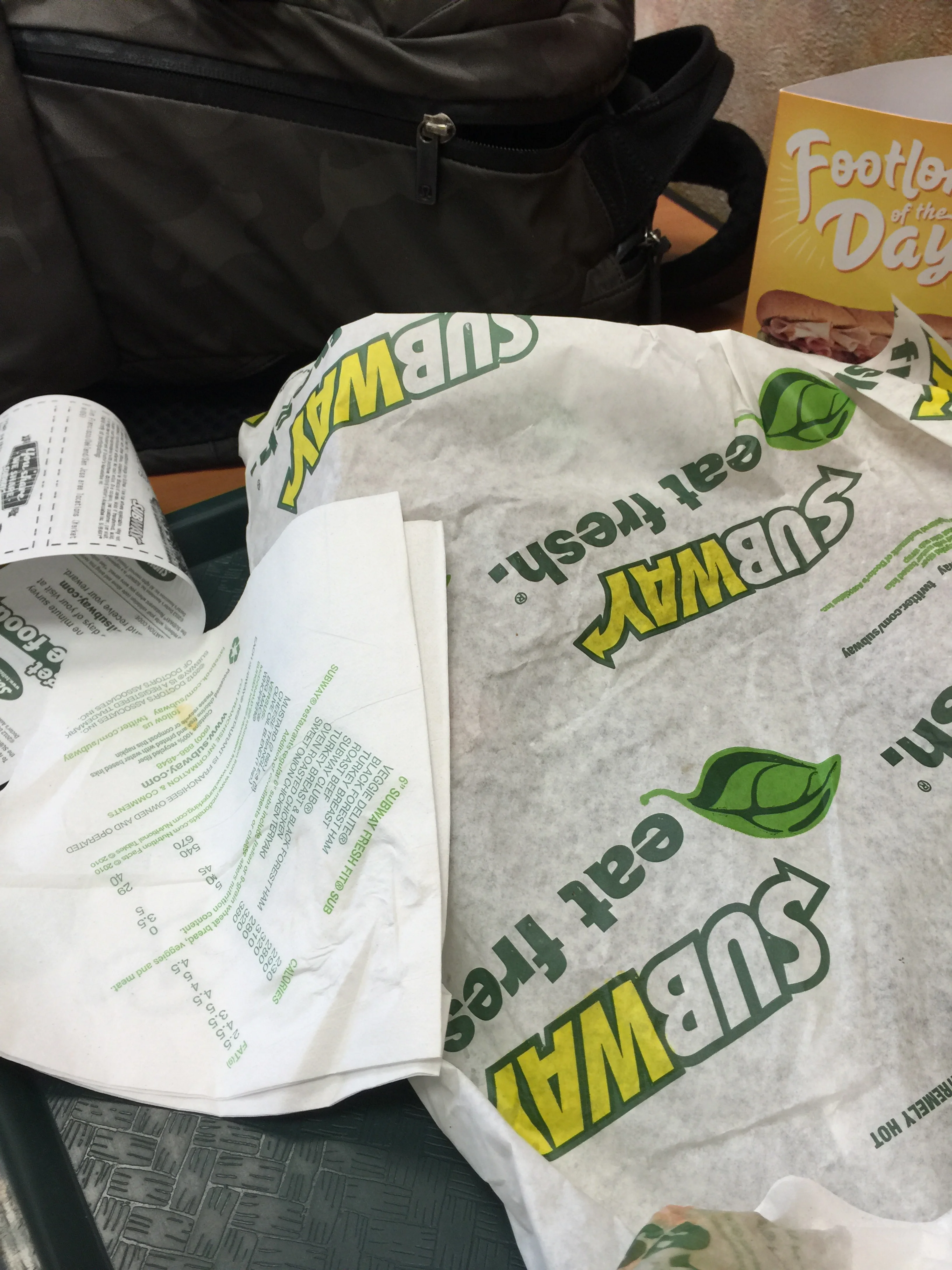
OK, this might be the dumbest topic I've ever written about in this space, but today, I want to write a little love poem to Subway.  Yes, the chain of sub restaurants that everyone loves to make fun of, with Jared and the eating of fresh and all that crap.  People dump all over Subway.  I remember a while back there was the yoga mat chemical thing.  Some people hate the smell of their bread.  Or they just complain that they're chincy. 

I've eaten literally thousands of meals at Subway in my lifetime.  At least a thousand, anyway.  There's a lot of reasons for that, but I guess the primary one is that Subway is kind of a gateway drug for me.  You see, I have a fascination with filling my face with crap from fast food restaurants.  I used to fantasize about Chick-Fil-A or Wendy's.  I've written elsewhere on this blog about why, but part of it is the regularity, the predictability of it.  Subway has that; anywhere in the country, or really the world, I can get a ham and cheese sub, and it's pretty much delicious.  At least, if you like it once, you'll like it every time.  But the difference is that Subway actually sells you things that look like they saw the ground recently.  The produce is actually always amazingly fresh and crisp-looking.  They have spinach and green peppers and olives.  Most of the green peppers I've eaten in my life probably came from Subway.  And, they tell you how many calories are in everything.  Not because they have to, but because it's part of their shtick.  If I'm in Jacksonville, for example, nobody lists calorie counts - except Subway. 

Subway has been the backdrop to a lot of experiences in my life.  I'm sitting there right now, typing this out.  A surprising number of my blog entries have been written there.  That's especially true in San Francisco, where there just aren't as many options for a quick, predictable and cheap meal that's reasonably healthy. 

So, thank you, Subway.  I am 100% certain that I am a way healthier person because you exist.  Compared to what I would've eaten otherwise, you've probably saved my liver. 

Comment

Comment

Day 392 - Somewhere Over The United States on a Plane

Today is going to be a bit of a "meta" post...a post about the blog itself.  Specifically, the posting schedule.  When I was on my bike trip - which is how this blog got started - I posted almost every day.  That made sense; it was kind of my personal travelogue, or diary.  I wanted to remember what was going on.  Plus, there was something interesting happening almost every day.  For a while after I got back, I didn't post very often because I was just kind of exhausted and adrift.  Then I got back into posting every day, then I dropped it, and back and forth.

Recently, I made a personal commitment to post every day.  Part of the reason for this is some conversations that I had with my therapist.  I've always had a bit of a "death of a salesman" complex.  That is, I feel - rightly or no - that I don't get as much attention as I'd like to.  It's a fundamentally selfish and almost certainly unhelpful attitude, that I'd like to lose, but it's there nonetheless.  And, quite frankly, posting to the blog helps.  It helps, of course, to think that people are reading what I wrote, and responding.  And so I thank every one of you who takes the time to read, and especially those that read and then respond, either here or on Facebook.  You are part of my conversation and my healing process and I value you more than you know.  But in a strange way, merely writing things down makes me feel heard.  It makes me feel like, at the very least, *I'm* listening to myself.  And of course I'm my own best listener.  I kind of think everyone should have a blog, even if that blog is only for yourself (I guess that's what they call a diary).  Although I'm pretty open and exposed on this blog, I have written a few entries that, after writing them, I threw away (or kept without publishing).  But even those entries felt cathartic and important.  I do go back and read what I've written some times, but even if I never did, these entries feel important to me.  Maybe it's just a way of fooling my psyche into thinking that someone cares.  Maybe it's that part of me feels like taking the time to actual put my thoughts down on paper gives them legitimacy, makes it feel like they matter.  Maybe part of it is that age-old exercise of talking to yourself to work out problems.  One of my old programmer jobs used to have this piñata, that you could talk to, when you had a programming problem to work out.  It sounds silly, but in the act of explaining the problem to the piñata, oftentimes you would realize the solution.  It just had to be spoken out loud.

So, yeah.  I am going to endeavour to make every single post on this blog interesting and worth reading.  But even on those days when I don't feel like I have much to say, I'm going to take my best idea and run with it anyway.  Because it's a practice, like meditation or eating right, that I have to do every day to make it the most effective.

So, today, I'm talking about the blog.  And, about my failure to sometimes witness myself, and to let others witness me.  I feel constantly unheard, but of course it's not true.  My parents hear me, my job hears me, my friends hear me.  And the more I let them hear me, the more they hear me.  It's true that, in some ways, I had a difficult childhood in this respect.  My brother took a lot of the attention in my family.  My parents - bless their hearts - never knew what to do with me.  I should have had tons of friends but instead I hid in computers for way too long.  I got shy in high school, and retreated.  And I developed an overdeveloped sense that I was being ignored.  Which, of course, became a self-fulfilling prophecy.  And now I live in San Francisco, honestly (and I say this with love) one of the most self-absorbed cities in the world, so that isn't helping.

But part of the solution is recognizing that I am my own best friend, and my own witness.  That I don't need to be validated by others, but to serve that purpose for myself.  I'm the only person I can count on 100% of the time.  And if I don't see myself as valuable, others never will.  This blog is just one instrument of that, one way to show myself that I'm worth paying attention to.


Comment

Comment

Day 390 - Jacksonville, FL

image.jpg

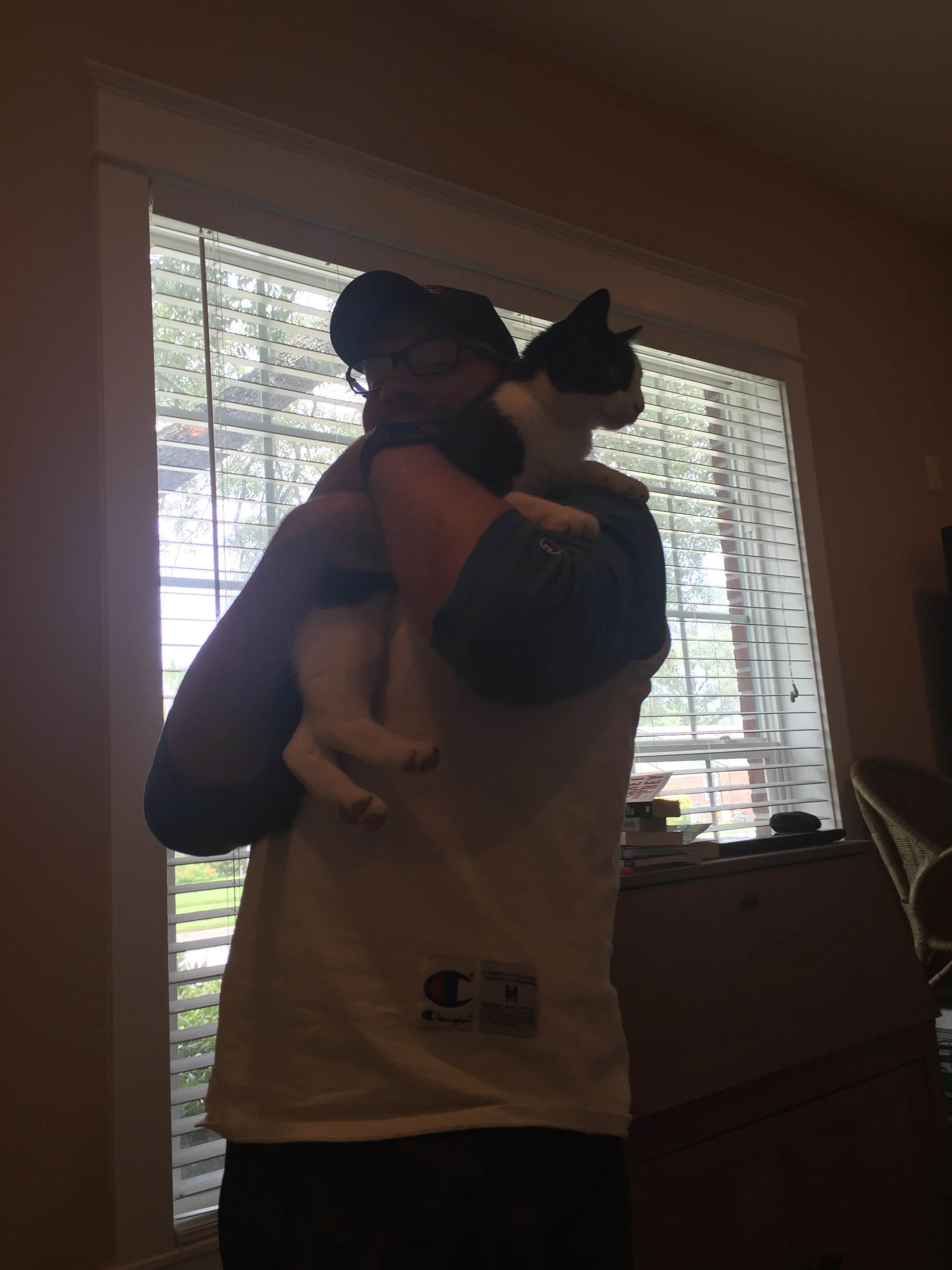
Today we're going to take a break and just do a little fluff - what the news shows would call a "human interest piece".  I'm out in Florida visiting my family, and one member of my family in particular is the subject of today's blog: my family's cat, Oreo.  Oreo is probably, to most people, an unremarkable cat, but to me and my family she is super duper awesome.  First of all, she's incredibly friendly.  I think she's one of those cats that thinks she's a human being.  She loves being picked up and held and she loves it when my Dad rubs her tummy.  If given half a chance she comes right over and sits on a lap and just starts purring.  She's actually really small, so small people think she's a kitten sometimes. 

What's particularly remarkable about her is that I even was able to pick up and hold her.  She's an indoor-outdoor cat.  She spends every night in my parents garage, laundry room or outside.  She loves to go out and hunt animals and run around, and the neighborhood loves her.  As always with outdoor cats, you worry about them.  In this case, about six months ago, my parents gave me the sad news that Oreo had been missing for a few days.  A few days stretched into a week, then into several weeks.  Most of us gave up, although of course I kept saying all the right things: that some family probably was keeping her, thinking she was a stray.  Maybe some kids took her home and begged their parents to keep her.  She was chipped, but that requires going to the vet to discover.  She didn't have a collar. 

My mom was the one person who genuinely didn't give up hope.  She always thought the cat was coming back.  And, lo and behold, one day I called, and nonchalantly my mom mentioned that Oreo had just showed up!  A neighbor had called while my parents were out saying that they'd seen Oreo just a couple of doors down from my parents place.  They drove over and sure enough, there she was, just walking around like nothing had happened.  It had been about six weeks.  She was well fed and groomed, so obviously had been living with some family.

There's a few lessons here, which I'm sure you already know but it's always worth remembering: first, love something today because it might not be there tomorrow.  Second, even though things often don't work out in this world, that means that sometimes, they do.  Third, cats are clever creatures. 

Hi, Oreo! 

Comment

Comment

Day 389 - San Francisco, CA

So, I think I might actually vote for Bernie Sanders.  Don't hold me to that, you know, but there is something kind of refreshing about the guy.  You get the sense that he's the kind of politician we haven't had for a bit.  He reminds me of Dave, when the guy brings in his accountant buddy to fix the books in the White House.  I like that he's a pain in the ass. 

It may sound weird for a guy who makes $150k a year, but I'm pretty ready for socialism, honestly.  Yes, it was quite a shock to see 48% taxes taken out of my signing bonus, but honestly the only reason I really cared was that I had debts to pay off; debts that arose largely from not being able to pay for things like health care and rent.  Point is, I'd rather just not have the debts or the money. 

Someday, my goal is to teach, and when I make that decision, I'd like to not have to think about money as a big part of it.  Twice now I've tried to become a teacher.  Once, I sat through a semester of classes in Early Childhood Education, to get a license to teach preschool.  I discovered to my chagrin that the average salary of a preschool teacher in San Francisco was about $28,000.  You can't live here for that.  Nobody could.  So I asked my fellow students what they were doing there.  Almost every single one said that she (they were all women) had a husband who made enough to support them.  :(  The second time around, I applied to and got into a very prestigious teacher training program at Stanford.  I even went down for the "sell weekend".  As I sat there, I added it up in my head: approximately $100k in lost wages, and $80k to attend the program.  In one year I would spend $180k to become a teacher, and go from being financially solvent to massively in debt for the rest of my life.  And so, I didn't pull the trigger. 

I would love for somebody to just tell me: "hey, be a contributing member of society, and we'll take care of education, health care, and a place to live.  the rest is up to you".  I'd love that.  For someone who specializes in anxiety, that sounds like a dream come true.  I want to be ambitious and successful, yes, but my ambition is to climb mountains, make some woman very happy, get in awesome shape, have a collection of awesome friends, etc., etc.  Not to make a big pile of cash. 

So, yeah, Bernie, let's do this thing.  Maybe land of the free means free to do our own thing, and maybe the best way to do that is to let go of control a little bit.   


P.S. I reserve the right to change my mind.  :) 

Comment

Comment

Day 388 - San Francisco, CA

The other day, I had an experience that reminded me of something important.  I had been watching a friend of mine's Facebook feed, and it looked like they were having a great day.  I was a bit jealous, actually; they'd been out with their family to a Giants game and to brunch.  The pictures looked really nice, everyone smiling, sunny day.  Later that day, I got together with that friend, and they proceeded to tell me how their day had really gone; they'd gotten in a fight with their sister, the game was overwhelming, and basically the day was a mess. 

I was reminded in particular of a video I watched a while back, which you can see here: 


It's a bit of a depressing video, to be sure (sorry about that), but I think it makes a valid point: too many times, we use Facebook (and other things like that) to put a version of ourselves out there that we want other people to like.  In the old days, it used to be that the only people who knew us were people who cared about us; people who we worked closely with, family members, spouses, good friends.  The only people who really had to worry what others thought of them - random people, that is - were celebrities or politicians.  But these days, everyone is CEO of You, Inc.  We all are minor celebrities, and we all put together clean and slick packaged versions of ourselves for public consumption. 

I am certainly as guilty of this as anyone.  What's the point in posting that I'm having a bad day?  It just brings others down.  Nobody's interested.  Anyone who really is interested is someone I would contact in private, offline.  So Facebook ends up just being a celebration of the best of my life.  And - to a point- I don't think there's anything wrong with that.  But I do think it's important to understand that's what we're looking at.  That what we see on Facebook is not, in any way, representative of who that person really is, any more than an OKCupid profile can really tell us what someone is afraid of before they go to sleep at night.  It's a fun diversion, a cute way to keep in touch.  But it's not real. 

Comment

Comment

Day 387 - San Francisco, CA

It occured to me, a few days ago, that some people who read this blog might be a bit confused as to why my titles are always so cryptic.  Like, why do I bother to list San Francisco?  Most of my posts are from San Francisco.  I live in San Francisco.  And what is day 387?  Well, that's a simple answer - it's 387 days since I left on my big bike trip last year.  But why list that seemingly random number? 

When I left on my trip last year, I had no idea what to expect.  I thought that I was leaving on a fairly concrete journey, with a beginning and an end.  But what evolved felt a lot more open-ended than that.  I ended up on about 3 different journeys, all in one.  And when I was done, when I snapped that picture at Walt Disney World, I felt a powerful sense that I didn't want it to be over.  That's when I realized: it not only doesn't have to be, it can't be over.  As long as I live and breathe, this is the journey I'm on.  That was true spiritually and figuratively, but I decided then and there that it would also be true literally; that I would one day get on my bike and ride again, someplace, some time.  And even though those plans got put on hold this year, that's still my goal.  Someday you will wake up and the title of this post will be "Day XX - Nice, France" or "Day YY - Canberra, Australia".  Or the Antarctic.  Who knows.  Maybe the Isle of Man.  The point is: life is a highway.  I'm going to ride it.  All night long. 

See you around the next corner. 

Comment

Comment

Day 386 - San Francisco, CA

An apology to those of you on the "less dorky" side of my blog readership, because today is going to be a bit dorky and math-y.  Well, OK, a lot dorky.

Anyway, this is something that's been on my mind a lot because I play a good bit of this online card game called Hearthstone, made by a big gaming company called Blizzard.  Any time you build an online game that people can play against each other, you end up running up against one of these game design problems that's particularly thorny: how to match people up to play against each other.  Of course, you can always play against your friends, or people you know personally, but generally, at some point you expect the designers of the game to hand you someone fun to play against that you don't know.  A general design principle of fun is to make something challenging, but not too challenging.  And that applies here: it's generally fun to play against people who are about as good as you are; sometimes slightly worse, sometimes slightly better.  The question is how to make that happen, and in an automated way.

A lot of smart people have thought about this problem, and since long before computer games.  One of those was a man named Elo, who was a top chess player.  He designed a system which you can read about here: https://en.wikipedia.org/wiki/Elo_rating_system.  The essence of his system is that every player is assigned a number.  Everyone starts at 1000, and you go up and down based on how you do in matches against other players.  If you beat someone, you get points, and if you lose, you lose points.  How many points you gain or lose is based on how much higher or lower they are than you.  So if you are at 1000 and you beat someone who is at 1500, you get a lot of points, maybe 15 or 20 or even more.  If, on the other hand, you beat someone who is 900, you may only get a half a point - or no points.  There are lots of variations on Elo's scheme, and some of them are in active use in online gaming.  They work reasonably well in some ways, and not as well in others.  And Blizzard decided that wasn't good enough.

A quick note about Blizzard: they are an incredibly successful gaming company.  Along with maybe Valve and Nintendo, they are household names among gamers.  In particular, Blizzard is known for building online multiplayer games.  That's their thing.  Another thing about Blizzard: they consider themselves design geniuses (and with good reason).  And their main design goal is, and always will be, fun.  They want everyone playing their games having fun, all the time.  And one problem with Elo is: it isn't really very fun.  It's very math-y.  It's kind of hard to explain.  When you win or lose it can be really hard to tell what just happened.  And it's kind of relentless; depending on the implementation, you find that you're always playing someone slightly better than you.  This is great if you're a dedicated chess champion who wants to hone their craft; it's less good if you're on your lunch break and just wanted to have a quick fun game.

So, in particular, for Hearthstone, Blizzard implemented a sort of hybrid system.  For really really good players - what they refer to as Legend - they use a system that's close to Elo.  But for everyone else, they use a much simpler system.  Basically, when you lose, you lose a point, and when you win, you get a point.  Then, you are generally matched against players that have about as many points as you do, plus or minus a couple.  That's it.  Simple, right?  And pretty effective, at least on paper.  After all, people who are better win more, and get more points, and so they play against harder players.  And everyone understands what's going on.

Except that it has a few flaws.  And those flaws aren't really obvious until you've been playing for a while.  For myself, I noticed that sometimes, I seemed to go on these long winning or losing streaks.  Even though I always had about 20 points or so, sometimes the players I played against just seemed, well, better than other times.  At first I thought I was being paranoid, but finally I figured it out: I was playing at different times of the day.

One of the things about an Elo system which has always been a theoretical problem is the idea of disjoint sets.  That is, sets of players who never play against each other.  Imagine, for example, that a high school chess club sets up an Elo system and starts to play against each other.  Their Elo scores will rise and fall as they play, and they may begin to accurately reflect their status inside that club, but they will never be meaningful when compared against scores of anyone else.  In the real world of chess, that's a serious problem; serious enough that different systems were designed to combat it, such as only getting points when you play against known chess masters.  But in the world of digital combat, such a scenario seems really unlikely.  Why would any such set of players evolve?  The world is so big, and so heterogenous, that eventually the graph of players that play each other will join up.  And, indeed, if Hearthstone used a true Elo system, that would happen.  But it doesn't; it uses this modified system.  And in this modified system, there is no way to significantly change a person's rank based on one (or a small number) of games.  That means that if I only rarely play anyone outside my own small set, that the effect can't be enough to "join up" the graph.  But - again - why would anyone consistently play other players that only come from a certain set?  Well, one way that could happen is geographically; if I'm paired with players based on geography - and I usually am, for technical reasons such as network speed - then my score is really only safe to compare inside that geographic zone.  Historically, that hasn't been a huge deal because, unless you're a racist, there's no reason to think that players in North America, or California, are better than players in Ireland.  

But time of day is different.  It appears - and this makes sense - that the demographic makeup of players at 10 in the morning PST is meaningfully different than the players at 5 pm.  I'm not sure exactly why this is, although I could speculate.  But there is a sizable and noticeable jump in player quality - for the same rank - at about 5 pm PST.  My guess is that this represents about 8 pm EST, which is when the best players, who are often adults, get home from work and log on to play.  They play for 3 or four hours, then they go to bed.  So if you play any time outside that window, you never play against them.

I have no idea if this is true.  It's merely subjective evidence.  But I can demonstrate, mathematically, that this is at least a theoretical problem with the system.  And I can say that subjectively, this theoretical problem appears to be a real issue.

How to fix this?  Well, they could use a true Elo system, of course.  Failing that, they could use Elo as a backup.  Meaning, when they go to pair two players of rank 20, they could also use their (hidden) true Elo scores to make the best pairings.  This would require a large pool of players, but Hearthstone has a large pool of players.  Perhaps they already do this, although if they did, I suspect I wouldn't be noticing the issue.

Comment

Comment

Day 385 - San Francisco, CA

image.jpg

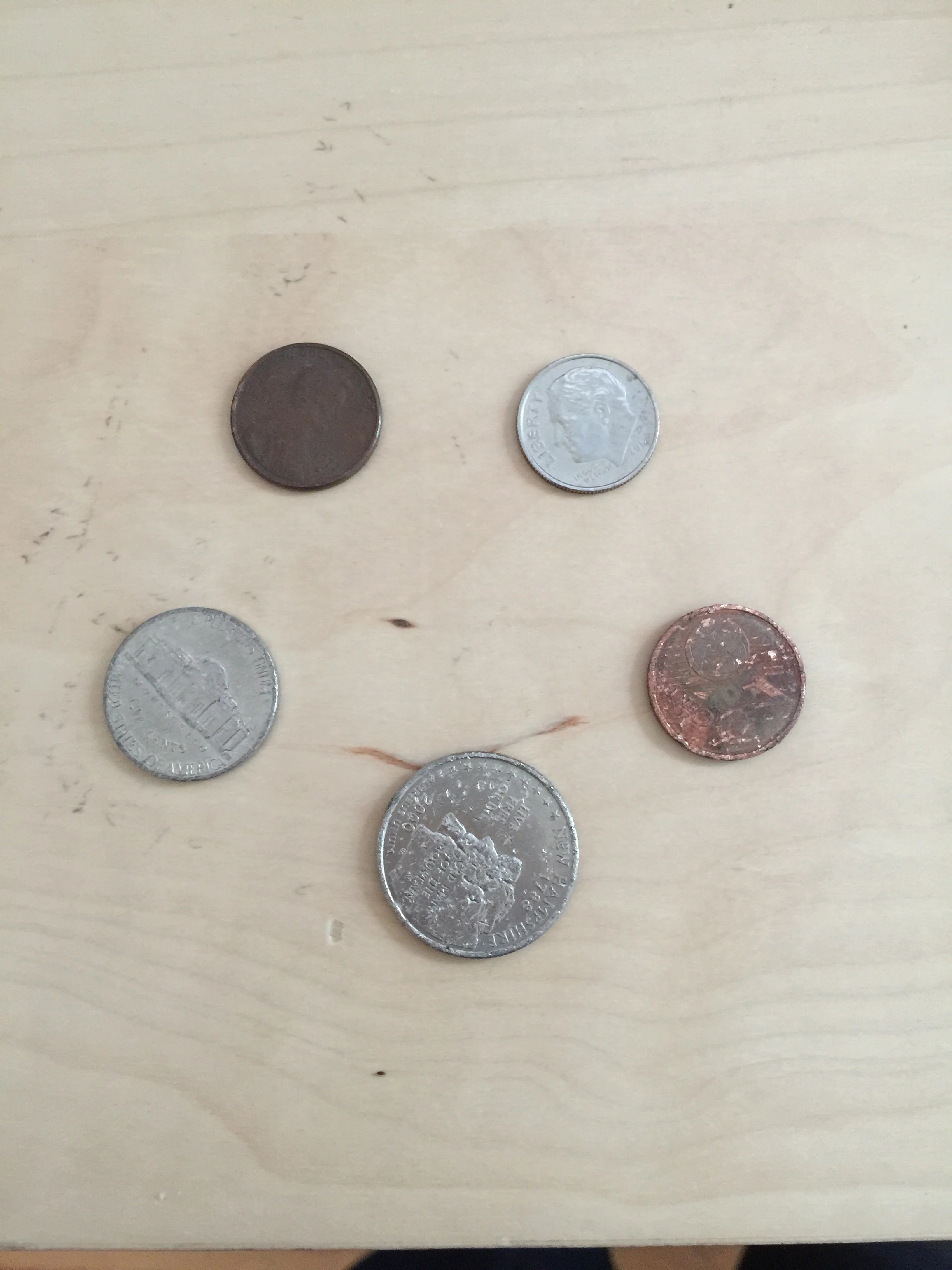
A few years back, I started to develop this habit.  I ride my bike a lot, usually in urban settings.  I use it to commute most days.  For some reason, I started stopping to pick up coins when I rode past them on the street.  They're usually pretty easy to spot; they glint up from the road in a way that catches the eye.  Like most people, I used to ride past them.  But one day - and I can't remember where I was or what was on my mind - I guess I felt like it's silly to ride past free money, or something.  I felt a kind of romantic attachment to these little coins.  I know that when I was on my big bike ride last summer I made a point of stopping to pick up just about every coin I rode past.  Sometimes it was nice and gave me a reason to take a break and get off the bike for a second.  Anyway, you learn some things when you start doing this, one of which is that there are an awful lot of coins on the ground.  Once you start looking for them, the roads are littered with coins.  That picture I posted is all just coins that I picked up yesterday, just riding around town.   (If you have a good eye, you'll notice that one of them isn't even American currency).

I can't honestly say there's any rational reason that I pick up these coins.  It certainly isn't worth my time monetarily.  I don't really collect them, per se - I thought about it but I just wasn't really called or motivated to do that.  Most of the time they go in my piggy bank and I probably wind up giving them to the bank.  I do like looking at them.  I like the look they get after getting run over, all scarred and pitted.  I like the sense that I get of cleaning things up, of somehow making things more efficient.  But basically I just do it just because. 

If I were in an 80s movie, maybe being played by River Phoenix, we would call this a "quirk".  I would be quirky.  And we like that sort of thing.  We like quirks in people.  I basically do this coin thing because nobody else does, and because it doesn't make any sense.  I think somehow it's important to us as people to stand out, to be individual.  It makes me happy that people don't understand why I pick up the coins.  Maybe it reminds us of our humanity.  Not to overdo it, but I think it reminds us of the essentially absurd nature of being a human being; that, at some level, nothing we do really makes a ton of sense.  I get strange looks sometimes from people when I stop, pull over, and pick up a penny.  I can see them thinking "did that guy drop that penny?  is it special somehow?".  Well, no, and no.  I'm just quirky like that, I guess. 

Comment

Comment

Day 370 - San Francisco, CA

June 23, 2014

June 23, 2014

A few days ago, a momentous occasion passed.  Because I’ve been so incredibly sick, I managed to barely notice.  I was vaguely aware of it, though, so when I finally felt well enough today, I checked the calendar.  Sure enough: on June 23, 2014, one year and five days ago, I made the choice to get on my bike and start a solo ride across the country.  I will never forget standing there, with my backpack on, hopeful but incredibly apprehensive.  I remember asking a confused older Asian woman to take my picture.  I remember going back up into my apartment at least 3 times for things I thought I’d forgotten.  I remember that first 5 miles riding through Golden Gate park, and then over the bridge into the Great Beyond.  I never quite made it all the way, in the literal sense, but in another real sense, it was possibly the biggest success of my life, and still the thing I am most proud of to this day.  It’s hard, being here, back in San Francisco, to have the right perspective on all this.  It doesn’t help that I still feel so physically lousy.  I’m sitting in one of my favorite diners, right near my house.  My throat hurts, my head is pounding, my back hurts from coughing.  My mood is not positive.  When I left on the ride, I had no idea what would happen, but I hoped that it would transform my life.  Sitting here, back in San Francisco, back at the beginning, working for a tech company, it’s easy to feel like nothing has changed, like the trip didn’t “work”, like I’m stuck forever.  But that would be so very wrong.  Everything has changed for me.  I see now that the bike trip didn’t change things, rather it was an expression of that change.  It was the beginning of the middle of the end of the story.

There are moments I will never forget, from that trip.  I still get flashes of moments, when I’m falling asleep.  The man in a bar in California who was there drinking with his mom, and offered me a room in his house for the night, complete with Golden Retriever, and made me breakfast.  Riding up a mountain pass in Central Oregon, out of water, being chased by a bee, and the tourist who gave me a bottle of water at the top.  Sitting in a river, bare feet in the water, bicycle propped against a portable bathroom, and then staying in a church’s basement that night.  Laying on a bench in a coffee shop somewhere on the coast, staring at stumps of trees, and calling my parents to tell them how I was doing.  Names of people and places have started to fade, which is why I’m so glad that I kept a blog.  I will forever treasure that blog.  I may even read it to my kids, someday, if I have any.

When I returned from the trip, I was confused.  What should I do next?  What will happen to me now?  I remember getting back to SF, riding back from the airport, and being suddenly lost.  What am I doing here?  What happens now?  Well, what has the last year brought?  I spent a few months trying to piece together contracting gigs.  I signed up for another charity ride, raised a bit of money, then quit.  My younger brother moved out, and we fell out of touch (I miss him).  I taught some yoga.  Searching for what to do next, I remembered riding through Bend, and how much I’d liked it there.  Poking around on the internet late one night, I came across a program in “Outdoor Leadership”.  Sooner that I could imagine, I was in my tiny red car, headed for Bend, enrolled in 14 credits of community college classes.  I spent 3 months living in Bend.  Halfway through I met a woman, who is still in my life.  I had my first kiss in a long time that felt like it meant something.  I moved back to San Francisco.  Then I moved to Portland.  Then I moved back.  I climbed Mt. Thielsen and almost died.  I climbed Mt. St. Helens.  I climbed South Sister and made myself sick.  Along the way, I realized I owed the IRS about $20,000.  I spent an awesome Christmas with my parents.  I drove my scooter halfway to Portland, got stuck in a storm, had a wild adventure, rented a pickup at the smallest airport you’ll ever see, threw it in the back with the help of some strangers, and drove it to Portland, where it now sits at the airport.  I sold my TV.  Someone stole my laptop.  I tried to give my yellow bike away, twice.

In short, things have not turned out according to plan; and yet, they have turned out exactly according to plan.  One of the profound realizations I had during my trip was the sudden clicking of everything into a coherent narrative.  It may just be human nature to see patterns in randomness, but suddenly the story of my life - at least the last couple of years - made perfect sense.  The order of things, the movement of relationships and jobs and places, suddenly it seemed like everything had to happen just the way it did; even some of the crappy bits.  I had to hit new dating lows in SF to realize just what was important to me about relationships.  I had to ruin my body running marathons to discover yoga.  I had to be in a relationship with a nutcase to find meditation.  And I still feel like I’m on that track.  I don’t believe in organized religion, but I understand now the idea of feeling like someone else is calling the shots, and right now that person feels like a benevolent despot; perhaps like I’m the main character in a novel, but that novel comes from the Young Adult section, not Horror.  I will admit to feeling a bit down in the moment, today, but when I take a step back, it really feels like everything in a broader sense is on this grand sweep towards something great.

Comment

Comment

Day 349 - San Francisco, CA

So, this week I've been sick.  Very sick, all week.  I finally feel today like I'm feeling better.  You would think that this would suck, and it has, definitely.  Scratchy, painful throat, fatigue, achiness.  But, in all of it, there has been a silver lining: being sick has forced me to slow down.  I just haven't physically been able to do that much this week.  And that might be a good thing.  I think maybe I've been pushing too hard the last few months.  So I'm trying to look on the bright side; I got plenty of rest for a change!

Comment

Comment

Day 348 - San Francisco, CA

The day before yesterday, I attended a talk at WWDC, which is Apple's yearly developer conference.  It was a technical talk about a moderately obscure new feature whereby developers will be able to package up assets that are targeted to only particular families of devices (don't worry if that made no sense).  As I sat there, I suddenly realized: this task, this new capabilitiy, requires a professional.   And then, suddenly, I had a moment of clarity: the day of the garage mobile developer is coming to an end.

I just started a job at a large mobile developer, Pocket Gems.  We're working on something new, as well as a game that's already released (War Dragons; check it out).  I'm not allowed to tell you how many people work on my team, but rest assured, it's more than a few.  And all of those people are professionals, making professional salaries.  There are artists, designers, programmers, marketing folks, office admins, middle management, etc., etc.  We have a small army of Mac Books and standing desks and a full service kitchen.  This is not an inexpensive operation.   When I squint, it reminds me of the days I used to work on console games.

Make no mistake; it will always be easier to develop for mobile than it was for consoles.  Back in the console days, we had to spend tens of thousands on custom development kits that were only provided if we passed diligence checks.  We had to submit against a huge binder full of checks and cross-checks.  It cost multiple tens of thousands just to ask nicely if we could publish on a platform.  The promise of mobile still is an open ecosystem (especially on Android; problem is, nobody makes money on Android).  But this idea that a dude in his garage can make an app is disappearing.  It's just too hard.  Modern gamers have increased their demands.  They want professional art, 3D effects, smooth performance, interoperation between a variety of platforms, etc., etc.  That stuff isn't cheap or easy.  Competition is fierce.  Yes, there's still a lot of money, but there's also a lot more people fighting for that money.  In the old days, there were simply fewer people trying.  This is all good.  I'm not complaining.  We're clearly moving forward, overall.  One or two dedicated people still can make a game - but the key word is "dedicated".  I'd expect to spend at least a few man years on anything that is going to be really quality and competitive.

Comment

Comment

Day 345 - San Francisco, CA

I really did not want to write today about this topic.  I had several other things on my mind that might make good blog posts.  But it keeps shoving itself in my face, so here we go.  Today's post is a little story.  Not a happy story, maybe not a sad story, just a story, of how people can sometimes get stressed, and maybe about the perils of living in a large urban environment.

Tonight, I was at the gym, working on the stationary bike, when I realized that I really needed to relax.  Maybe, I thought, I should do some yoga.  One of my favorite yoga studios was holding a Yin class, and that seemed perfect.  So I pulled out my Amex, and charged $17.  I googled it and saw that if I got off the bike, I had time to pick up some Subway and still get there on time.

The Subway part of the adventure went fine.  ( I don't recommend the guacamole, though).  After Subway, I went back to my office to pick up my bike.  It's a new job, and I'm still getting used to the bike room thing; it's in the basement and you have to take a special elevator, and I got a bit lost in the maze of the garage.  Then, on the way down to Valencia, I was riding in the bike lane and a woman was riding very slowly all the way on the left, next to the cars.  I tried to pass her, and she started yelling at me about how I was passing people wrong.  This was not a crazy person; this was a hipster.  And apparently I was riding my bike wrong, and, you know, needed to be told that in public.  Loudly.  (She was incorrect, by the way).  A bit rattled, I rode on, and showed up to class, but at this point I was 5 minutes late.  At this point, I realized I had left my yoga mat at home.  They had rental mats, but they cost $1, and I didn't have any cash.  The lady gave me a look, but let me take the mat (thanks, lady).  I gingerly stepped into the room and immediately was told (nicely) to put my mat down.  I did.  Then I was told I put my mat down wrong.  So we lifted it up and turned it around.  I immediately laid down, closed my eyes, and tried very hard to relax.

And failed, utterly.  I lay there, thinking about the bike room, the lady who yelled at me on the street, about being late, the fact that I put my mat down wrong, the $1 I owed but couldn't pay, basically everything except relaxing.  After laying there for a bit, we transitioned to a different relaxation pose.  I closed my eyes and settled in and started to feel peaceful.  Suddenly, there was a voice whispering right next to my ear.  It was the teacher.  Apparently, I was relaxing incorrectly.  I politely asked if I could just close my eyes and just keep being, you know, quietly wrong.  She visibly huffed and moved on.  I closed my eyes again.  

And failed, utterly.  Now I was thinking about the teacher, and the fact that the room was really damn warm (apparently, she didn't know how to run the system and the room was about 15 degrees warmer than it was supposed to be).  And how this class cost $17.  After another 10 minutes of this, I finally, blissfully, felt myself calm down.  I lay there for about 15 awesome minutes, floating.  Finally, class was over.  I started putting my props away.  When I came back for another load, the teacher was standing on my mat.  She kept talking to someone.  I had to politely wait for her to move.  Then I picked up my final blanket to put it away - and a splinter from the hardwood floor jammed itself under my fingernail.  It hurt.  Kind of a lot.  I grimaced, finished putting my stuff away, put my shoes on my feet, waited my turn at the water dispenser, found some good light, got the splinter out, went outside, unlocked my bike, and rode home (fairly uneventfully).  When I got home, I thought to check on my car, which I rent to other people.  Turns out the last person had parked it with straight wheels on a hill and received a ticket, which I now have to pay, and hope that I get reimbursed for (which I'm supposed to, and the people from Getaround were very nice).

Not everyone I interacted with tonight was unpleasant and judgmental, and not everything that happened went badly.  There were definitely moments of bliss and happiness in the midst of everything.  It's hard, thought, not to shake the feeling that I probably would have been better off if I had gotten off that bike, rode home, pulled the covers over my head, and just read a book!

Comment

Comment

Day 344 - San Francisco, CA

I don't think Mad Max: Fury Road is a very good movie.  But this post isn't really about Mad Max.  It's more about movies in general.  I will readily admit that I'm picky about movies; I probably dislike more than I like of the ones I see, and I'm extremely picky about which ones I even bother to see.  To me, one of the main things a movie has to do is build interesting characters.  To me, interesting means one of two things: 1) Believable characters in unbelievable/interesting/incredible situations, or 2) Interesting/bizarre/incredible but believable characters in fairly normal situations.  What doesn't work for me is unbelievable characters, by which I mostly mean inconsistent characters.  Let me explain: I like watching people with "normal" personalities respond to really weird settings.  Case in point: The Princess Bride.  Wesley is a fairly straighforward character who becomes a Dread Pirate because, well, he kind of has to or die.  I also like watching strange people try to do normal things.  Case in point: UHF, where Weird Al tries to run a TV station.  What is always true, though, is I have to be able to put myself inside the character(s).  I have to be able to say one of two things: I recognize/know a guy like that guy, and yeah, that's what he would do, or If I was like that person, then yeah, that's probably what I would do.  Mad Max sets up some incredibly weird (but fairly consistent) settings, and then introduces some characters with certain personalities.  But then those characters go on to do things that - in my opinion - don't "ring true".  That is, there's a difference between people with crazy personalities, and people without a personality, that is, people who don't seem to act by any set of internal rules or guidelines or framework.  It's perfectly natural for Hannibal Lecter to kill and eat people.  What would be out of character for him is to suddenly decide to become CEO of his brother's luggage company.  That's something perfectly normal, but not for Lecter.  If that were going to happen in a movie, it would either require a ton of very crafty storytelling, or be a joke. 

Again, just an opinion.  But that's why I didn't like Mad Max. 

Comment

1 Comment

Day 342 - Portland, OR

I'd really like to get back in the habit of updating the blog every day, even if what I write is small, or not terribly groundbreaking.  So today, I'm going to talk about my new Apple Watch.  I don't really have anything to say that others haven't already, but having had some realistic time to spend with it, I have a few conclusions:

1) I really like being able to respond to basic text messages and phone calls from the watch.  This is the one killer app so far, for me.  Being able to see messages, write a quick response (usually using voice), and even answer phone calls is a godsend, especially when I'm driving my car, or riding my bike (or even on the elliptical machine).  This is well implemented, and worth using.

2) Apps suck.  Basically they all stink.  I blame Apple; if one app stinks, that's the fault of the app dev.  If they all stink, Apple did a bad job.  And they did; the WatchKit is trash.  Rumor has it it's going to get a lot better soon, though.

3) Notifications are often a waste of time.  Nobody seems to have gotten this quite right yet.  My solitaire app, for example, tells me once a day that a new daily game is ready.  I don't care.  Meanwhile, Facebook Messenger doesn't seem to notify the watch, which is the one thing I would like.

4) I really want Google Maps.  If I want turn-by-turn directions to show up on the watch, I have to use Apple Maps.  Well, I don't like Apple Maps.  I like Google.  I want Google Maps on my Apple Watch.  And I'm the consumer, so give me what I want. :)

5) The battery life is actually pretty darn good.  This is the one thing Apple did right, and I suspect it underlies a lot of their other choices, including things that they did "wrong".  For example, I know the main reason apps stink right now is that Apple is being super careful not to let you drain your battery playing Tetris.  Which is the right call.  Now it's time to carefully find the balance.

6) There's so much wasted potential.  This thing is gold.  The hardware design is fantastic; spot on.  It's the software that has to get better; way better.

1 Comment

Comment

Day 341 - Portland, OR

I talk about some pretty intense things here on the blog, but today I want to talk about a lighter topic: IKEA furniture.  IKEA furniture is a thread throughout my entire life.  As I sat this morning, putting together a Breim wardrobe with a pink screwdriver,  I waxed nostalgic about all the other wardrobes, cubbyholes, dressers, and chairs I've put together over the years.  I must have assembled almost 100 pieces of IKEA furniture in my life.  As someone whose life has taken him all around the country, I have often found myself in a new place, with a need for the basics, like a place to sit down.  And because I'm a cheapskate, and I like modern design, I find myself wandering the endless labyrinth of IKEA one more time.  From a consumer standpoint, I understand what makes IKEA so compelling: the price point, the design sensibility.  But what, if anything, does IKEA mean for our immortal soul?  What does it say about our culture?

As a man, what I find particularly interesting is the process of putting IKEA furniture together.  I was just listening to a sports talk radio show the other day where the host was asked by his sidekick what he can do around the house.  After saying that he was good at cleaning and gardening, he said that he could "never get the hang of that IKEA stuff".  Building things just wasn't his strong suit, he said.  As I screwed slot A into tab B this morning, I mused about the fact that putting together IKEA furniture from a box has become our closest metaphor for actually building things.  For many of us, it's the closest we'll ever come to making anything with our bare hands.  Sort of like buying a microwave burrito is the modern substitute for cooking.  I'm not saying this is neccessarily a bad thing.  But it's interesting to me.  I feel sometimes like my cat, who used to take his food out of the bowl and bat it around before he ate it.  You know, just to keep things interesting. 

IKEA is also a cultural and conceptual background to my life.  The transience of things, the ephemeral nature of my places.  A while back, in what feels like another life, I sat in one place for an extended period of time.  But now I move around, and my IKEA furniture is always there.  No matter where I am, I can sit in one of those Poang chairs that rocks back and forth.  But it isn't the same chair, of course; why bother moving IKEA stuff when you can re-purchase and re-assemble it for less than it would cost to move? 

I like IKEA.  But someday I will move out of the IKEA phase of my life.  And when I do, I think IKEA will be the metaphor I choose to describe this period of my life. 

Comment

Comment

Day 340 - Portland, OR

As most of you know by now, I don't shy away from delicate topics here in this space.  That's a conscious choice.  Today's topic isn't the most delicate I'll ever address, but it is about a sensitive topic: sex.  As some of you who know me personally know, I was raised Roman Catholic.  I haven't been Catholic for a long time now, but the practices and ethics of that religion - as practiced in the Northeastern US, anyway - still linger in my mind.  One thing, in particular, was hammered into my head from an early age; not just in Sunday school, but by my public school, my relatives, even messages from society as large.  That thing is this: women don't like sex.  Corollary: the ones that do are weird.  Corollary to the corollary: if a woman seems to want to have sex, she probably is just saying that to make you feel better.  Third corollary: nice guys don't really push the sex thing too hard (because women don't want it and that would be bad).

The story goes a bit like this: men are, essentially, horndogs.  The job of a man is to constantly clamp down on his sex drive because - left unchecked - it would corrupt his soul.  Women, on the other hand - chaste creatures that they are by nature - must never inadvertently tempt the man. 

This is not some sort of postironic commentary.  As an 8-14 year old, I truly, truly believed this.  Even into my late teens and early twenties, I assumed that my sex drive was completely unwelcome in the "fairer sex" and that, generally speaking, my job was to pretend to not want to have sex, in order to make sure women felt comfortable around me.  My ex-wife, who I met when I was about 23 - and is, by the way, an awesome and amazing person - was a virgin, as was I, when we got married.  Neither of us had any clue what we were doing.  Looking back, it's clear that my ex was - through no fault of her own - just not a person with a high sex drive, at least not as high as me (at the time).  And, of course, this just reinforced what we had both been taught; that men desire sex, and women merely receive it. 

Imagine, for a moment - if you were not unfortunate enough to receive this piece of homespun wisdom - what entering into a sexual relationship would be like, given this as your paradigm.  Not good, I assure you. 

After my divorce, and into my thirties, I had enough sexual experiences to allow at least the scientific side of my mind to put this myth to rest.  It took a while, and some patient partners, but I no longer believed intellectually that women had any less of a sex drive than men.  Of course, there are women who don't really like sex - as are there men.  I'm no longer convinced that there's any difference at all, when averaged out among the whole gender.  I have recently been lucky enough to start a normal, healthy sexual relationship, and it's amazing what can happen when two people approach each other's needs without that kind of baggage.  I'm still dealing with the emotional fallout of my upbringing.  It takes time for the scientific mind to convince the 8 year old who sat through Sunday school.  But I know this for sure: if I have a child be it son or daughter, I'm not perpetuating that bit of nonsense. 

Comment

Comment

Day 336 - South Sister, OR

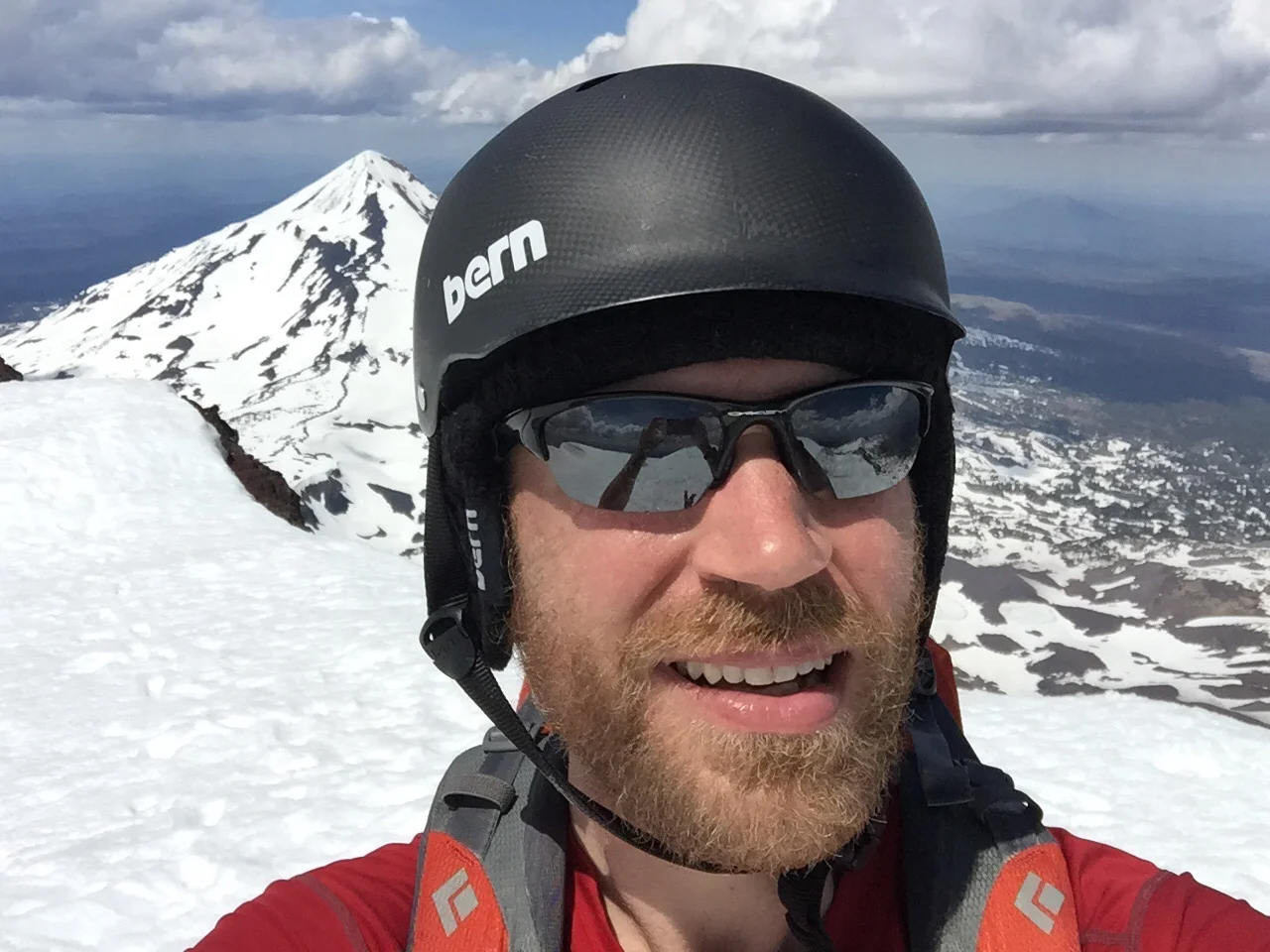
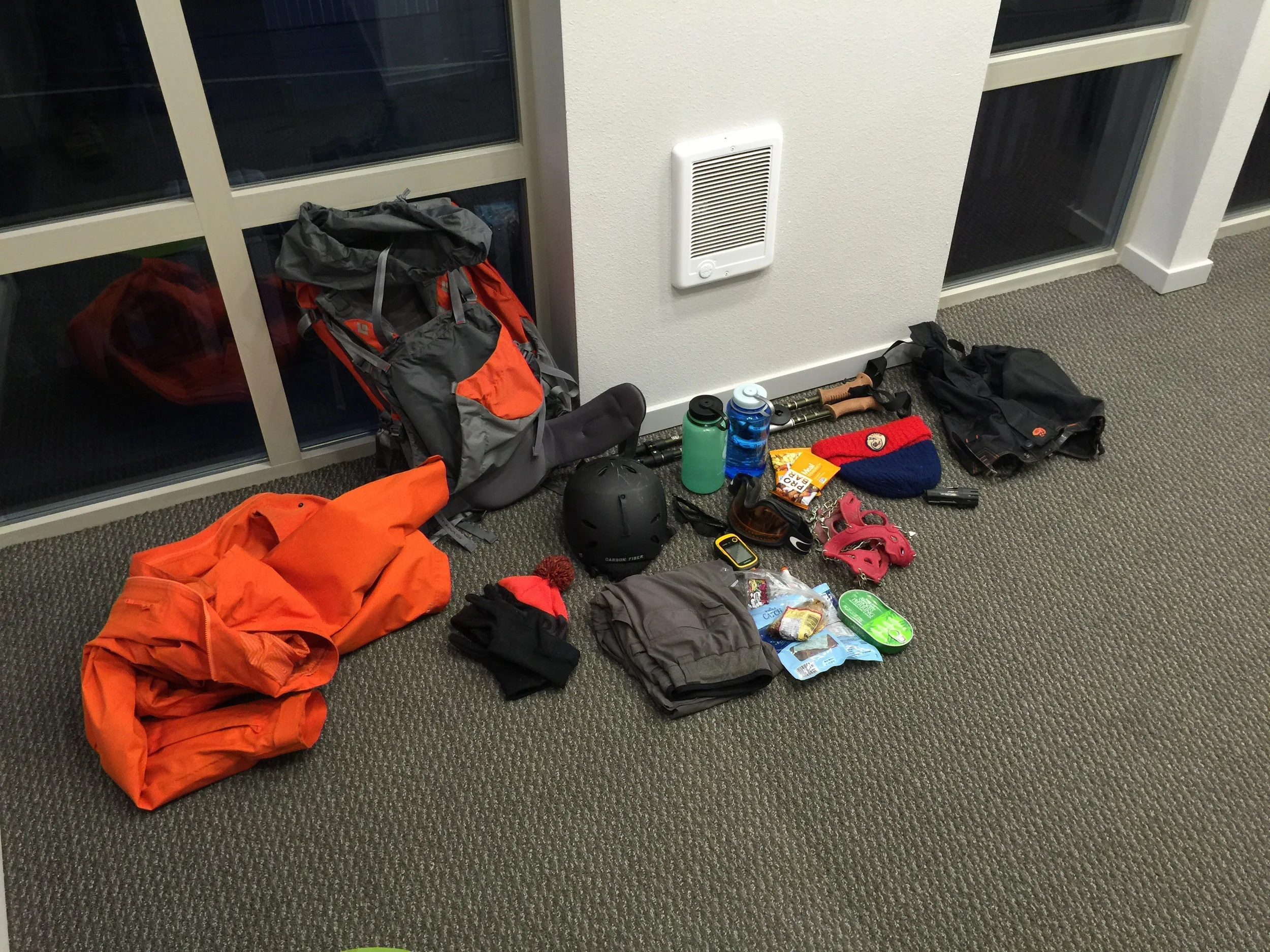
A couple of days ago, I climbed South Sister, a mountain in the Cascades, about 30 miles from Bend.  At about 10,300', it's considered one of the easier of the glaciated peaks; that is, peaks which never melt all year round.  This is my third glaciated peak, and this time I don't have any grand philosophical revelations to share with you, rather, some very prosaic practical thoughts and recommendations: 

1). I seem to have some kind of macho problem with wearing sunscreen that I desperately need to get over.  I endangered my whole climb by getting so much heat stroke on my arms, neck and face that I got dizzy. 

2). I have to carry at least twice as much water as I think I should. 

3). Micro spikes are amazing, but crampons are way better. 

4). GPS is nice, but it helps to have a real paper map.  In the snow, the concept of a "trail" gets really lost. 

5). False peaks can join bike thieves in hell. 

6). Climbing is still awesome. 


Here's to 4 days of raccoon face!! 

image.jpg
image.jpg
image.jpg

Comment

Comment

Day 332 - San Francisco, CA

This week, Ireland voted - in a landslide - to allow gay marriage.  The vote was notable for the margin of victory, which was about 62%.  There is no question that this vote is a Good Thing - for Ireland, for the world.  An interesting tidbit about the vote got short airplay, though.  The country of Ireland is known for being overwhelmingly Catholic.  As a nation, they only legalized *divorce* in 1995.  Yahoo news says “Saturday's emerging landslide marked a stunning generational shift from the 1980s, when voters still firmly backed Catholic Church teachings and overwhelmingly voted against abortion and divorce”.  Until very recently, homosexuality of any kind was against the law in Ireland.  People went to prison for it.

Now, this is all a good thing, I hear you saying.  And yes, of course - I completely agree.  But it’s also interesting.  Because what’s happened here, without us really noticing, is the fluidity of morality.  We’ve long understood that our modern life is just faster paced and more fluid than it ever used to be.  Writing a novel has turned into tweeting.  The average attention span is down to about 8 seconds, I hear.  But most of us had assumed that certain issues - the bedrock of our conscience - were still pretty rock solid.  And among those was morality, philosophy and religion.  But that appears to me to be less and less the case.  And there are really no societal conversations happening about this trend.

In an article I read recently on CNN, they were talking about what Obama might do before he leaves office with all the people - I hear it’s measured in tens of thousands - who are serving long sentences for possession of marijuana.  Which, until recently, was a very serious federal offense (I guess it still technically is).

I am totally in favor of the legalization of marijuana and gay marriage.  I think it’s awesome.  And, of course, I’m excited that we got there relatively quickly.  It’s the right answer, so why not do it sooner rather than later?  But I’m also a bit dubious.  You see, once things move fast, they tend to keep moving fast.  And not always in the direction you want them to move.  It would be terribly naive to think that all the societal movements that are going to sweep the world over the next 10, 25 or 50 years are going to be pleasant and benign.  I hope they are!  But hope is not a strategy.  

Let’s conduct a thought experiment.  What do you think we do - regularly, as a society - that our grandkids will think is incredibly weird, or disgusting, or perhaps even immoral?  Perhaps one day you’ll tell your grandkids that some people used to roll plants up in a tube and light them on fire and then inhale the smoke into their lungs and they will shudder in disgust.  Maybe you’ll tell them that we used to get our meat by slaughtering animals instead of growing it in a tube and they’ll gasp in horror.

Maybe you’ll tell them we used to regularly wear clothes and they’ll just snicker.  Or, alternatively, maybe you’ll tell them that people used to go out in the street without covering their face and they’ll be mortified.  

I think it’s terrible that people used to keep slaves.  But I also recall that some of our great founding fathers, such as Thomas Jefferson, kept slaves.  Does that make him morally bankrupt?  Tough, right?  On the one hand, we tend to regard morality as an absolute.  If it’s bad to have slaves, then it was bad to have slaves back then, and people “should have known better”.  But what will the future look back at us for and wag their fingers?  I feel a bit queasy at the thought that perhaps something I’m doing today will be written down and judged by people a hundred years from now - or maybe, given the pace of change, even 10 or 20.

I’m certainly not suggesting that we should intentionally withhold marriage equality, or the freedom to smoke pot, just to make a point.  I suppose what I’m saying is two things: one, that it’s ok to move slowly sometimes when it comes to important societal change, and more importantly, that when we do change, it’s not (always) fair to judge those of us that came before us.  I still, personally, believe that there are some moral absolutes: murder, rape, theft.  And I value our free thinking society.  I just hope we keep it pointed in the right direction.

Comment

Comment

Day 328 - Portland, OR

On this, the eve of my most recent job search, I am reminded of some of the greatest miconceptions about the job search process.  Allow me to dispense the wisdom of all my searching.  No need to thank me.  : )  In honor of Dave Letterman, I present to you: the Top Ten Myths about Engineering Jobs: 

10.)  Companies know how to hire people, so all you have to do is do a great job of being an interviewee.  Yeah, not so much.  It makes sense if you think about it: the skill set required to be a great interviewer is not the same skill set required to be a great engineer, or maybe even a great engineering manager.  And most engineers are just not very good at interviewing.  Which means you have to take charge, and make sure they're getting what you want them to get out of the process. 

9.)  Engineering is mostly about writing great code.  No, no, no.  Engineering - like every other human endeavour I can think of with rare exceptions - is about people.  If you write great code and nobody likes you, you won't get anywhere.  If everyone likes you, your code can be passable at best and you'll still be welcome in many workplaces.  I've seen very few startups fail because their code wasn't very good; I've seen many fail because the people who worked there didn't get along. 

8.)  Looking for an engineering job is a numbers game.  Yeah, no.  Have you ever seen someone frantically look for their car keys when they're late?  They tear the place apart looking everywhere, spending a ton of energy.  Then, once they're exhausted, they sit down and think for a second.  Then they walk right to where they left them.  It's the same way with relationships, roommates, and jobs: when you apply for the right job, you only need one.  I'm not saying there aren't times when sending out a lot of resumes can be helpful.  But speaking as someone who went on 400 online dates, I can tell you that when the needle isn't in that haystack, it doesn't matter how hard you look. 

7.)  Being in demand means you don't have to work to find a job.  Sure, sometimes a job will come to you.  And the more your skills are kept up to date, the better off you'll be.  In some sense, a job interview is the last step in a long process that starts with having a great skillset.  That said, great jobs don't fall out of the sky.  You have to be ready, you have to work hard, and you can never take a good job for granted. 

6.)  Coding is geographically fungible; that is, it doesn't matter if I live in Boston or Baltimore; if I'm good, the job will come to me.  At one time, there was a dream: that the wonder of the internet, and video conferencing, etc., would make telepresence omnipresent, and the worker of the future could be anywhere they wanted.  Sometimes, remote jobs work out.  But if anything, I've noticed that jobs are clustering even more; SF is known for Mobile front ends, Portland for back end web software, New York City for marketing, etc., etc.  If you want a great job, you still may have to move. 

5.)  The best engineer for my job is one that's already familiar with the technologies I use.  No, no, a thousand times no.  The best engineer for your job is the one with the passion, problem solving skills, and communication skills to get the job done.  Of course, it does depend on the job and the situation.  If I need code written in the next week, then maybe I can't wait for someone to ramp up.  But, honestly, if I need code in the next week, I've done something terribly wrong, and I'm much better off re-evaluating what I'm doing.  Over time - I'd estimate a month - a talented programmer will outperform someone with a narrow dedicated technology skill set everytime.   

4.)  If I have a good job, I don't need to care about any of this stuff.  Well, good luck with that.  You better be pretty sure about that job; and in this climate, I don't think that's a good bet.  The moment you lose a job is not the best moment to start thinking about how to find a new one.  Building a diversified skill set may mean doing work on the side to keep your skills fresh, or acting as an advocate for yourself to keep learning on the job.  And staying in touch and networking always help.

3.)  The best place to find a job is online.  Hey, online is great.  LinkedIn is awesome.  But statistics show that most people still get a job from a friend of a friend, or through a contact.  I personally like Meetup, because I think it's a good hybrid; a way to meet people online that you then interact with in person.  Relying entirely on online outlets because you don't have time or energy (or are feeling too introverted) to meet people in person is not a winning strategy. 

2.)  The hardest job to get is the first one; after that it just gets easier and easier.  Personally, my first job was by far the easiest; being fresh out of college is an easy and well-worn recruiting pipeline at many large companies.  My most difficult job was about job #3; when I started to get paid a bit more and specialized, doors started to close because I was "overqualified".  The real point may be: at any given time, any job search could be easy, or hard; you never know.

And, myth #1: 

1.)  The best engineers naturally rise to the top.  Of course, at the end of the day, being great at what you do is the best way to get and keep a good job.  But just like the best athletes don't always win, and the best guy doesn't always finish first, the best engineer doesn't always get the job.  Sometimes, as my Dad says, it's better to be lucky than good.  But, of course, smart people make their own luck! 

Comment