Comment

Day 235 - Bend, OR

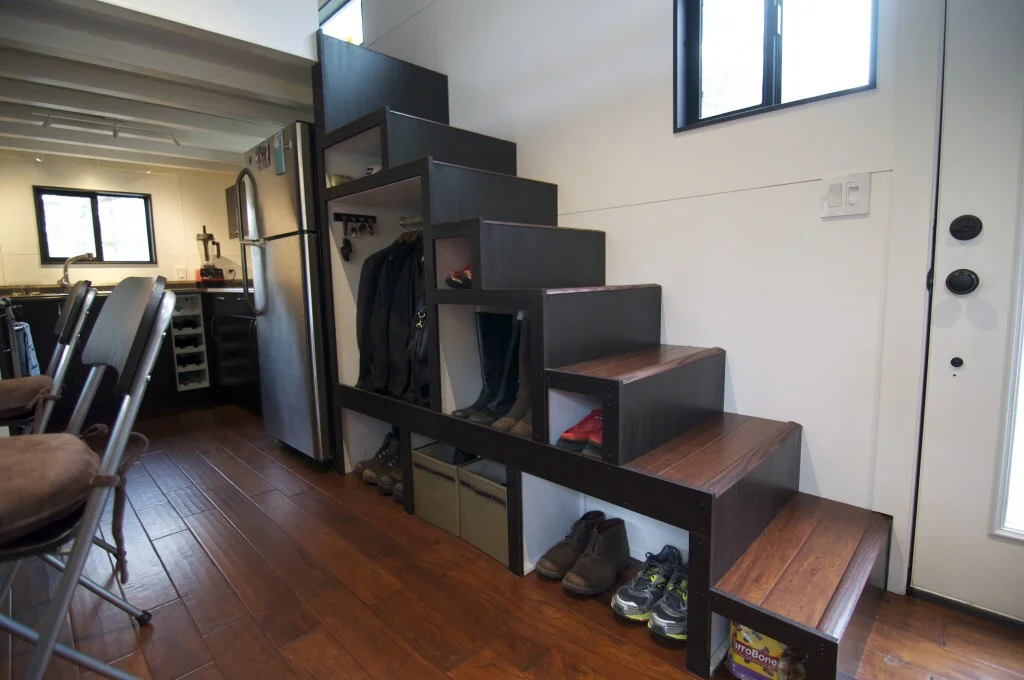
Tiny house! 

As if I needed another hobby - I'm about to pick up a big one!  In about a month, I'm off to Austin to attend a workshop by the Tumbleweed homes company on how to build your own tiny house.  

For those who don't know, the tiny house movement is a new-but-not-so-new movement that's gaining steam both in the U.S. and across the world.  Of course, people have been building small houses for a long time - mostly out of neccessity - but this is a coordinated movement of folks interested in building an industry out of the idea. 

What is a tiny house?  Well, there's no agreement about that of course, but in general, a tiny house is about 200 square feet or less.  Most of them are intended for at most 2 people, although there are people who raise families in them.  They come in one of two main types: mobile or stationary.  I'm going to build a mobile one, I think.  They cost around $30k if you build one yourself, or more if you buy it premade (and, yes, you can buy them premade).  They are variously classified as trailers or permanent homes depending on where you live.  Tumbleweed, the company, has a rustic Colorado-esque design aesthetic, but I prefer a more modern look, so I'm looking at the hOMe (yes, cheesy name) at www.tinyhousebuild.com.   

Why a tiny house?  Well, there's a few reasons: 

1) First and foremost, it's about downsizing my life.  The same way meditation and yoga have showed me how to clean out my brain, I think - as do many others - that living more simply will help me organize my life. 

2) Financial.  I've both owned and rented in my life, and they're both a pain in the butt.  Imagine owning your own home, having no debt, and paying almost no taxes. 

3) Mobility.  A movable house makes it a lot easier to, well, move. 

4) Self-determination.  Learning how to build my own house, and doing it with my own two hands, sounds like an amazing learning experience and a great confidence builder. 

I'm not on a fast timeline for this particular project; I'm thinking 4-5 years for the final product, with the actual construction taking about a year.  

image.jpg

Comment

Comment

Day 233 - Mt. Hood, OR

image.jpg


Snowboarding

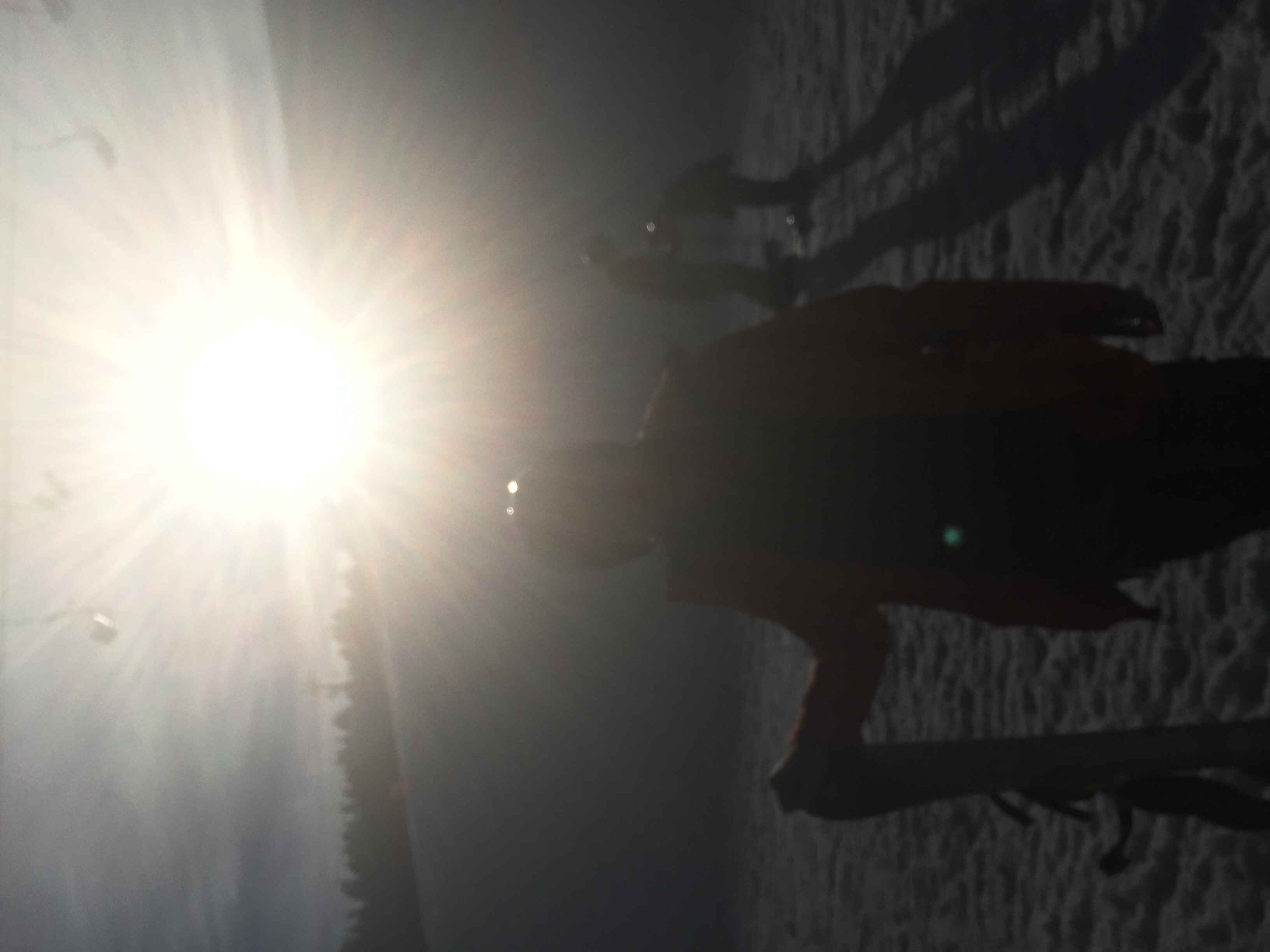
For years now, I've been wanting to try out snowboarding.  I've been an avid skiier for years, and I've just never wanted to ruin a good day of skiing with learning to board.  But with the snow conditions being so miserable this season, I finally had my opportunity; I didn't feel like I was missing anything.  So, yesterday was the day!

Adam's Summary of Snowboarding For People Who Usually Ski:

Not as hard as people make it out to be: +50 points

You don't feel like as much of a dork wearing a helmet (which you probably should anyway: +20 points

You still feel like a little bit of a teenage douche, even though you're really not: -30 points

It's really easy to turn: +25 points

It's incredibly hard to stop: -100 points

You really do fall a lot: -50 points

When you fall it's pretty harmless and relatively easy to get back up: +40 points

You have to put the damn thing on every time you get off a lift: -75 points

When you get off to go get lunch, you're not wearing bizarrely shaped concrete death boots: +60 points

The board is way easier to carry, and you don't need poles: +40 points

Skiing is just totally awesome and makes you feel like some kind of invincible olympic athlete who sips cognac and reads The Times: -100 points

Final score: -120 points.

All kidding aside, I think I'm a skiier for life, but it is fun to try new things, and I'm looking forward to my second lesson.  I can see the appeal, for sure.

Comment

Comment

Day 232 - Government Camp, OR

image.jpg

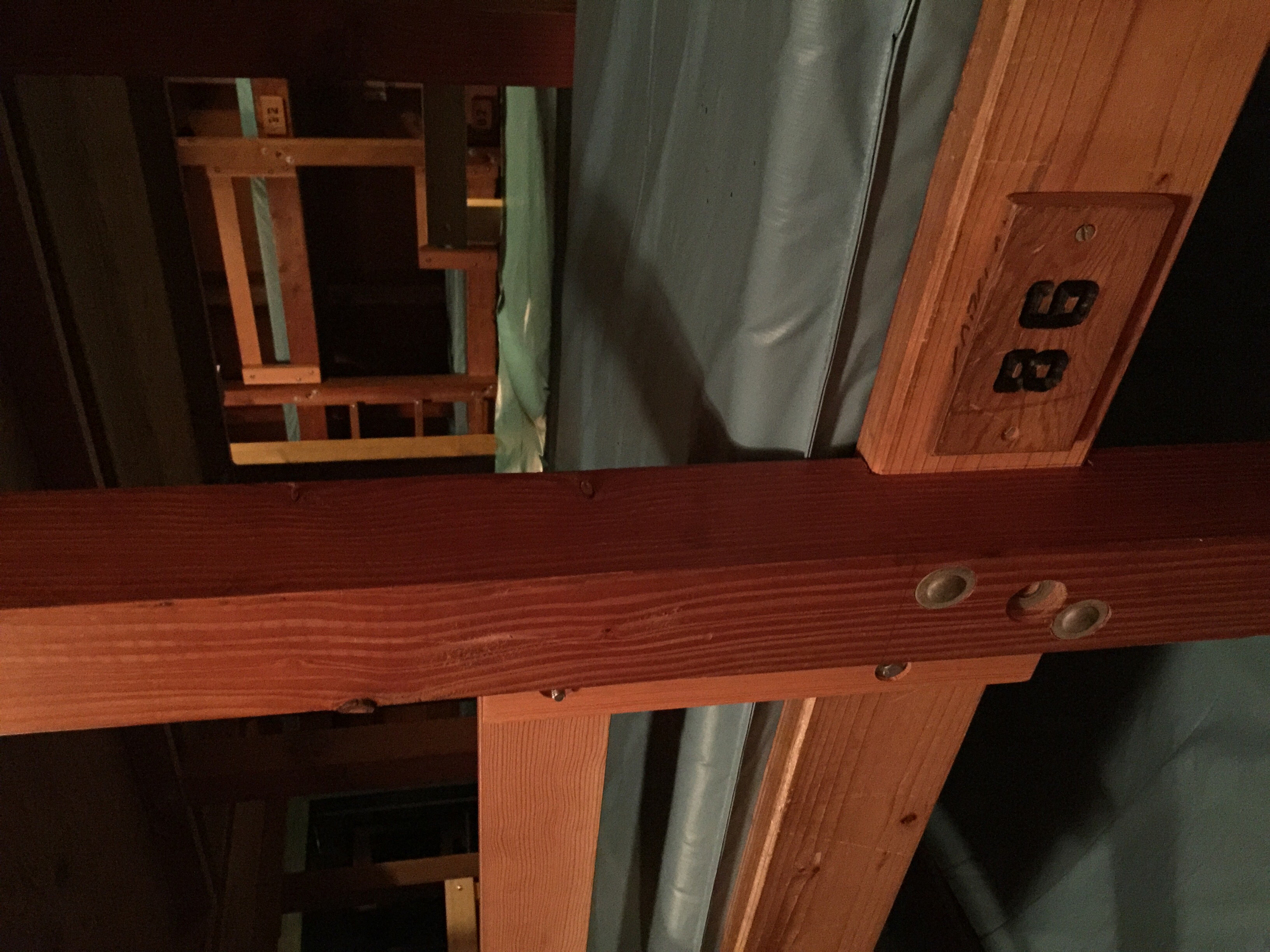
Hostels.  There are many topics I was planning on writing about today, but hostels just jumped and bit my brain right on the ear.  Wait, that sentence made no sense.  Anyway.  You get the idea.


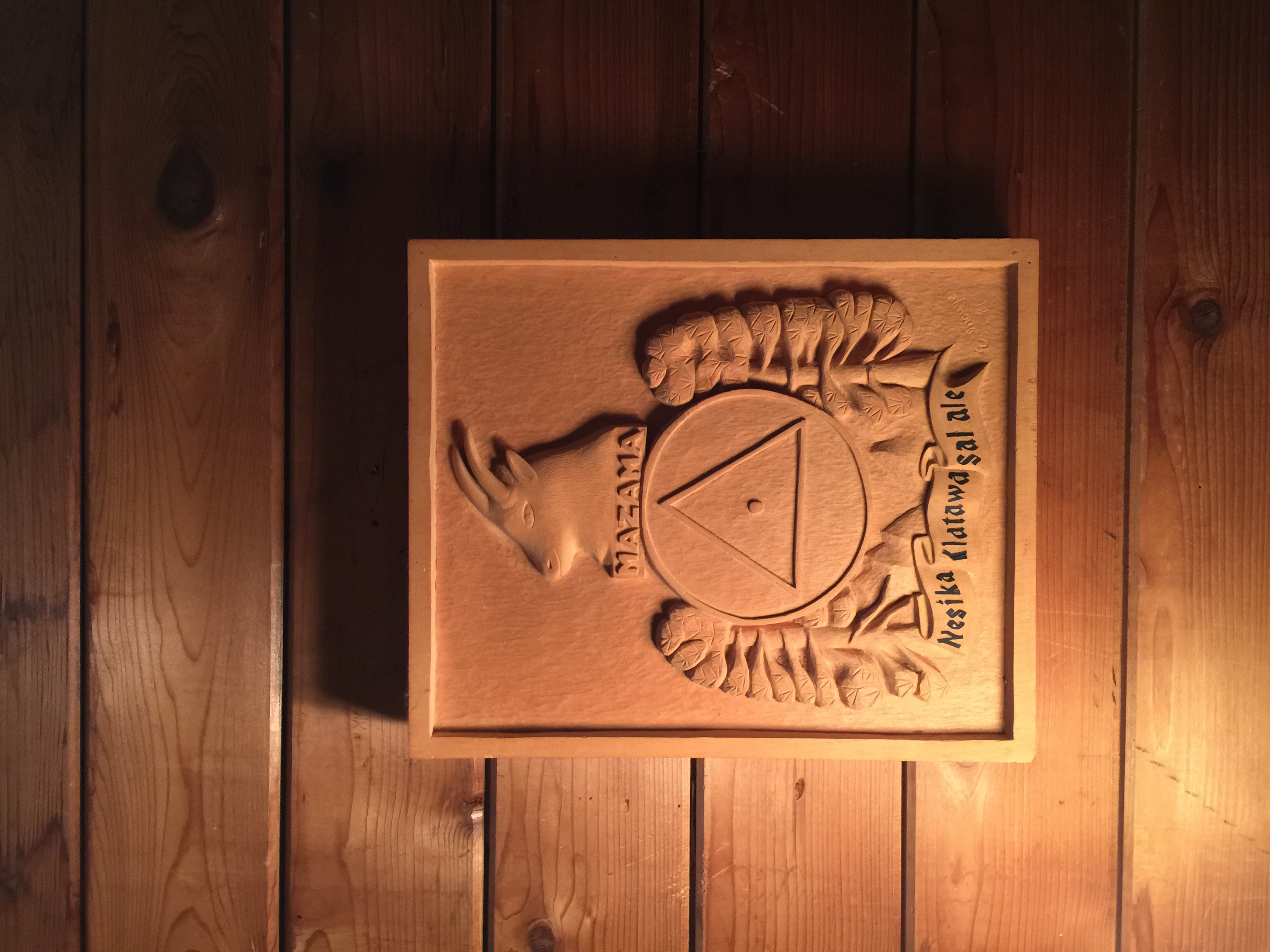
In my travels around this globe, I have stayed in quite a number of hostels.  Some were really nice, even swank.  Some were - charitably - a dump.  Each of them has been remarkably different.  All have a story.  Hostels remind me of what I like about SF - everyone you meet has something interesting to say.  There’s the cute hostel in the palm trees in Volcano, HI.  There’s the revitalized hostel in the theater district in downtown Buffalo, NY.  A St. Christopher’s Inn in London.  Or the hostel I’m in right now, the Mazama Lodge in Government Camp, OR.  Nestled up in the woods, along a dirt road that I couldn’t find in the dark, Mazama is the best of what hostels represent.  It’s not really honestly a hostel at all, more of an ex-ski lodge, turned hostel.  Fire roaring, breakfast in the morning.  I’m in the library, where there’s a book about “The Vikings of Today”, a book about Sasquatch, somebody’s old iPod, a really ancient copy of Trivial Pursuit, and for some reason a classic 1950s era stand microphone.  What I’m trying to say is, there’s a story here.  I may never know the details, but I can wrap that story around me like a warm cloak.

I always sleep well in hostels.

image.jpg

Comment

Comment

Day 230 - Bend, OR

Sleep.  Ah, delicious sleep.  Today I want to talk about the miracle drug.  There isn't a lot I can say about sleep that you probably don't already know.  It protects us from heart disease, diabetes, and even cancer.  It keeps us from overeating.  It keeps us from making dumb decisions.  It helps us drive.  It improves our mood.  It's like an aphrodisiac, anti-depressant and a career change all wrapped in one.  There's isn't much it can't do.  And yet, none of us gets enough.  When was the last time you got a solid eight hours?  And if it's been awhile, what's stopping you?  Is what you were doing really more important than getting a good night's rest?  As I get older, I find that I'm more sensitive to a lack of sleep - but I'm not sure if that's biological or rather that I'm just becoming more in tune with my body.  I can say this: the problems of being tired are bad enough, but it's really the secondary items that hurt the most, my "fatigue compensation strategies", like food, caffeine, YouTube, etc.  and it's a vicious cycle sometimes: when I don't sleep, I tend to indulge in things like late-night YouTube marathons, which makes the problem worse.  

When I studied Early Childhood Education, I learned that little kids are very bad at knowing what they need.  That is, often a toddler will tell you that they are hungry or thirsty when really they're tired, or vice versa.  And I think that even as adults, we'd like to thing we're good at that, but we're not.  I often find myself mindlessly eating when what I really need is a nap.  So, who wants to take a nap?

image.jpg

Comment

Comment

Day 228 - San Francisco, CA

image.jpg


San Francisco, let's chat.  All my San Franciscophiles out there, let's put our heads together.  Something is happening to our fair city.  It's not a surprise nor is it a new thing.  It's been happening for years.  The exact nature of it is hard to define but the broad outlines are clear: San Francisco is losing its edge.  Whether it be Borderlands closing this week, the end of the Anon Salon house, the loss of the Yoga Punx house, or maybe passing a law prohibiting certain kinds of public nudity; whatever your personal "bright line", we can all agree that something is happening.  Of course, some people think it's a good thing, and I'm not here to argue with them.  But for those of us who don't think so, the question is: what to do about it?  Can anything be done?  *Should* anything be done?  Is Borderlands an artifact of an old and outdated San Francisco, or something worth saving?

I like to tell the story about how years ago, I found myself needing to get from one party to another across town.  I wanted to walk, which was totally reasonable.  Less reasonable was that I was dressed head to toe as the Tick; a giant blue costume with antennae.  And it was decidedly not Halloween.  In other cities, that might be odd.  In SF, I never even thought about it.  Nor did anyone else; nobody commented on the six foot tall blue guy with antennae.

SF, in the old days - long before I got here - was the home of the Barbary Coast.  It was the place where the term "shanghai" was invented - the name for soldiers who were drugged in bars and hustled on to ships bound for China, where they would wake to 6 months of imprisonment.  It was, in a word, not a very nice place.  Modern SF is continuously undergoing a process of sanitization.  It's not that it's a bad place to live, per se - it's more that it's becoming just like everywhere else.

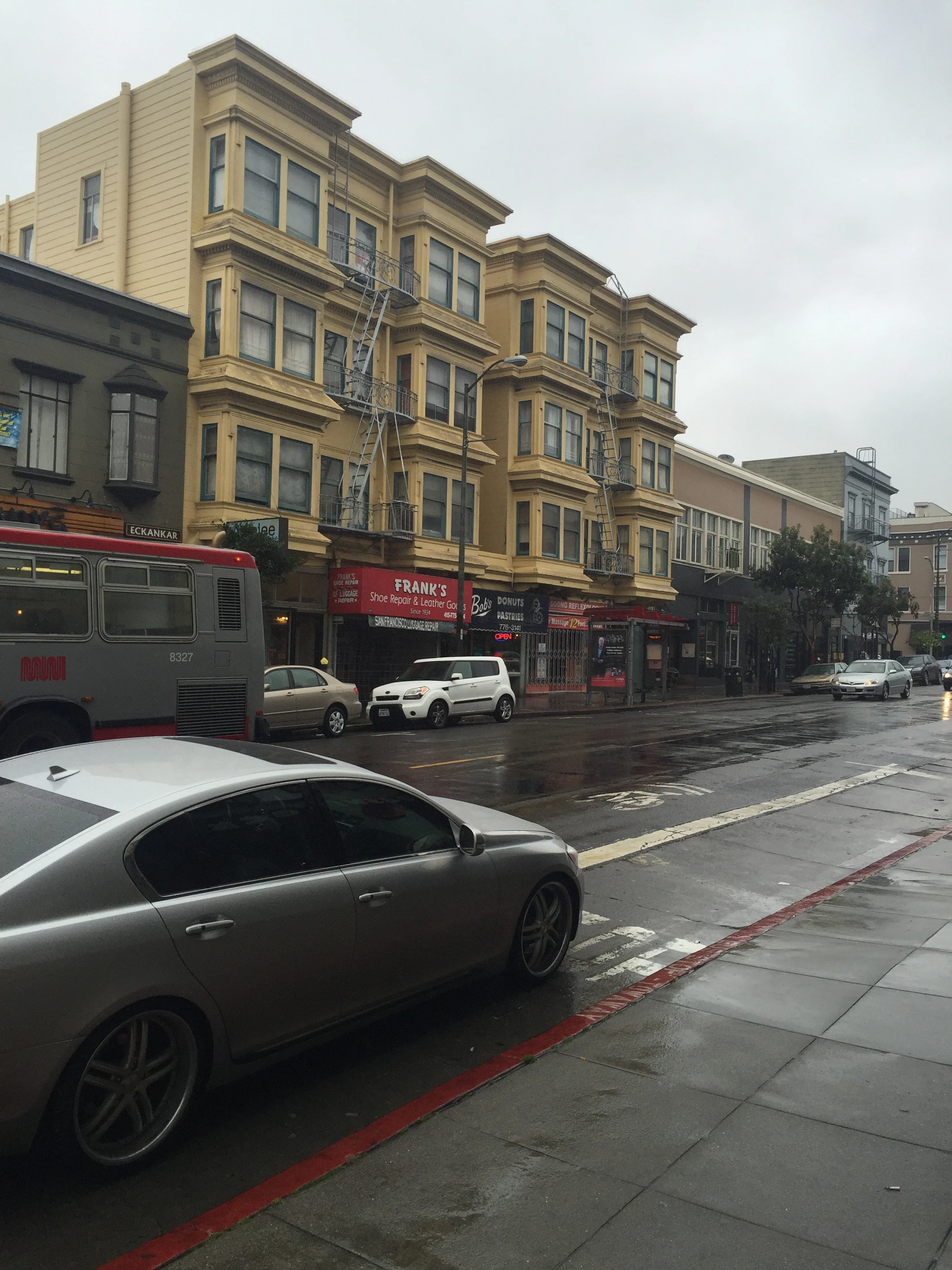
Another great example: Bob's Donuts.  Bob's is over on Polk street, and if you've never been you should go.  For one thing, they make the best donuts I've ever had, and that's reason enough.  But in addition to that, Bob's represents something: one of the last stomping grounds for the old San Francisco.  I remember going in there years ago and listenning to a conversation between a hooker and her John.  He had decided he wasn't really out for sex after all and just wanted to take her out for a donut and some coffee.  So, there they were, in Bob's.  Try that at Flour & Co.  Nothing about Bob's is pretentious.  They were, until recently, cash only.   6 or 7 chairs are lined up along a table near the front.  A sign on the wall advertises the fastest recorded times for customers to eat their head-sized donut.  Often a Chinese man is seated at the front table reading a Chinese daily newspaper.  Bob's is home-away-from-home for the sort of person San Francisco used to be about.

My point here, though, is not simply to rehash all of this.  Nor is it to be excessively negative.  There are some advantages to increased standard of living.  There is a danger in romanticizing the old days.  Nobody wants to get shanghaied.  However, the irony is that, during this process, one of the main draws to San Francisco is being destroyed by the very people it attracts.  I am often amused to watch apps, like Sosh, scrape the city for "fun things to do".  Techies - especially hip, urban, young ones - *want* to do something a little bit exciting and different.  But they've priced out the very people who make those exciting things happen; the artists, the hippies, the lunatic fringe.

We all know what's happening - the rise in cost of living, especially rent, driving out those who can afford to sit around and think about the absurdity that is life, especially modern life.  The question is: what can we do about it?  Would creating affordable housing options bring back the art?  Can technology help?  Should we all move to Oakland?  Austin?  Memphis?  Is this just a natural evolutionary process?

I don't have the answers - but I think the question is worth asking.

Comment

Comment

Day 226 - Bend, OR

image.jpg


Today, Radio Shack filed for Chapter 11 bankruptcy.  Let me explain why I care about that.

Part of it is unquestionably nostalgia.  When I was - let's see, about 16 - my mom said that I needed to start applying to scholarship programs for college.  I must have written about 100 essays on all kinds of crazy topics, like agriculture or beekeeping.  But one of the essays I was actually kind of interested in writing was about electronics.  It went to a little organization called the Tandy scholarship - and I won.  I received $1000 for college, which was awesome.  But even better - although I didn't realize it at the time - it came with a job offer: come work for Radio Shack in the summers.  As it happened, my parents also wanted me to have a summer job.  So, the summer between junior and senior years of high school, I found myself driving to a Radio Shack owned by a guy named Chuck in a strip mall in Jacksonville.

Now, Chuck was just a really stand-up guy.  He was the sort of dude that rolled his dress shirts up to the bicep.  He shot straight with everybody - customers and staff.  And he really liked me.  Maybe he liked me because I liked electronics.  Maybe it's because I was a good, quiet employee.  I did the things his other employees wouldn't do, like stock shelves.  You see, Radio Shack was mostly commission in those days (maybe it still is, I don't know).  All the other people working there just wanted to sell big screen TVs and computers.  I remember one guy I worked with, an Italian guy in probably his late 30s, who was one of the best salesmen I'd ever met.  He chain smoked, and he would stand outside on the sidewalk holding the door open, cigarette in one hand.  If anybody got near the store, he'd throw the cigarette on the ground, hold the door open for them, say "How's it going, boss?", and follow them into the store.  From that point on he would never let you go.  The guy was good.  I watched him sell refrigerators to Eskimos, if you get my drift.  And I didn't care about any of that.  I was there just to make my parents happy.  The money was a nice perk.

I learned a lot from working in that store: how to be nice to your coworkers, how to dress nice every day, the value of a dollar.  But the most important lesson I learned was this: you can build stuff, and even more importantly, you can take it apart.  I remember that, once a year during the summer, Chuck would have what he called a "tent sale".  You see, one of the great - and terrible - things about Radio Shack was that they would take anything back, anytime.  And people knew it.  We used to call it "Rental Shack".  One summer while I was there, at the beginning of the summer this construction crew came in.  They bought all kinds of stuff, including a bunch of expensive walkie talkies.  At the end of the summer, they came back in with them, all crusted with dirt, and said, with a straight face, that they didn't like them very much.  Chuck took 'em back.  Anyway, at the tent sale, we would sell all that stuff: the stuff so broken that Radio Shack headquarters didn't even want it.  Chuck's store was the district store (Chuck was the district manager in addition to the store manager), and he would collect all this stuff and put it out for pennies on the dollar.  Mostly it was there to attract people into the store.  When that sale happened, I would spend half that week's paycheck on stuff.  I remember I bought a whole stack of semi-functional electronic calculators one time.  One of them had a tiny solar panel, and I took it apart and wired up that solar panel to a meter to see how much electricity it put out (not much).  I don't know that I ever learned anything all that monumental.  All the real learning happened later, in college.  But what I learned was more important: that you could take things apart.  It was OK.

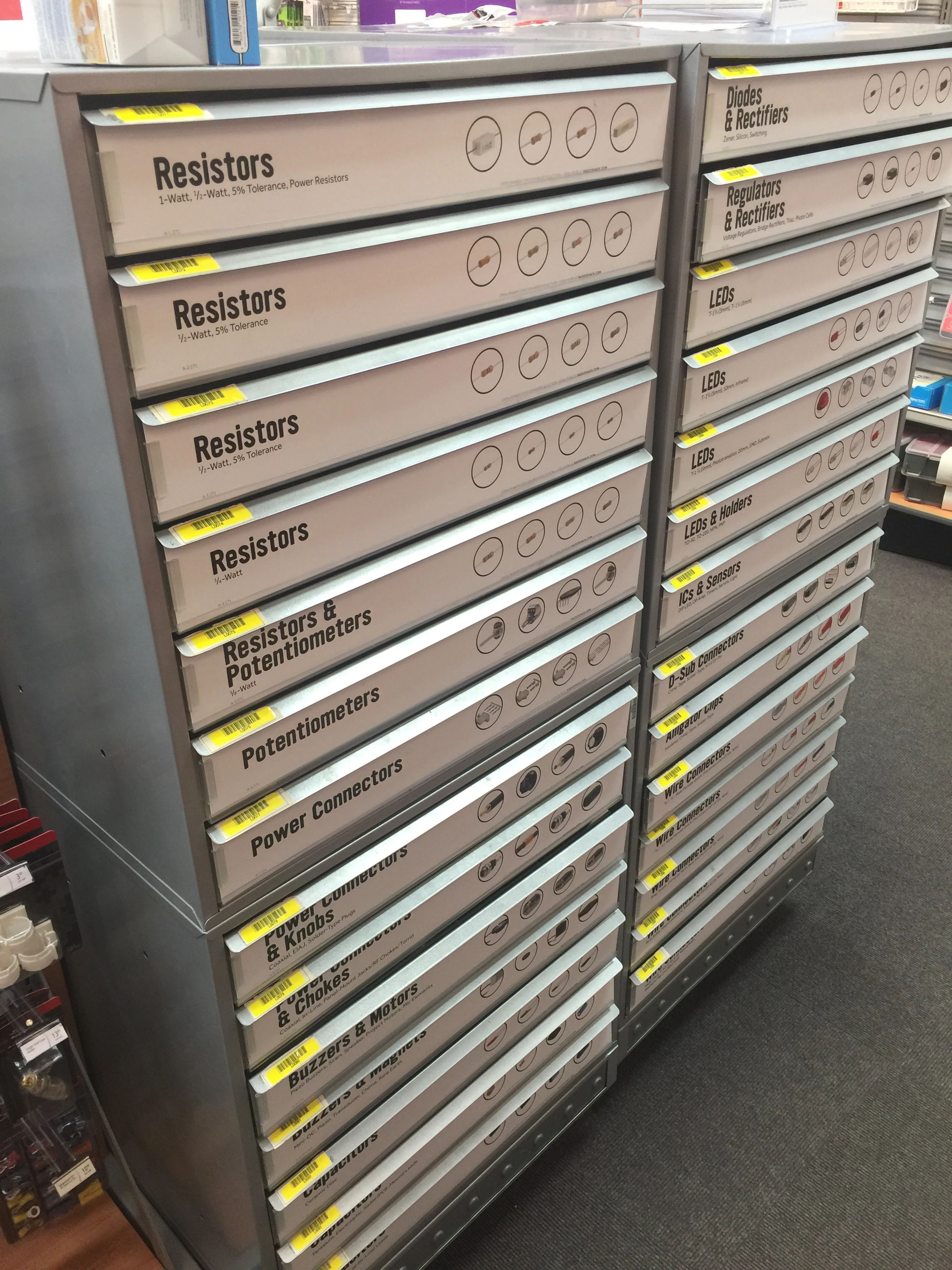
You see, that's what Radio Shack represents - or used to.  And it's still there, if you go look, behind all the cell phones and XBox controllers - the old Radio Shack.  Arduinos, weird batteries, multimeters, soldering irons - buried in the back.  Most of the time the people working there don't even know what they are.  But they are a link to something important and valuable, a time when it was explicitly American to build stuff, when knowing how to work a soldering iron was cool.  Now, I'm not saying that is gone.  Others have taken up the mantle to some extent: hacker collectives, the Maker movement.  But Radio Shack was unique: it was the only place that somebody in, say, Redmond, Oregon could go and buy a transistor, or a resistor.  And that's important.  It's all well and good to buy stuff from Amazon, that's cool.  But here's the thing: I never *explore* at Amazon.  I hardly ever go there to buy things I didn't already know I wanted or needed.  Radio Shack was, for a kid, like the public library - a place to go *learn what you didn't know you wanted to learn*.  

I'll miss Radio Shack.  And I wonder what Chuck is up to these days.

Comment

Comment

Day 225 - Bend, OR

image.jpg

The Internet.  The series of tubes.  I have a complex relationship with the Internet.  This isn't surprising; I have a complex relationship with almost everything.  (Except cheeseburgers.  Actually, scratch that; even cheeseburgers.)  A lot of people - both the technerati and your average folks - have ambivalent feelings about the Internet.  It's this amazing way to keep in touch with people, but it's also deeply distracting and can be a serious pain in the butt.  I have this really terrible cell phone service plan, a pre-paid plan from Verizon - by the way, don't ever buy the pre-paid plan from Verizon - and the data part of the plan got all screwed up a few days ago.  So I just sorta didn't fix it, just to see what would happen.  I'm on day 5 and so far the universe hasn't ended.  But it is really annoying.

A lot of things about the internet and my reaction to it confuse me, but one thing has become really really clear: crappy Internet service is deeply irritating.  I can't begin to describe how much stress I experience using a crappy internet connection.  The apartment I'm living in here in Bend, just because of the way it's physically set up and the service my roommates picked, is incredibly terrible.  It fades in and out, sometimes not working at all.  And I'm over it.  If I am going to use the Internet - I want it to be top notch.  It's like driving; I'd rather not drive at all, but if I'm going to, I do not want to wait in traffic.  I will structure my life willingly to avoid traffic if at all possible.  Add to that list lousy Internet.  I want fiber directly into my brain, or I'm just going to curl up with a DVD or a book. 

Of course it occurs to me that I used to use a 1200 baud modem to connect to BBSes.  Which is true.  But there's two things about that: one, it annoyed me even back then.  Two, I knew it was going to be slow and terrible, so I didn't use it for anything all that important.  Nobody used the internet to look up phone numbers and addresses, or how to get someplace, or apply for a job, or sign up for classes.  Now we do all those things - and, dammit, I want it to work.  Like, right now.  After all, phone books never had to load; you just opened them up and there you go.  And that kind of Internet exists; I've used a quality connection, for example at work, and I know what that feels like.  (Hint: really good).

So bring on that fiber, set up that 802.11n, let's do this thing.  Fatten up those tubes. 

Comment

Comment

Day 224 - Bend, OR

image.jpg

Introvert.  

Today I want to talk about that word.  I've been thinking a lot about introversion over the last couple months - maybe even the last few years.  I think it's an interesting concept that - like many simple concepts - has a kernel of truth to it, surrounded by some interesting half-truths and metaphors.

All my life, one of the interesting things - challenges, maybe - about my life is that I seem to float between worlds.  And that's no less true when it comes to the introverted/extroverted continuum.  The first time I took the Myers-Briggs test as an adult, the woman who administered it half-jokingly accused me of cheating.  I had come down right on the 50% line between introvert and extrovert - a result which, she said, was "highly unusual".  Certainly we see it that way in popular culture.  People are one or the other - introverts who bury their heads in the sand, or extroverts who can't seem to ever be quiet.  But my reality has always felt a lot more malleable than that.  Sometimes, I'm the life of the party, and other times, I just want everyone to go away.  It isn't quite the same as whether I like people or not, either; I usually do like them, but even when I like them, sometimes I find them exhausting.  This is true not just on a day-to-day or hour-to-hour level, but in my life overall as well.  When I was a little kid, I distinctly recall being very extroverted - the leader of my little local pack of kids, a popular student, a football player.  As an adult, I feel I'm at the apex of my introverted phase.  Especially moving to Bend, I feel very much like retreating, like being alone.  So how to jibe this sense of introverted-ness being a fluid, changeable thing, with the typical perception of it as an absolute description?

I don't have the answers to this, but I will say this: in my life, my level of introversion feels much more like nurture than nature.  Do I think there are biochemical aspects of my brain and metabolism that make being social harder sometimes and easier others?  Yes, I think that's probably true.  But a lot of what makes me want to - or not want to - be around others is simply my recent experience with how people have been treating me.  This seems obvious, on one level.  When we have a bad experience - say, crashing while skiing - then we may be a little shy of skiing for a while.

What I find particularly interesting about this is the potential for positive or negative cycles to occur.  When people are rude, or just difficult to understand, it causes stress.  A side note about that: obviously negative interactions can be stressful.  People yelling or being rude or nasty or bullying is stressful.  But stress can also come just from interactions that are awkward or hard to understand.  Even well-intentioned interactions can make someone feel misunderstood or confused, and that's stressful. That stress has an immediate negative effect, but it also tends to create an expectation that future interactions will cause more stress.  After a while, like an abuse victim, you approach each interaction guardedly, wondering if perhaps that interaction will go poorly.  And if this is true for me, I suspect it's true for many people.  There's a similar phenomenon in exercise; when you work out, you burn calories, it's true - but even more critically, you create excess muscle mass, which increases your resting metabolism, creating a virtuous secondary cycle.  So, do people avoid interacting with someone because they are shy, or are they shy because people avoid interacting with them?  Perhaps both.

My point - in as much as I have one - is that introvert/extrovert is not a label, it's more of a state of mind.  We create shy people and introverts by the way that we interact with others - at least part of the time.  That's an opinion of course, based on my own life and my observations.  But, if true, it's a pretty inspiring message - it means that we can change our attitude - but we need help.  Just like obesity, or alcoholism, what we once thought was entirely choice, then later entirely genetics, we now understand to be a complex issue combining willpower, genetics, and the support of others.

Comment

Comment

Day 223 - Redmond, OR

Caving! 


image.jpg

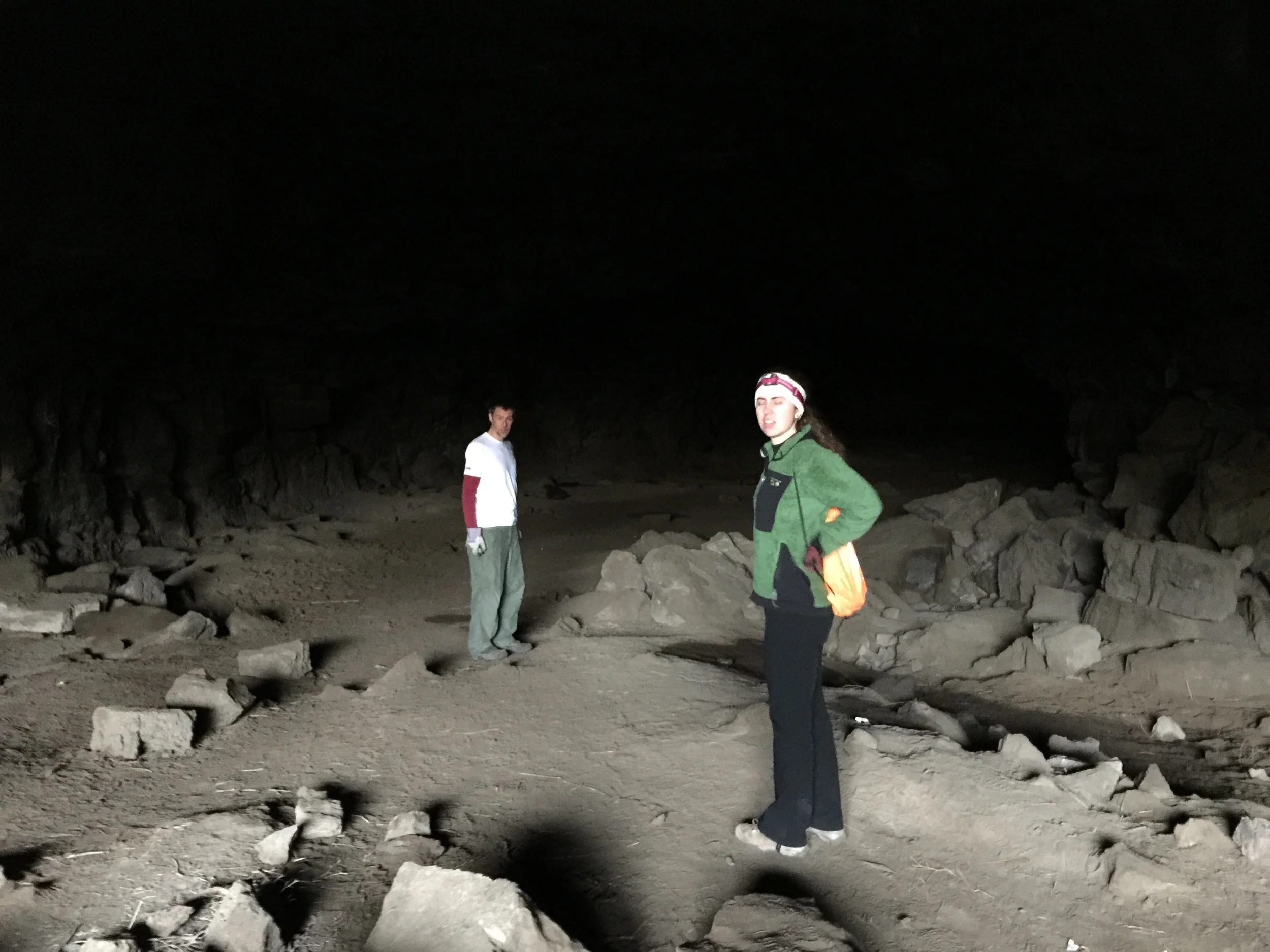
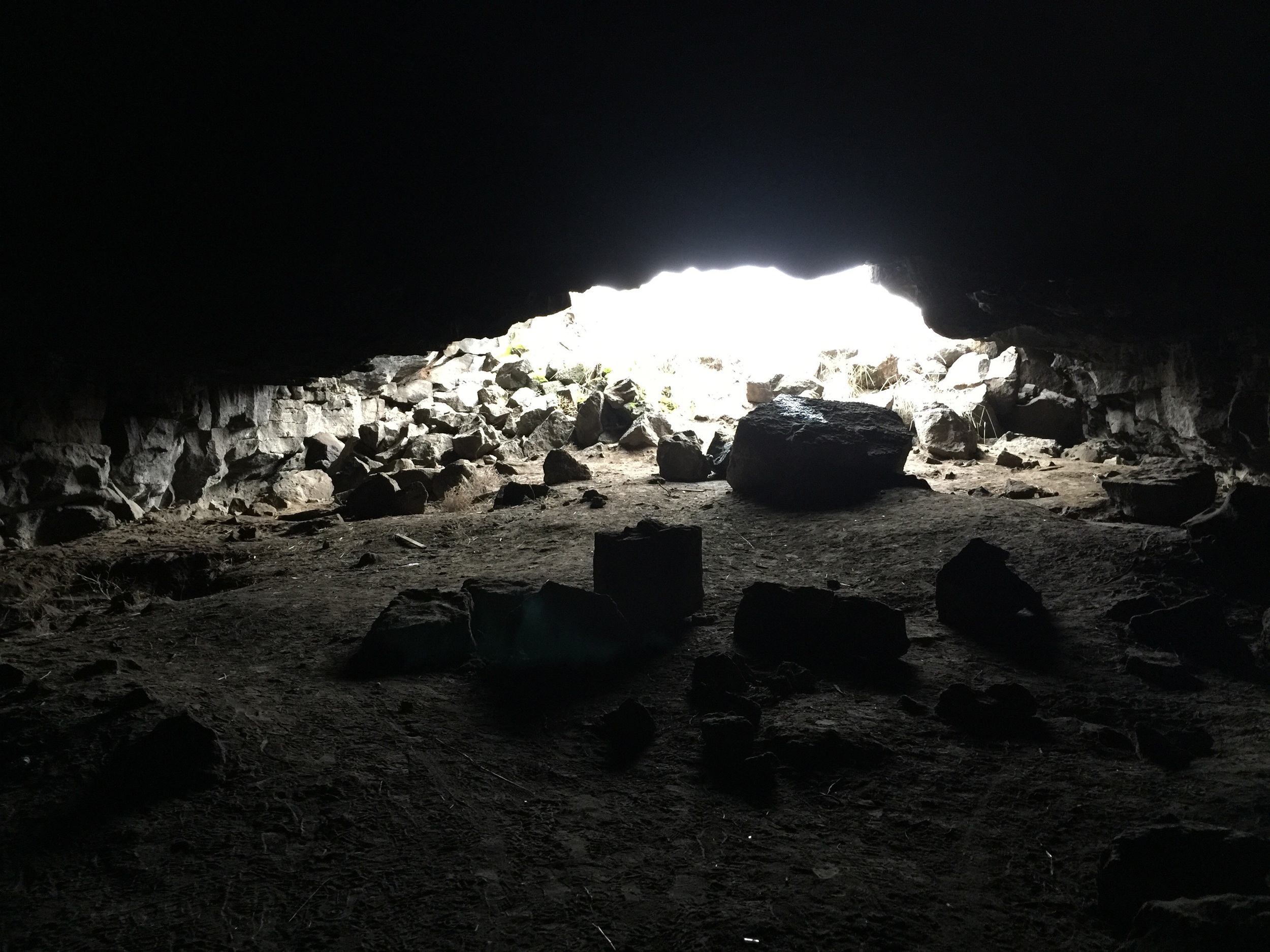
Today's adventure du jour was caving!  I went with a Meetup to the Redmond Caves, about 20 miles from my apartment in Bend and right across the street from the Redmond airport.  I've been in caves before, of course, but this was the first time that I was actually crawling around in one on my own, belly to the floor.  It was definitely fun and something I'd like to do again.  At one point we turned off all our lights and it was pitch black - and quiet.  It's interesting what sensory deprivation will do to a social group.  The conversation turned to online  dating, and for the first time I had nothing to do with it.  :)  I stayed quiet while I listened, and I learned a lot more than I would have flapping my gums.  So a lesson learned.  There were about 5 seperate caves, although we couldn't figure out how to get into one.  So we'll say 4.

What struck me was the juxtaposition with a friend who came through Bend who is doing a Masters in trans-cultural studies, and specifically studying how different cultures deal with coming of age and how being outside relates to that.  What is interesting about the caves is that - probably because there aren't that many of them and they aren't that big - there was just enough "officialness" to have some signs up and protection, but there was nobody on duty or anything like that.  We were totally free to just wander around.  If we got stuck and starved to death - well, it's your funeral, as they say.  I feel like we don't get enough of those kind of opportunities in modern life.  You're never going to learn what a cave is like by downloading an app, or even - no matter how well-intentioned - going to a museum or on a guided hike.  There's just no substitute for growing up the hard way.  Does everybody need to go climb around in a cave to grow up?  No, of course not.  But real experiences - the kind without visible safety nets - are a big part of our learning process.  Do I mean that people should do truly dangerous things?  Well, it depends - if you want to, sure.  I don't think it's neccessary, though, no.  But these caves - while perfectly safe, really - had at least the illusion of some genuine danger, some actual real-ness.  And boy was it fun! 


image.jpg

Comment

Comment

Day 223 - Redmond, OR

Caving! 


image.jpg

Today's adventure du jour was caving!  I went with a Meetup to the Redmond Caves, about 20 miles from my apartment in Bend and right across the street from the Redmond airport.  I've been in caves before, of course, but this was the first time that I was actually crawling around in one on my own, belly to the floor.  It was definitely fun and something I'd like to do again.  At one point we turned off all our lights and it was pitch black - and quiet.  It's interesting what sensory deprivation will do to a social group.  The conversation turned to online  dating, and for the first time I had nothing to do with it.  :)  I stayed quiet while I listened, and I learned a lot more than I would have flapping my gums.  So a lesson learned.  There were about 5 seperate caves, although we couldn't figure out how to get into one.  So we'll say 4.

What struck me was the juxtaposition with a friend who came through Bend who is doing a Masters in trans-cultural studies, and specifically studying how different cultures deal with coming of age and how being outside relates to that.  What is interesting about the caves is that - probably because there aren't that many of them and they aren't that big - there was just enough "officialness" to have some signs up and protection, but there was nobody on duty or anything like that.  We were totally free to just wander around.  If we got stuck and starved to death - well, it's your funeral, as they say.  I feel like we don't get enough of those kind of opportunities in modern life.  You're never going to learn what a cave is like by downloading an app, or even - no matter how well-intentioned - going to a museum or on a guided hike.  There's just no substitute for growing up the hard way.  Does everybody need to go climb around in a cave to grow up?  No, of course not.  But real experiences - the kind without visible safety nets - are a big part of our learning process.  Do I mean that people should do truly dangerous things?  Well, it depends - if you want to, sure.  I don't think it's neccessary, though, no.  But these caves - while perfectly safe, really - had at least the illusion of some genuine danger, some actual real-ness.  And boy was it fun! 


image.jpg

Comment

Comment

Day 221 - Bend, OR


Hiking!

image.jpg

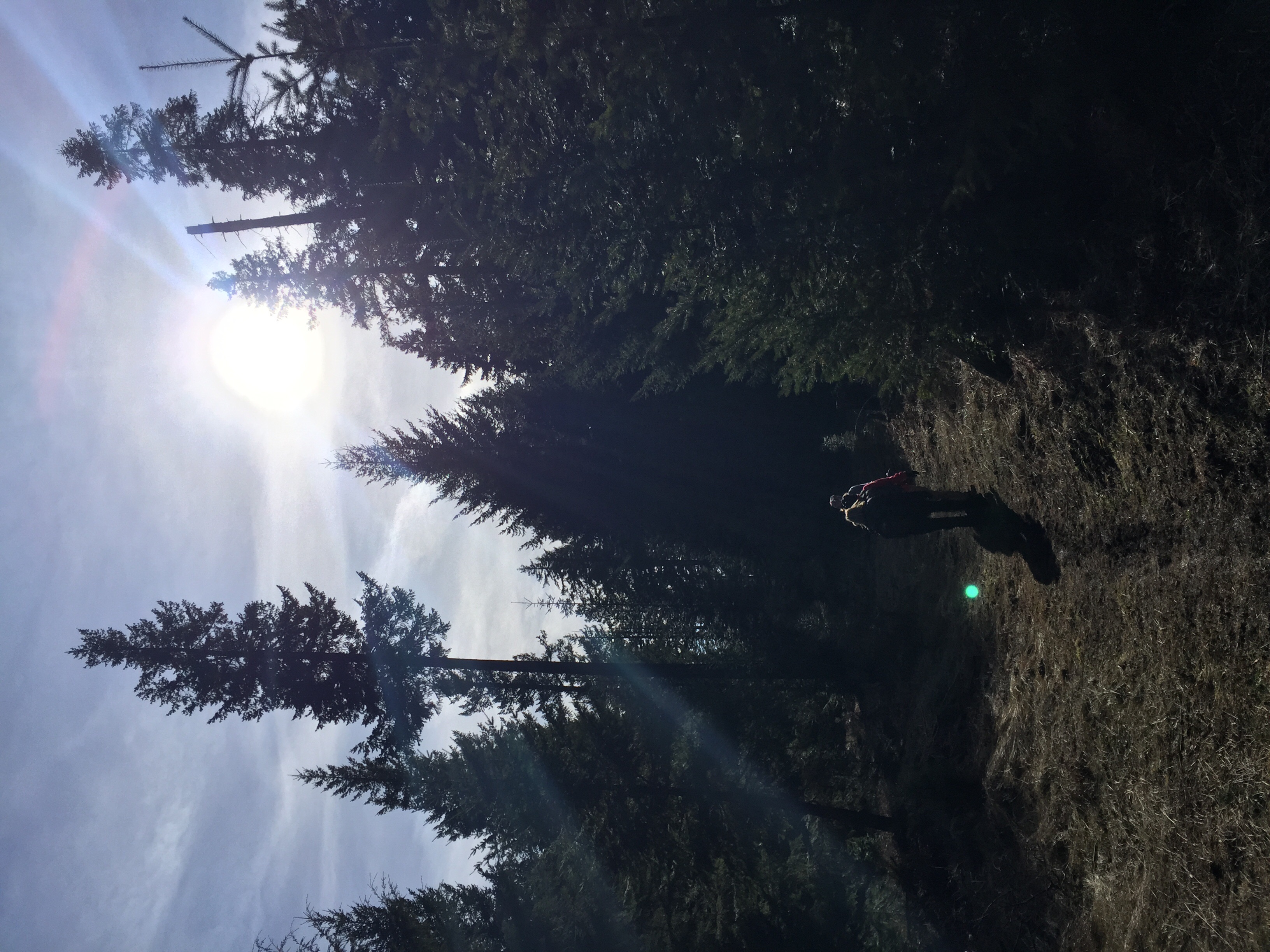
With the lack of snow, today was a day for hiking.  I went out with a Meetup group - proving once again Meetup is the best way to move to a new city.  The hike was really awesome, temperature rose from the 30s into the 50s.  Only issue was that what was supposed to be a 7-10 mile hike turned into 14.7 miles, which wouldn't be that bad (in fact it would be good), except that my new hiking boots aren't adapting well to my feet.  The right foot especially is feeling a bit off, there's a few rubbing places.  Making shoes is surprisingly hard!  Which is why it's so awesome that REI has such a good return policy.

It's interesting; when you really find what you enjoy in life it sets everything else into stark relief.  What I mean is, as you get older, you realize that your preferences are just that - yours, uniquely you.  You stop trying - well, if you grow up, you do - to convince other people that your preferences are better than theirs.  You just live and let live.  For example, I think hiking is fun.  I enjoy it.  But I'll never like it as much as randonneur (distance cycling).  To me, I need the change of scenery that comes with going slightly faster than you can hike.  I love waking up in Sisters and going to sleep in Prineville.  I love leaving San Francisco and being able to ride all the way to Oregon.  Hiking just is too slow - for me.  But, hey, that's what makes the world go 'round!!  And there's nothing wrong with a solid hike once in a while!

image.jpg

Comment

Comment

Day 220 - Bend, OR

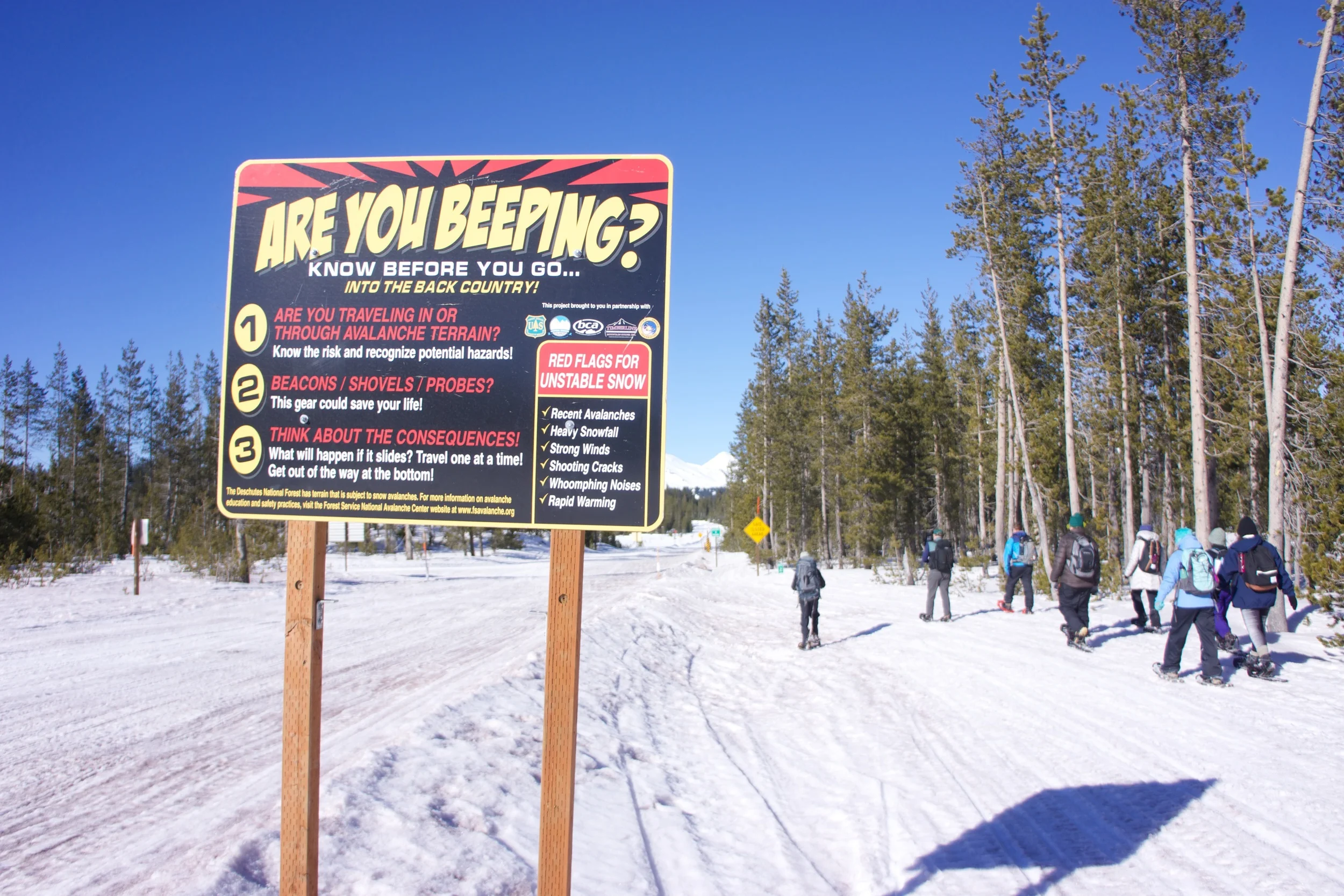
Snowshoeing!! 


snowshoeing.jpg

Today I got to go to the first meeting of my Snowshoeing class, HHP 185WN.  Let that sink in for a second - a credit college-level class in Snowshoeing.  Granted, only 1 credit, and i's only elective credit, but still.  This is why I came up to Bend; for the unique educational opportunities.  Not to be overly political, but as we explore Obama's idea of free community college for everybody, I think it's really important to think about what college can represent that is fundamentally different from what high school's intent is: specialization, and technical experience.  Of course, I'm still a big fan of a well-rounded liberal arts college experience for many people, but I also think that we can really expand our ideas about what college can teach.  When I was considering college, I had very narrow ideas about what went on there.  Basically, if it wasn't a Science or Engineering discipline, or taught at Oxford in the 1900s, then you didn't study it in college.  I would never have dreamed of a degree in Outdoor Leadership.  Degrees were for things like Civil Engineering, or English.  

In a weird way, I draw an analogy to the opening up of the restaurant business in the U.S. - or, for that matter, craft brewing.  When I was a kid, restaurants came in one of two forms: American food, or local ethnic cuisine (in my case, Polish or Italian).  There were no Vietnamese restaurants, no "fusion" cuisine.  Unless you lived in New York City, nobody was going to sell you a cuban, or bulgogi.  But, at some point, our national tastes grew up, and our universe broadened.  I think it's time for the same thing to happen to our secondary educational system.  Why not a degree in Outdoor Leadership?  Or Immigration?  Or Men's Studies?  Automotive Engineering?  Outdoor Automotive Leadership?  (OK, maybe not).  I say yes, let's get creative. 

In the meantime: snowshoeing is really fun, although we could use some more snow up here (thanks, global warming).  But we learned how to read a map and a compass and how to crunch around in the snow, and I got to make snowballs.  So today was a win, for sure! 

Comment

Comment

Day 219 - Bend, OR

New bike!

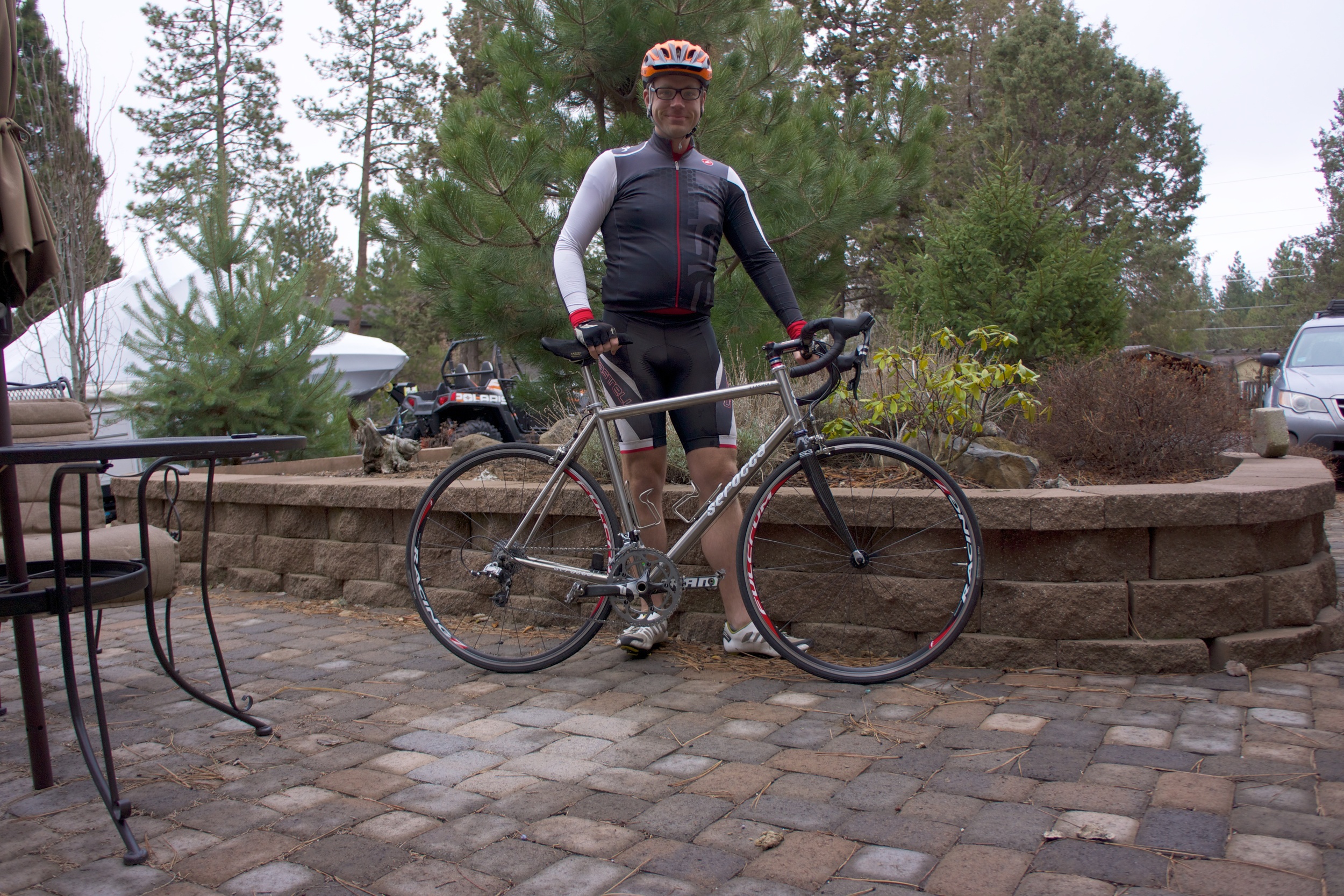
As some of you know, recently, Rocinante was uncerimoniously taken from me from off the top of my car in San Francisco.  But, fear not - I'm sure she will live a fine life on the streets of San Jose, or wherever she ends up.  She's a trooper and a wanderer.  However, if I'm going to ride 3800 miles next summer - and I am - I need a bike!  And here she is!  A Serotta titanium bicycle.  Yes, that's right - I finally decided to just invest in the top of the line.  Used, of course - bought it off eBay and assembled it with my own two hands.  I already love it.  Titanium is the creme de la creme of bike materials: incredibly durable and light, and ready to take whatever the trail dishes out next year.  It's already been great just on the Bend roads, which are covered in gravel in the winter (to aid with defrosting).

Now - I know what you're asking: What's its name?  Well, Rocinante, of course.  Like the waiters at Victoria and Albert's, Rocinante has become more of a title than a nomiker.  Every road/touring bike I own will, by definition, be Rocinante.  Until I stop tilting at windmills (which is never).  Perhaps you can think of this one as Rocinante II.

Speaking of tilting at windmills, I would love love love if you could accompany me on my ride with a small donation towards the cause.  I'm riding 3800 miles for Multiple Sclerosis: all you have to do is click this link!  Http://tinyurl.com/BikeAcross.  Do it for everyone who can't ride!

Comment

Comment

Day 218 - London, England

image.jpg
image.jpg

Healthy food options!

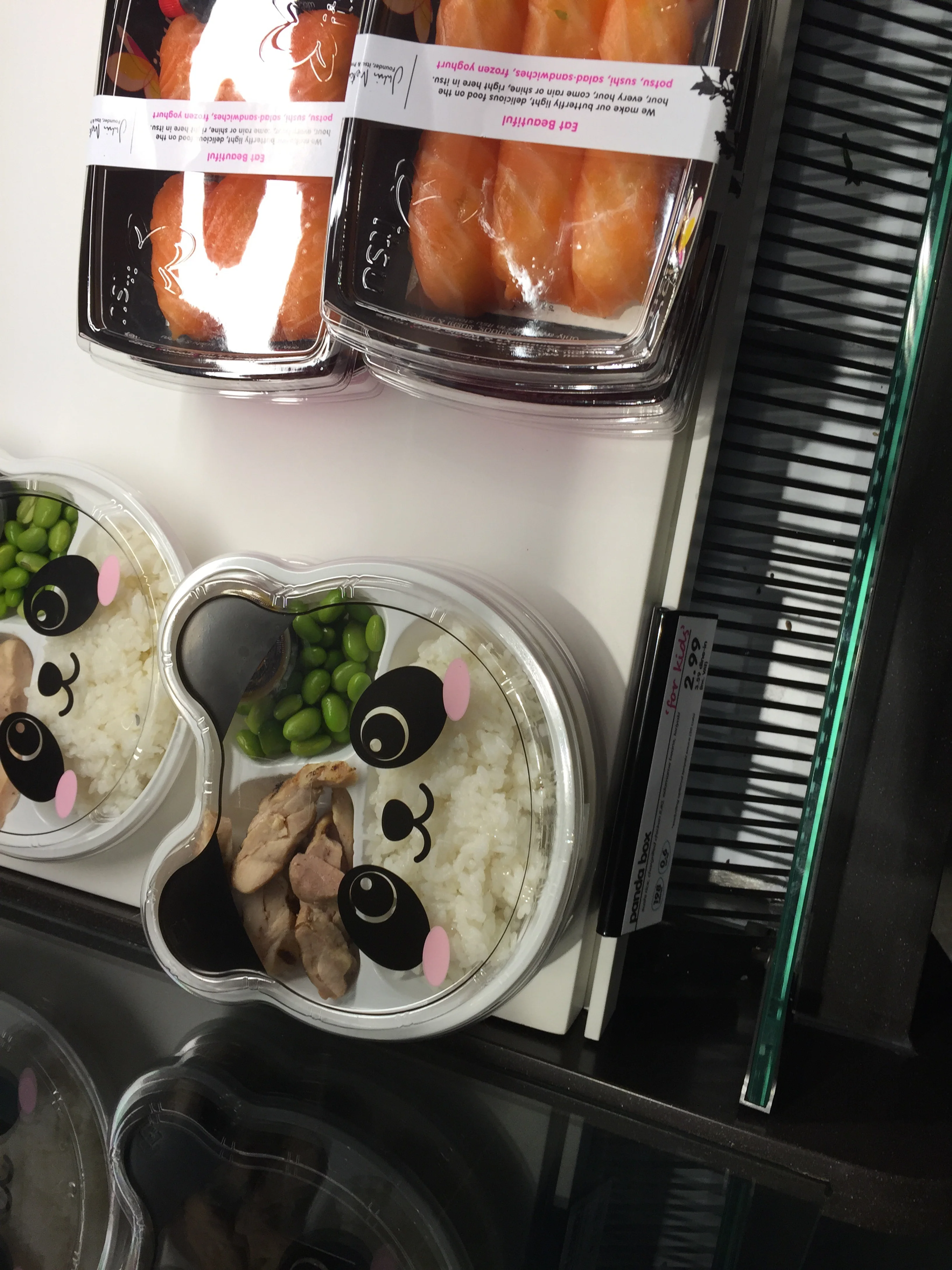
In addition to being the densest agglomeration of ostensibly human beings I’ve ever seen on the surface of the Earth, one of the expectation-confounding things about London was the prevalence of healthy, quick-service food options.  One of the stereotypes of British food is that it’s terrible; the others being that it is awful, unhealthy, and brown.  None of those turned out to be accurate at all.  Yes, you can go - and we did - to a traditional British pub and get yourself some bangers and mash, but in general, London was both extremely cosmopolitan and also very health conscious - at least about what they eat.  Intriguingly, Londoners appear to be much less concerned about exercise and fitness than San Franciscans - but they have us beat hands down in the nutrition department.  Quick - think of the big chains in the U.S.: McDonalds, of course, then maybe Burger King, Wendy’s, Taco Bell.  If you dig a bit you might come up with Chipotle and Starbucks.  Now, let’s compare to the chains that blanketed London: EAT, itsu, Pret a Manger.  In each of these, options for eating healthy were plentiful - and all for less than 10 dollars, and in less than 5 minutes.  Pret a Manger is full of delicious healthy sandwiches and soups, most of them for 4-6 dollars.  itsu was even cheaper, an asian-themed eatery with sushi, delicious hot soups, etc - all for 3-5 dollars.  I’m in a Health and Wellness class right now where we’re discussing the epidemic of obesity and diabetes in America.  Of course this is a fairly obvious observation, but I can’t help but wonder how much of it is due to how poor our “easily accessible” food options are.  Even here in Bend - which is a very active and outdoorsy city - it’s easier to get a cheeseburger or a burrito then to get a bowl of soup.  And that’s odd, really.  I wonder how long it will take before our food catches up with our athletic ambitions.  I see real change in our physical activity - the ski slopes are full and so are the yoga studios - but motion on the nutrition front seems slower.  If you could combine the enthusiasm for the outdoors of San Francisco with the nutrition and food awareness of London, I think you’d really have something!

Comment

Comment

Day 216 - London, England

image.jpg

Hello!  I am writing this post winging my way back across the Atlantic on American Airlines, reclined across 3 seats near the middle of the plane.  It’s glorious, because the plane is mostly empty so we all get plenty of space.  And, the flight attendants are so much nicer because they’re not nearly as busy.  Makes me wish that air travel was always like this - but of course the catch-22 is that if airline travel was always like this, then it would either cease to exist or cost 10 times as much.  There’s some sort of lesson in there, which we’ll get back to in a moment.

But first, a quick word: I haven’t been updating the blog.  That sucks.  Now I’m going to update the blog.  Which will be good.  There - quick word over.

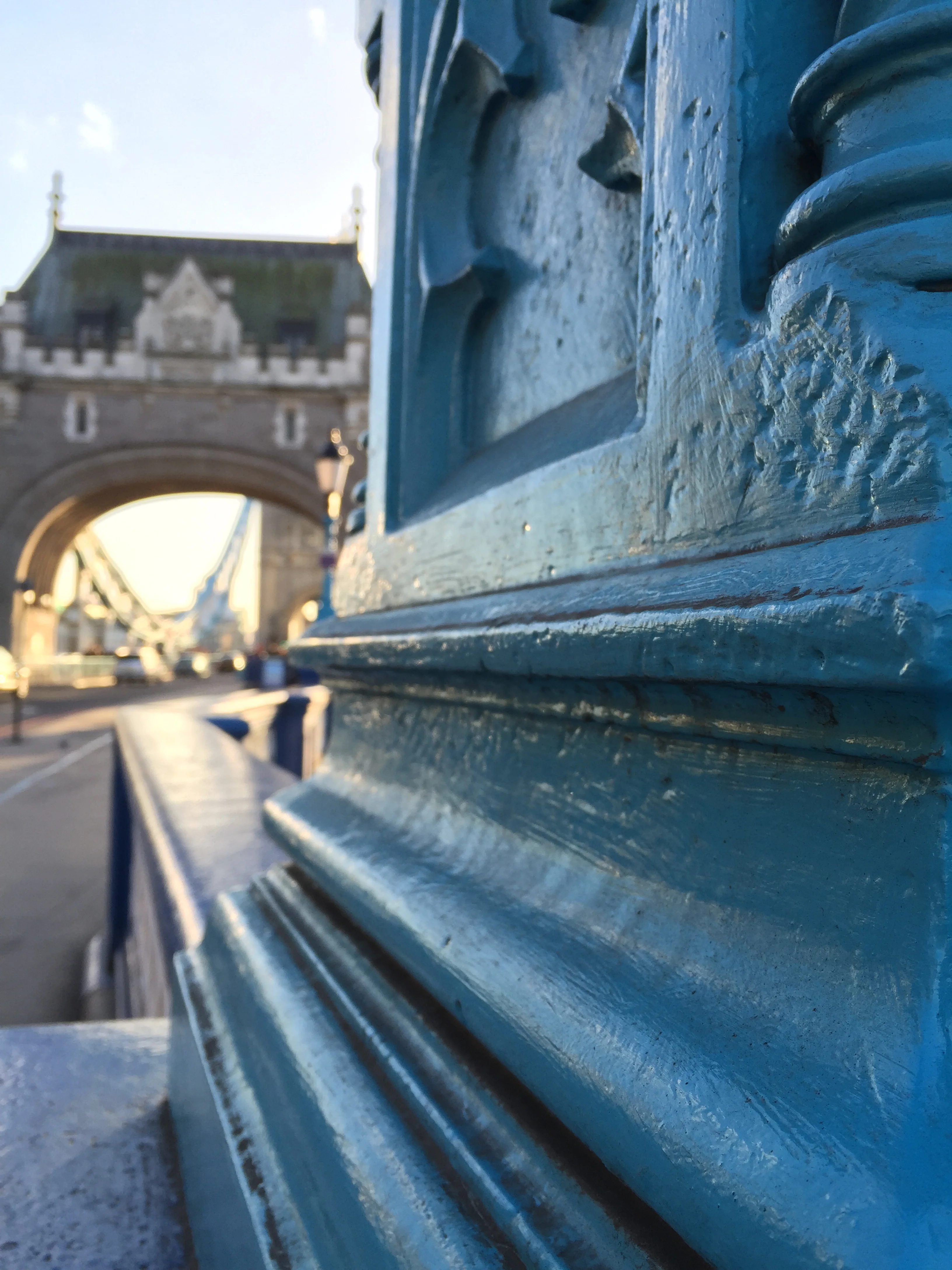
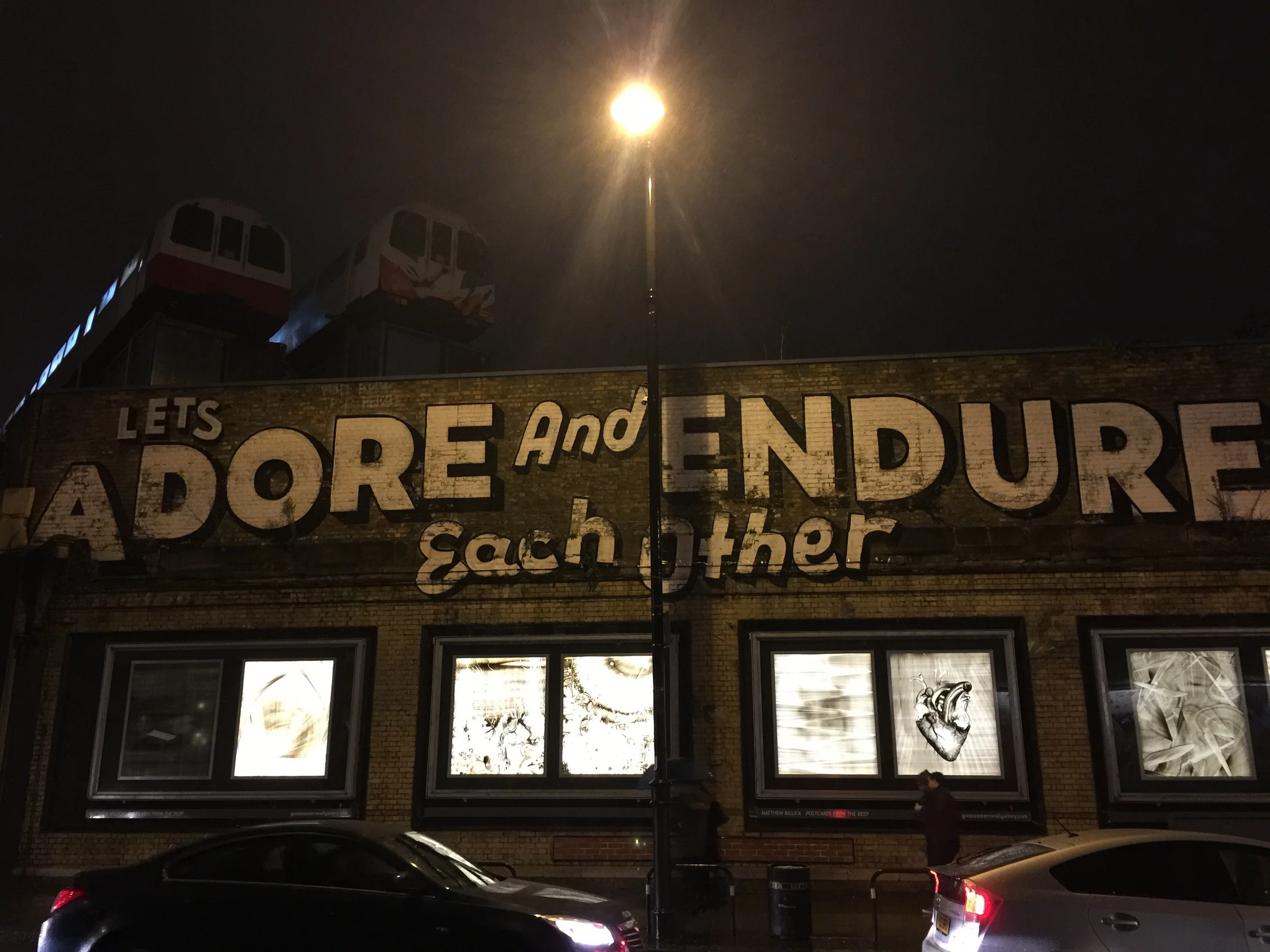
Anyway - London.  Awesome place.  Definitely a cool place, glad I visited.  I was there just not quite long enough to get over the jet lag, so all 3 days were kind of a blur - but a good blur.  First things first: there a approximately - by my scientific estimate - 807 million billion people in London.  I have never seen so many people try to occupy the same place in space and time, and this is coming from someone who lived in New York City for a year and a half.  In one particular scene etched into my mind, Katie and I were trying to get someplace and were transferring between Central and Picadilly lines, and the tunnels were so full of people we were crawling along like sheep.  Amazingly, though, everyone was so well-behaved.  And quiet!  It was alsmot peaceful, but also very, very claustrophobic.  Every restaurant we tried to go to was just packed full of people - until Sunday, when things started to empty out.  Apparently Thursday/Friday/Saturday is kind of the high time, then Sunday people just lay off.

More on this subject later, but along the lines of my empty flight - I wanted to mention how awesome the hotel room was.  It was the Hoxton in Shoreditch - sort of a Mission-esque neighborhood, very trendy and hip - and the hotel room was just great.  What impressed me was how they managed to do so much with such little space.  With an almost Japanese-like precision, items folded down or out of the walls, and everything had its place.  No square inch was wasted.  In particular, because the room was smaller, the appointments could be so much nicer.  Little touches, like USB and international power outlets, or a tiny cupboard with 2 wine glasses, or a cutout for your pencil in the desk.  Everything in its place, and a place for everything.  Not in an anal or neat-freak way, but just in an efficient, space-saving way.  This synchronized with my personal life, in that I’ve recently developed an interest in tiny houses, in particular www.tinyhousebuild.com.  The concept of doing less with more really appeals to me, on both a practical (think of the money you’d save!) and a philosophical level.  I really think it would reduce my personal anxiety to live in a small but exceedingly well-arranged space, and I’d like to make that happen someday in my life.  It’s also become increasingly clear that it’s a metaphor for life - that what makes life tick along smoothly is really what we choose *not* to do - the clutter we clear out of our lives.  All those objects that are not worth the time and space it takes to keep them have an analogue in our daily life; hobbies, activities, maybe even acquaintances that are serving as a drain off of our primary priorities.  But, again, more about this later.

image.jpg

Comment

Comment

Bike the US for MS!

biketheusformslogo.png

Hi everybody!  Want to donate to a really great cause, spread a little holiday cheer, and assist with an awesome journey?  Well, I have an opportunity for you to do all 3 at once!  As some of you know, I rode my bicycle 2600 miles this past summer.  It was an amazing, life-changing experience, and when I was done, I told myself I want to do it all again.  But this time I wanted to do a couple of things to make it even better: first, I wanted to do it with others.  Second, I wanted to go all the way across.  And third, I wanted to do it for a cause bigger than myself.  Granted, last summer's "alone time" was amazing, and really important, but this time around, it's going to be about more than me.  Multiple Sclerosis is a terrible disease that I, as a yoga practitioner who specializes in muscular rehabilitation, have gotten to know a bit better.  The MS organization is known for sponsoring charity bicycle rides, which makes it a great fit for myself.  I used to ride the MS150, which is an 180 mile bike ride over 2 days from Houston to Austin.  This is the next level!

The ride will take place next summer, and we'll be taking the Transamerica trail from Virginia to Oregon over about 6 weeks - a total of 3800 miles!  The ride is supported, but we'll be carrying our own gear and cooking our own food.  I believe there's about 30 of us on the ride.

How can you help?  Well, of course I'd love just your well-wishes.  But if you feel like you're in a place to do so, a financial contribution would help not only me but those suffering.  Most of the money (over 50%) goes straight to helping those with the disease.

If you are inclined to donate, or just would like to learn more about the trip or how your donation will be used, I have a great "personal cyclist" page up at the Bike The US for MS site, click here.  It's easy and secure and you can do it all online.  How much should you donate?  Well, that's up to you!  Maybe donate a penny per mile I'm riding - that's $38.  Or just give $5.  Whatever you can give will help!  I will be looking to raise the first $500 over the next month; that's our first "milestone".

Merry Christmas and Happy Holidays, everyone!

Comment

Comment

Day 178 - San Francisco, CA

Yesterday I had an interesting interaction with someone that reminded me of something very important.  It was meaningful to me, and I think it will be an interesting reminder to some of you, gentle readers.  The nature of this interaction isn't really the important part.  Suffice it to say that about 3 months ago I was interacting about someone with regards to something very important to me.  We had some communications - miscommunications - that were open to interpretation.  I proceeded to assume that this person meant the worst, and I didn't want to deal with more rejection and disappointment, so I just simply stopped talking to them.

Fast forward 3 months, and for random reasons they popped back into my life.  Suddenly, lo and behold, it turns out that they had the exact *opposite* thing in mind.  I had totally miscontrued what they were trying to say/do, and it was exactly the opposite. 

6 and a half years of living in San Francisco has, sadly, taught me some lessons, most of which I don't really like and, increasingly, some of which I'm figuring out aren't even true.  And I'm reminded of a truism which, to paraphrase, is that if you think someone has it out for you, whether you're right or you're wrong, you're suddenly right.  It's like the old saying: whether you think you can (have a positive relationship with someone) or you think you can't, you're right.  And it's so true.  The way that I imagine relationships proceeding turns into the reality of the situation.   

So, no matter how many interacting I have that genuinely go poorly, it is of paramount importance that I treat each new one as an opportunity to start fresh.  Not because it's the morally or ethically right thing to do, but because - as every salesperson knows - it's just more successful at bringing me what I want, which is genuine human interaction. 

And that's an incredibly important lesson for me to learn right now. 

Comment

Comment

Day 177 - San Francisco, CA

Tonight I watched an episode of Cosmos - not the new one with Neil DeGrasse Tyson, but the old one, with Carl Sagan.  (I'd like to see the new one, too, when I get a chance).  There are lots of amazing things to comment about in that old show - groundbreaking ideas that are still incredibly relevant today.  But what strikes me in particular is the pace of the show.  It operates at a human pace.  He speaks intelligently, slowly - with caution and care.  At times there are long pauses, as if he is genuinely considering what to say next.  By modern standards it appears almost glacial.  And it is so, so nice.  So calming.  Of course it's appropriate for his subject material.  But it really serves to highlight a key of modern society - how fast we move from topic to topic.

Good on you, Carl Sagan.

Comment

Comment

Day 175 - San Francisco, CA

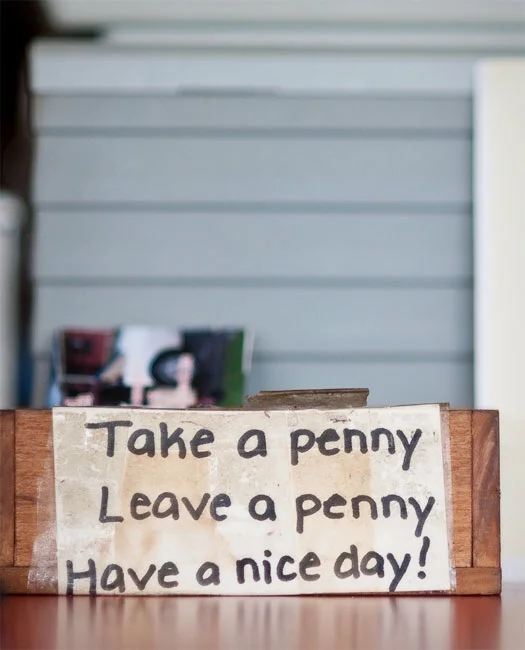
The penny jar

An analogy popped into my head the other day, the day I came back from my retreat.  It's a good one, and it made some things make sense to me, so I want to share it with you.  It's about Love, of course, because really, that's what everything is about.  It goes a little something like this: when I was a kid, my love was a little bit like a missionary, going door-to-door, looking for a donation, pressuring people into giving, possibly even to a cause they didn't feel at all like giving to, just to get the guy to go away.  As I got older, my model shifted to that of a store: I was selling love, and if you deposited enough of your own, you could buy what I was selling - but it always had to be a fair exchange.  No handouts here.  I had that model in my head for most of my adult life, and even through my marriage.  I was the one that counted the christmas presents to make sure that I got as many as I gave.  Now, I was very generous, to be sure - but I expected that generosity back in return.

Moving to San Francisco, and going through some of the humbling experiences I went through, made me soften my edges.  I realized that you couldn't do Love that way.  Love, as the Grinch says, isn't found in a store, and it isn't for sale; at least not in that way.  So I was proud of myself for realizing this; I patted myself on the back.  My new model was that of the donation jar.  I labeled my jar "love", carefully adorned it with stickers and clever bon mots, and then set it out on the corner. 

But here's the problem with the donation jar; it's still a bit too grabby.  If you've ever been to Starbucks, and seen the jar sitting there, with a clever catchphrase ("Tipping is Sexy"), you know that you immediately feel a bit guilty. Then, maybe, you feel a bit angry that you feel a bit guilty.  What if I didn't want to tip?  Am I a bad person?  That model may work for tipping your Barista, but it still doesn't work for Love.  You can't sit there, with a Mona Lisa smile on your face, calmly waiting for love - and seething inside as person after person walks by your donation jar and doesn't put anything inside. 

image.jpg

My new model for Love is the penny jar.  You know, the take-a-penny-leave-a-penny jar at the counter at the corner store.  It's the perfect model.  You don't feel guilty if you don't put a penny in the jar.  You put one there when you have one, when you can give.  No big deal.  And you can take one without giving one back.  The only thing society asks is that you try to put one back when you can; even better, you don't even have to put one in the same jar.  As long as you put one in somebody's jar, we're all good.  And I like that model for Love.  I want my love for people to be like the penny jar.  Except, instead of it only having a few pennies in it, my jar has a lot of pennies.  A big huge pile of pennies. 

And you can take one anytime you want.  Just ask! 

Comment

1 Comment

Day 172 - San Francisco, CA

Whew.  So that may have been one of the most intense 36 hour periods of my life.  Obviously, I’m here, writing to you, on the evening of the second day of what was supposed to be a 10 day silent meditation retreat.  So I suppose on the one hand, I have to come to terms with the fact that it was a failure.  I walked out on the second evening, and we’ll talk about why in a second.  In another sense, it wasn’t a failure at all, but explaining that will take a little work too.  Suffice it to say that I learned a few things about myself, and maybe I learned a bit too much, too quickly.

One thing to get out of the way - I have nothing against Vipassana, or specifically the Northern California Vipassana Center.  Just because I left doesn’t mean that I think it’s a bad practice, and I don’t want anything I’m about to say to make anyone think I feel that way.

Why did I leave?  Well, I’d like to blame a piece of it on the weather.  The weather was awful; cold, and raining hard constantly.  By the second day everything I owned was drenched.  I’d blame a piece of it on the center itself; for one, the sessions were all video recorded, not live, and the man doing the speaking had a particular Dracula-esque drone/intonation that I found grating.  But these are all smoke screens.  What it boils down to is that I essentially lost my shit and was freaking out - lonely, wet and crying in the woods like a child (there were some woods behind the center where we were allowed to walk).  I broke like a twig.

To understand that, you have to understand a bit more about Vipassana, and about Love.  Love is the key.  Love always was the key, love still is the key.  For those who don’t know, Vipassana is a style of breathing meditation based on some very ancient Vedic texts.  Again, I have nothing against it, but it has been described as “cold”.  It advocates following the breath to reach a certain state of emptiness, of equanimity.  What others smarter than myself have suggested, though, is that when you reach this balance, this emptiness, it is cold - the void.  Other disciplines - such as Tantra - add on a second truth, which is variously described as compassion, or love, to “warm up” this void.  But Vipassana - basic Vipassana - doesn’t talk much, if at all, about love, or compassion.

On the morning of the second day, I basically started to freak out.  I had visions of my father being dead and nobody being able to reach me.  I felt like the people sitting around me were zombies.  I felt trapped.  (It didn’t help that the center made a really huge deal about people leaving; they kept pounding it in, even closing a gate behind you and asking to check your cell phone).  Its easy, but a bit too simple, to blame this on the intensity of having to meditate, or stay silent.  Yes, those are scary.  The thing is, though, I’ve done a good bit of meditation, including a full daylong retreat, and I never felt that way at all.  I *like* meditation; that’s why I signed up.  When I left the daylong I felt rejuvenated.  So what was the difference this time?  Simply put, I realized that I just didn’t feel loved.  Even worse, I felt completely detached from love, from everything I loved.  Everyone there was, in fact, actively engaged in trying not to care about me, or anybody else for that matter. (The last time I went to a daylong it was a slightly different style, taught by monks who were physically present.  And we were allowed to talk to each other as students, when we weren’t meditating). 

And I realized something about me: love, and passion, are a key part of who I am.  And they’re also what I’ve spent the last 6 years largely without.  The whole root of the problem with my life is a lack of love and passion, and my resulting anxiety about that, which causes not only free-floating anxiety, but specifically anxiety about attachment.  So to suddenly find myself out in the woods in the dark, with people I don’t know and aren’t allowed to even make eye contact with, while the Deluge of Ages pours down around me, and then to be told that if I leave it’s a sign of a weak mind and a failure - well, I basically freaked.

Again, this is not about Vipassana, or about the NCVC - this is about me, and what I learned about myself, which is this:

1) Passion is the key to my happiness.  I’m a passionate person, and I have to follow my passion.

2) My passion is changeable.  It moves.  That’s just the way it is, and that’s just something I’m going to have to be OK with.

3) I am sensitive.  I’m vulnerable, and easy to hurt, because I’m so attuned to what people think of me, and yet often very confused about their reactions as well.

4) Because I am passionate and changeable and sensitive, I often scare people.  Like a car careening out of control, people don’t want to get close.  Understanding this and managing it in my personal relationships will help, but to some extent I think I just have to accept that’s part of who I am.  Some people just won’t like me or will even be afraid of me.  At least now I understand why, and can accept that.

5) Because of this, I have to grow a thicker skin about other people’s reaction to me.  As long as I am kind, and act out of love, if people still don’t understand, that just has to be OK.  Their reaction is an outgrowth of my choice.

6) This passion can’t be confused with reactivity.  It is changeable, yes, but it’s part of a longer plan, not a to-the-minute thing.  I have to get better about instant gratification and listen for my true passion(s).

I feel as though I’ve made a lot of progress in dealing with my own anxieties in the last year or so.  It was scary and awful to suddenly be confronted with the literal, and figurative, dark woods at the center of my soul, and to have all those anxieties flood back up all at once, especially when I felt like my surroundings were bereft of love.  It was too much to take and threatening to unseat me.  It also wasn’t going to be a good space for me to learn any kind of meditation technique.  So that’s why I left.  

On the way out, I turned to the woods, tiny flashlight pointed in, and tears streaming down my face, I said “I love you, woods - but I am not a monk.”

I need to be loved, I deserve to be loved.  I *am* loved, to some extent, and my life will be more full of love in the future, if I have anything to say about it.  I need to find love.  As an adult, that can be tricky.  But I think a good place to start is to be around people/creatures who love.  Pets and children obviously come to mind.  So does volunteering, and senior citizens.  Maybe even (gasp) Unitarian Church.  Perhaps a combination - volunteering with animals, or kids, or with a church.  Whatever it is, I need to find love, and friendship, and community - and then, of course, hopefully romantic love as well.  Like the Beatles said, Love is all I need.

So I’m back out of the woods.  I’m glad I went; it’s been hard to feel passionate lately, and at least it uncovered some of that passion.  It also was a bit of a mistake, but yet a really important learning experience that will guide my future.  And as much as I feel sheepish, and like a coward or a failure, I think it took a lot of guts to look all those people in the eye and say “No, this isn’t right for me.”

In the immediate term, my plan is to have a 9-day “staycation”.  I’m going to do my own meditation retreat in my house, with a similar set of rules: up by 7, bed by 11, meditate an hour a day.  One big difference: at least one, if not two, hours of exercise.  Healthy food, cooked by me.  No caffeine, no alcohol.  No porn or masturbation.  And no programming.  Focus on people - write to people I care about and tell them so.  Spend some time finding new people to start relationships with.  Find some love.

1 Comment